By HAN News Desk
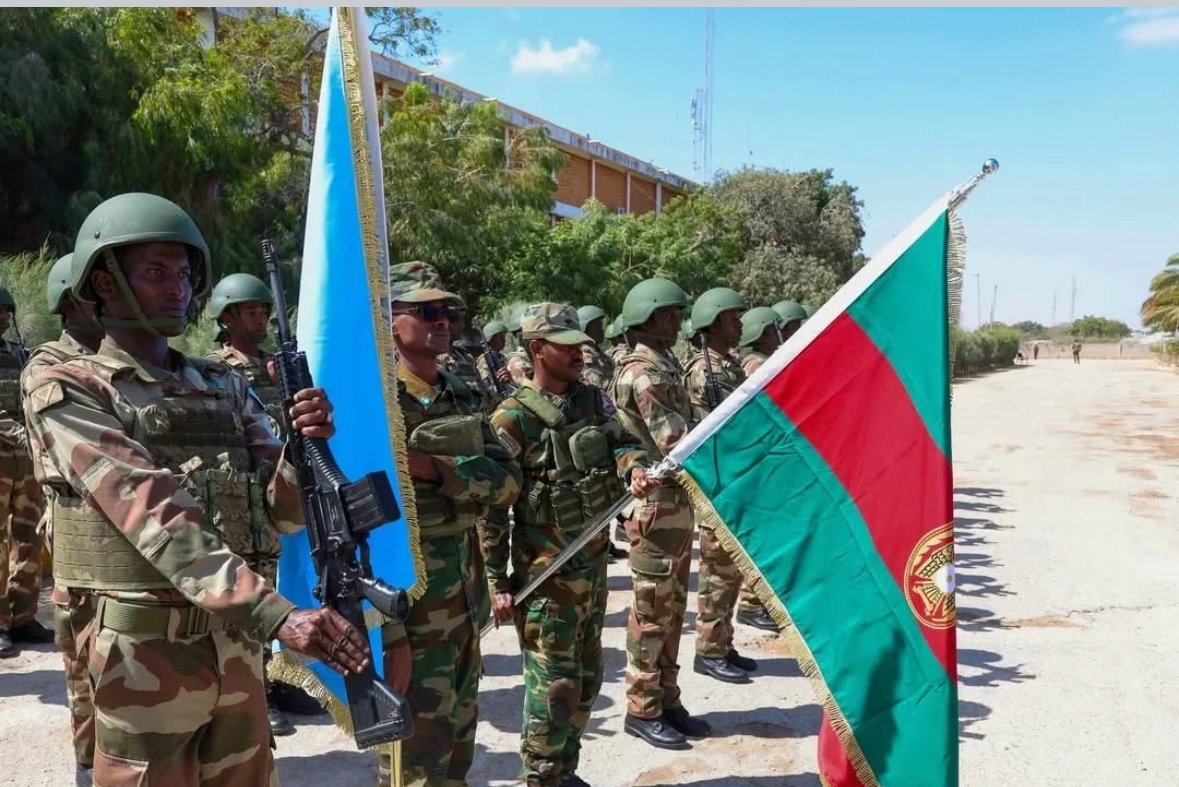
MOGADISHU — President Hassan Sheikh Mohamud has become the first Somali head of state in more than three decades whose security is fully handled by the Somali National Army, a development officials describe as a major milestone in the country’s long process of rebuilding state institutions since the collapse of the central government in 1991.
The shift marks a symbolic and operational change in Somalia’s security architecture. For years, the protection of senior leaders — including the presidency — relied heavily on African Union peacekeepers and foreign security partners. Somali authorities say the transition reflects growing confidence in the capacity and professionalism of the Somali National Army (SNA).
Over the past four years, the SNA has recorded significant gains in operations against the al-Qaida-linked militant group al-Shabab, known locally as AS. Military officials say government forces have dismantled key militant bases, killed senior commanders and disrupted extortion and intelligence networks in central and southern Somalia.
International partners have played a central role in rebuilding Somalia’s armed forces. Turkey, in particular, has been a key supporter through training and institutional development programs. Thousands of Somali soldiers have graduated from the TURKSOM Military Training Academy in Mogadishu, one of Turkey’s largest overseas military facilities. The academy has provided structured training in infantry tactics, officer development, logistics and command systems.
Somali authorities say the army has undergone major institutional reforms. Soldiers are now registered through biometric systems to reduce fraud and eliminate “ghost soldiers,” a longstanding problem that drained public resources. Salaries are paid directly into bank accounts, and new systems have been introduced to regulate recruitment, promotions and personnel management.
The army has also expanded its operational capabilities, acquiring improved equipment and developing limited air assets to support ground operations, officials say.
In 2022 and 2023, the African Union Transition Mission in Somalia (ATMIS), along with Ugandan forces, handed over several security installations — including responsibility for protecting Villa Somalia, the presidential compound in Mogadishu — to Somali forces. The transfer was widely seen as a test of the army’s readiness to assume greater responsibility as African Union troops gradually draw down.
In December 2023, the United Nations Security Council lifted a decades-old arms embargo on Somalia that had been in place for more than 30 years, allowing the government greater flexibility to procure weapons and military equipment for its national forces.
President Hassan Sheikh has said the Somali National Army has reached a level where it is capable of independently securing key state institutions and expanding operations nationwide. In 2024, Somalia also assumed leadership of the East African Standby Force, a regional security mechanism, underscoring what officials describe as the country’s emerging role in regional peace and security efforts.
Despite these developments, security analysts caution that challenges remain, including sustaining funding, maintaining discipline and ensuring coordination among federal and regional forces. Al-Shabab continues to carry out asymmetric attacks, including bombings and targeted assassinations.
Still, officials say the full transfer of presidential security to Somali forces represents a significant step in restoring national sovereignty and rebuilding public confidence in state institutions.
Source: TRT Turkish media.