
By HAN News Desk
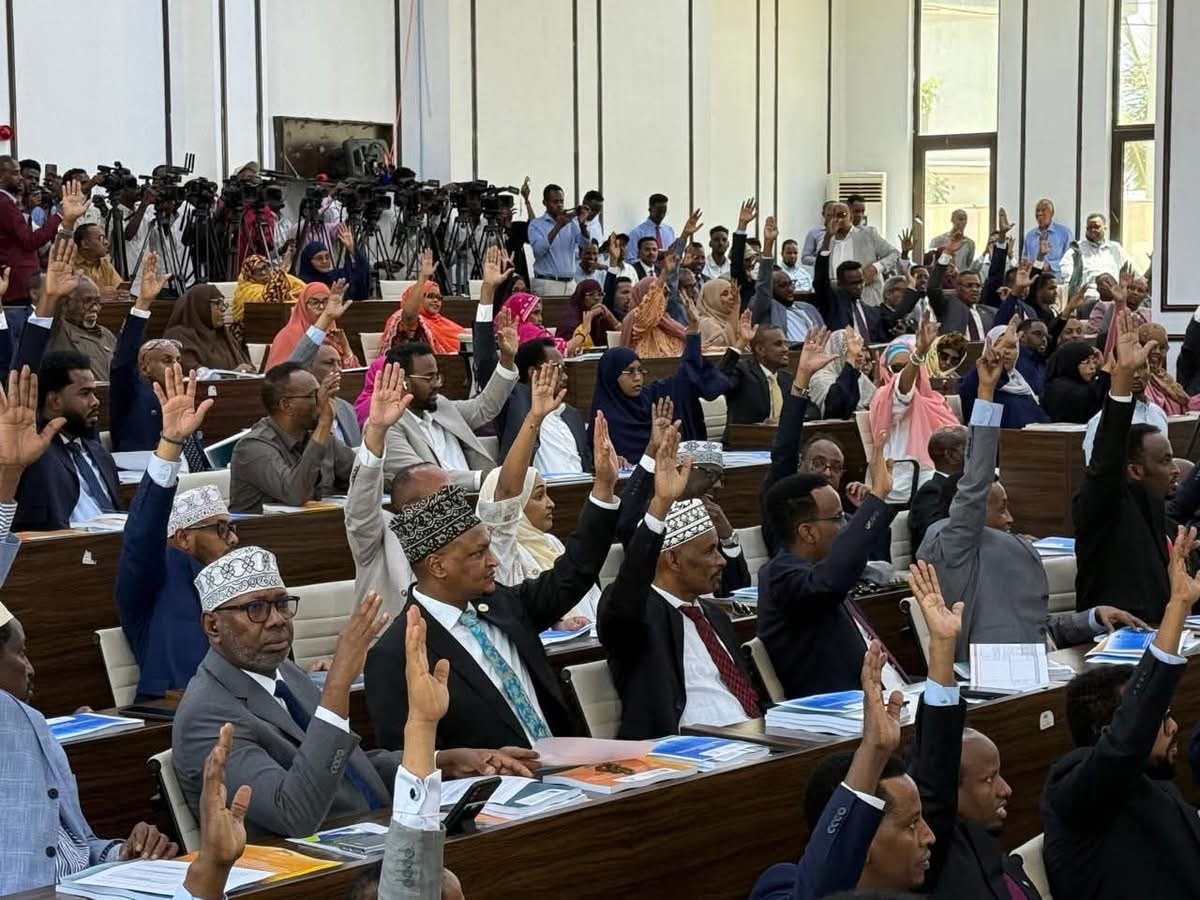
MOGADISHU — The Federal Parliament of Somalia on Wednesday officially approved amendments and additions to the country’s Provisional Constitution, marking a significant step in Somalia’s long-running constitutional reform process.
Speaker of the Lower House, Adan Mohamed Nur (Aadan Madoobe), announced that the approved provisions came into effect immediately after the vote, signaling what lawmakers described as a new phase in efforts to complete and modernize the country’s constitutional framework.
The decision was made during a parliamentary session in Mogadishu, where legislators debated key articles aimed at clarifying governance structures, strengthening federal institutions and advancing the process of constitutional review that has been ongoing since Somalia adopted a provisional charter in 2012.
However, the move has sparked strong political controversy. Regional administrations including Puntland State of Somalia and Jubaland State of Somalia have previously announced that they reject the process through which the amendments were adopted, arguing that it lacked comprehensive national consultation.
Officials from both federal member states said constitutional matters are national issues that require broad political consensus among the federal government, regional administrations and civil society. They accused the central government and parliament of pushing forward important constitutional provisions without reaching a wide political agreement.
Opposition politicians based in Mogadishu have also criticized the approval of the amendments, describing the process as incomplete and questioning its legitimacy because not all political stakeholders participated.
Political analysts say the dispute over the constitution highlights ongoing divisions between Somalia’s federal government and some regional states. The core issues under debate include the distribution of powers between the federal government and member states, the structure of future elections and the overall design of Somalia’s federal system.
Some constitutional experts argue that passing the new provisions could help strengthen state institutions and provide clearer legal guidance for governance and elections. Others warn that without a broader political settlement, the move could deepen tensions and complicate cooperation between the federal government and regional administrations.
Although parliament has declared the amendments effective immediately, many questions remain about how dissenting regional states will respond and whether negotiations could lead to a broader political compromise. Observers say the coming weeks will be crucial as Somalia’s federal government, regional leaders and opposition figures navigate the dispute — a development that could significantly influence the future of the country’s federal system and its broader political stability.