MOGADISHU — Somalia’s political landscape has once again spotlighted deep divisions over the legality and transparency of regional state elections, as the recent South West State vote sparks widespread debate among citizens, politicians, and civil society organizations.
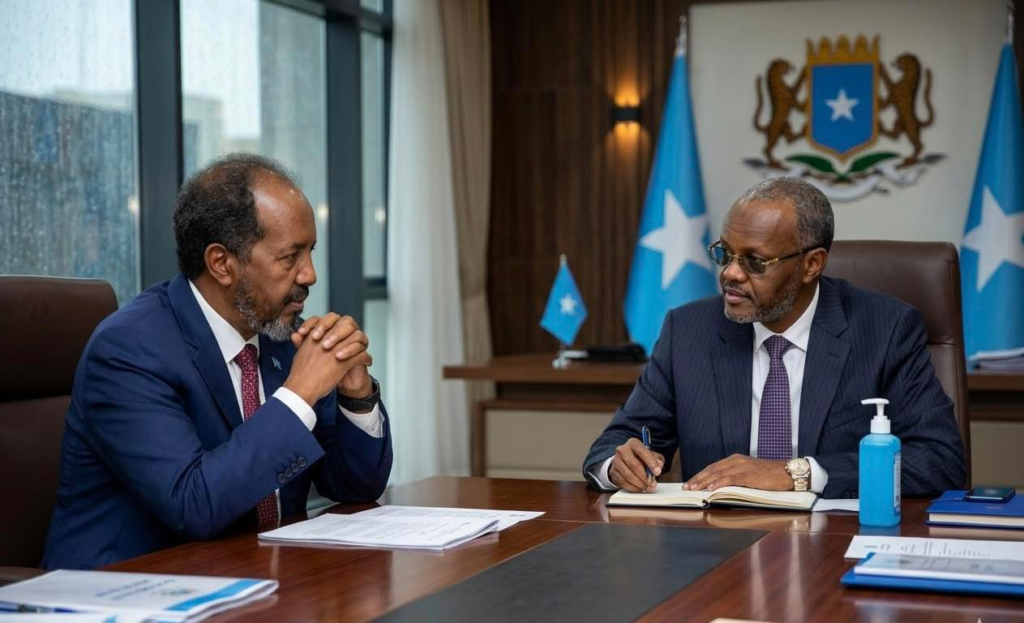
The South West election, held last month, was conducted at a pace that many observers described as unusually rapid, raising questions about the legal framework and administrative procedures followed by the electoral commission. Critics say the accelerated schedule limited public scrutiny and reduced the ability of candidates to challenge irregularities. Some civil society groups and opposition figures allege that the process lacked transparency, particularly in candidate vetting and vote verification, which they say undermines the credibility of the result.
Adding to the controversy, former President Mohamed Abdullahi Farmaajo issued a public statement congratulating the newly elected leadership. The statement drew immediate attention and criticism, with many questioning why Farmaajo endorsed an election that some community members and political analysts described as contentious. Political observers say this reflects long-standing concerns that Somali politics is often driven more by strategic alliances, factional interests, and personal ambitions than by consistent legal principles or democratic norms.
Comparisons with other federal states, including Galmudug, Hirshabelle, and Jubbaland, have intensified scrutiny. Analysts point out that political reactions in these regions frequently shift based on short-term calculations rather than electoral integrity. “Decision-making in Somali politics is frequently influenced by personal or factional interests rather than adherence to electoral law,” said Dr. Abdiqani Mohamed, a political analyst based in Mogadishu. “This trend undermines public confidence and highlights the urgent need for institutionalized, impartial election procedures.”
Civil society organizations and independent media have called for more robust oversight mechanisms to ensure fairness and inclusivity in all future elections. Several NGOs warned that without reform, repeated allegations of political manipulation could erode citizens’ trust in democratic institutions and weaken the federal system.
Public opinion appears to be shifting as well. Many Somali citizens now expect both current and former political leaders to prioritize the common good over individual or factional gains. Social media platforms and local radio stations have seen a surge in discussions urging politicians to respect transparent electoral processes and ensure that leadership selection reflects the will of the people.
Somalia’s federal states remain a critical pillar of the country’s governance system. Analysts stress that the independence of state elections from political interference is essential not only for national unity but also for broader political stability. Ensuring credible elections, they say, is key to strengthening Somalia’s democratic institutions and federal structure.
Observers further note that upcoming elections across other federal states could serve as a test of whether Somali authorities and political actors are willing to implement reforms. Experts emphasize that future votes must be conducted under clear laws, with full transparency, legal oversight, and protections for citizens’ rights. Doing so, they argue, is the only way to restore confidence in Somali institutions, reduce political volatility, and support a more stable federal democracy.