
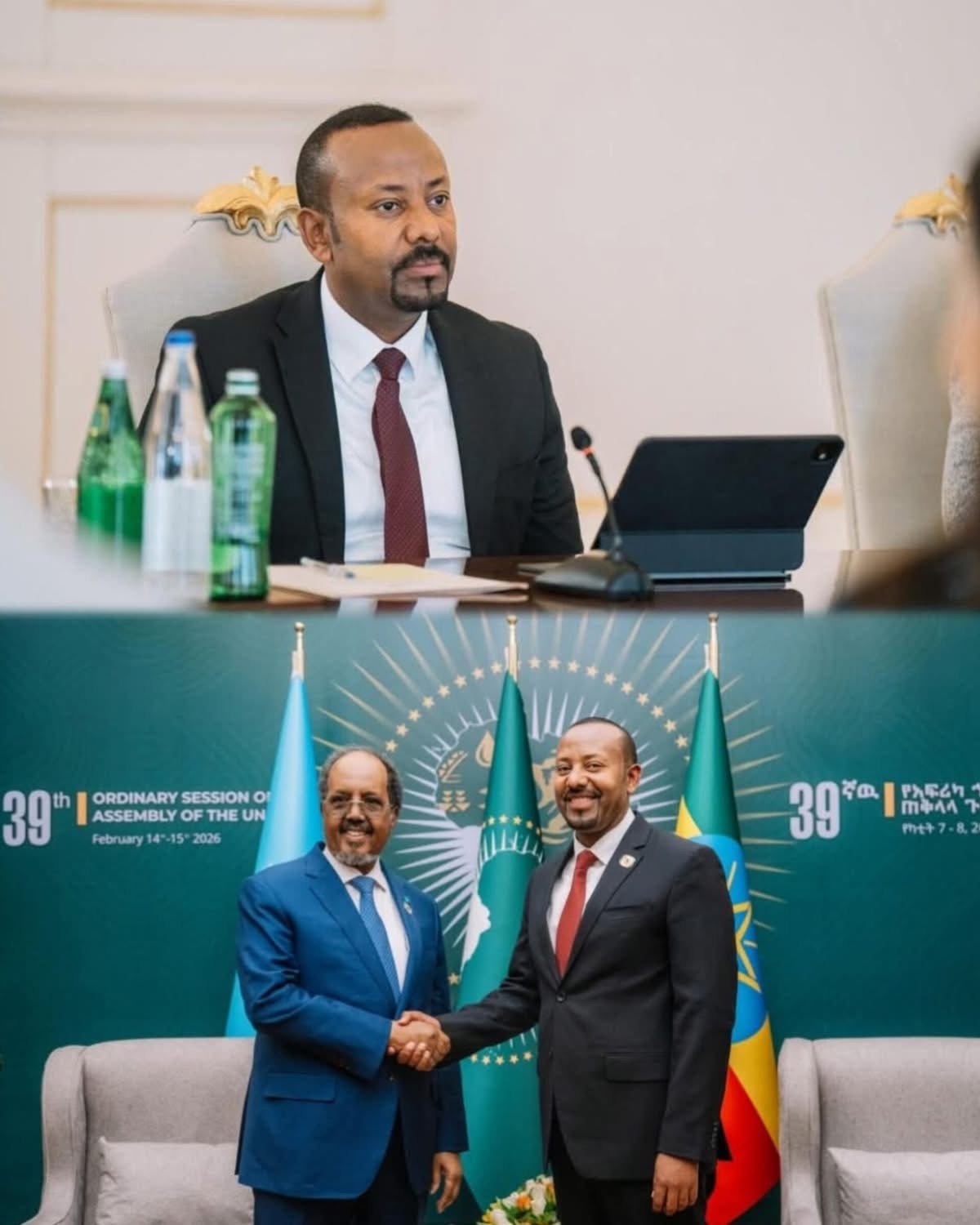
ADDIS ABABA — Ethiopia says it has shifted away from decades of foreign policy shaped by a perception of “encirclement by enemies,” promoting instead a neighbor-focused diplomatic approach, even as critics warn of declining influence in parts of the Horn of Africa.
In a recent statement, the Ethiopian government said the past eight years marked a turning point in its external relations, emphasizing engagement and cooperation with neighboring countries. Officials said efforts to rebuild trust and reduce long-standing suspicions had led to improved ties across the region.
“The new diplomatic direction prioritizes good relations with neighboring states and peaceful engagement,” the statement said, adding that the policy aims to position Ethiopia as “a model for Africa” in conflict resolution and regional cooperation.
Authorities in Addis Ababa highlighted what they described as “significant achievements,” including strengthened bilateral relations and expanded diplomatic outreach, although they did not provide specific examples in the statement.
The announcement comes amid growing debate over Ethiopia’s regional role, following comments by prominent Oromo politician Jawhar Mohammed, who accused the federal government of pursuing a flawed foreign policy toward neighboring countries.
Jawhar recently linked political developments in Somalia — particularly in Southwest State — to what he described as weakening Ethiopian influence. He alleged that shifting alliances allowed rival regional actors, including Egypt, to gain ground in the strategic city of Baidoa.
He also warned that Puntland, a semi-autonomous region in northeastern Somalia, could be at risk of moving out of Ethiopia’s sphere of influence, reflecting broader geopolitical changes.
Ethiopian officials have not directly responded to Jawhar’s claims, but analysts say the contrasting narratives highlight tensions between the government’s diplomatic messaging and perceptions among some political figures.
“Ethiopia is trying to reframe its regional role through cooperation rather than confrontation,” said a Horn of Africa analyst based in Nairobi. “But influence in the region is also shaped by competition from other actors and internal political dynamics.”
The Horn of Africa has increasingly become an arena for competing regional interests, with countries such as Turkey and Egypt expanding their diplomatic and security engagement, particularly in Somalia.
In Mogadishu, the federal government has strengthened ties with multiple international partners, while maintaining that cooperation with neighbors remains essential for stability.
Observers note that Ethiopia’s evolving policy follows a period of significant internal and regional challenges, including conflicts and shifting alliances, which have tested its traditional influence in neighboring countries.
Despite official claims of progress, some analysts caution that rebuilding trust in the region is a gradual process. “Diplomatic statements are important, but perceptions on the ground and political realities will ultimately determine influence,” the analyst said.
While Ethiopia presents its new approach as a success story, the debate underscores the complex and evolving nature of regional politics in the Horn of Africa, where cooperation and competition often unfold simultaneously.