MOGADISHU — Somalia’s federal government has issued a direct warning to two former presidential spokespersons, accusing them of spreading disinformation and attempting to shape public opinion while presenting themselves as independent media figures.
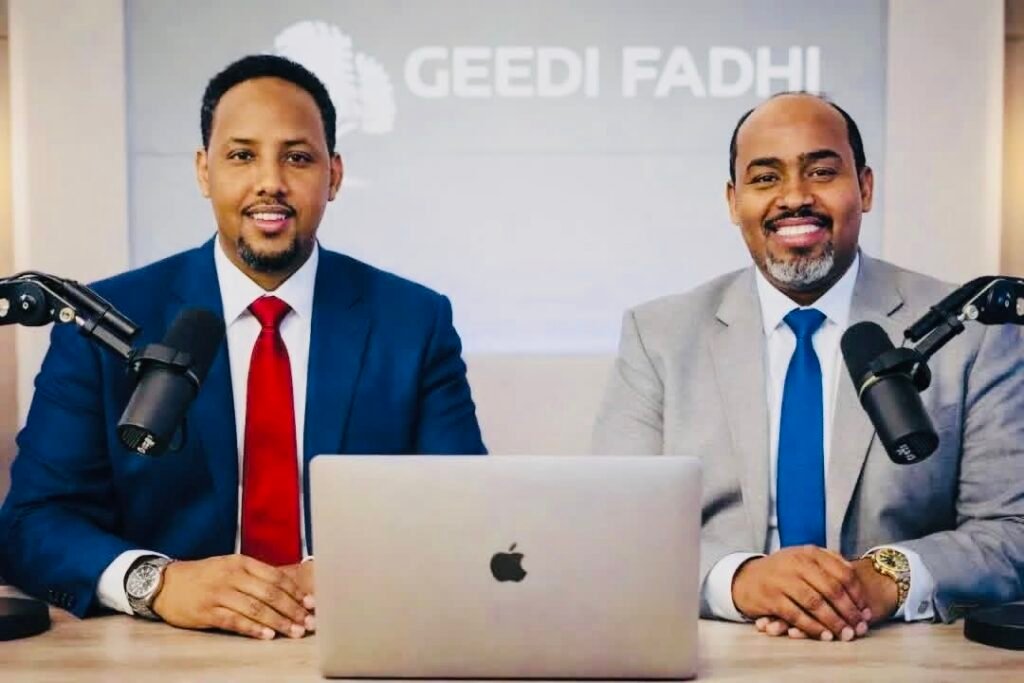
Deputy Minister of Information Abdirahman Yusuf Al-Adala identified the individuals as Abdinuur Mohamed Ahmed and Abdikarim Ali Kaar, both former communications officials at Villa Somalia.
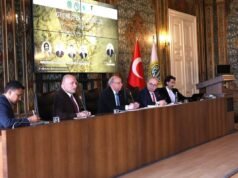
At a press briefing in Mogadishu, Al-Adala alleged the two men have recently re-emerged in the public sphere under the guise of journalists and political commentators, using social media platforms to disseminate what he described as “false narratives, politically motivated criticism, and divisive content.”
Government officials claim that some of the content linked to accounts associated with the pair — including commentary published on a platform known as Geed Fadhi — has contributed to heightened political tensions. Authorities allege that certain posts contain inflammatory language and messaging that could deepen clan divisions, though no formal legal charges have been announced.
“They have failed to sell their political ideas to the Somali people,” Al-Adala said. “Now they attempt to repackage those same ideas through deception, posing as journalists while spreading propaganda and clan-based narratives.”
The accusations have drawn mixed reactions from Somali media stakeholders and press freedom advocates, highlighting broader concerns about both disinformation and government overreach.
The Somali media experts called for caution, urging authorities to provide verifiable evidence to support the allegations while respecting press freedoms.
“Any claims of disinformation must be backed by transparent evidence,” the group said in a statement. “At the same time, individuals presenting themselves as journalists must adhere to professional ethics and avoid content that could incite division.”
Similarly, Somalia media activists emphasized the need to distinguish between legitimate criticism and deliberate misinformation.
“Somalia’s media space is already fragile,” Somali media activists noted. “Accusations of this nature should not be used to silence dissent, but unethical conduct — including anonymous propaganda — must also be addressed.”
Legal experts say the dispute touches on sensitive questions surrounding freedom of expression and media regulation in Somalia. Under the country’s provisional constitution, freedom of speech and media is protected, but subject to limitations related to public order, national security, and the prevention of hate speech. Analysts note that enforcement of these provisions remains inconsistent.
“Labeling individuals as disinformation actors without due process risks undermining constitutional protections,” said a Mogadishu-based legal analyst who requested anonymity due to the sensitivity of the issue. “At the same time, if there is credible evidence of incitement or harmful misinformation, the government has a responsibility to act — but through legal channels.”
Observers also point to the absence of a fully independent regulatory framework for digital media, leaving a gray area in how online political content is monitored and addressed.
The case underscores the increasing role of social media in Somalia’s political landscape, where former officials, activists, and commentators often operate outside traditional media structures. Analysts say the blurred line between journalism, political advocacy, and online influence campaigns has made it more difficult for the public to assess credibility.
“Social media has democratized speech in Somalia, but it has also created space for manipulation,” said a regional media researcher. “The challenge is ensuring accountability without restricting legitimate expression.”
Al-Adala urged the public to remain vigilant when consuming online content, warning that misleading narratives could “manipulate opinion and deepen divisions.”
Neither Abdinuur Mohamed Ahmed nor Abdikarim Ali Kaar has publicly responded to the allegations.
Observers say the controversy reflects deeper tensions in Somalia’s evolving political and media environment, where debates over governance, identity, and power increasingly play out in the digital sphere — often with limited oversight and high stakes.