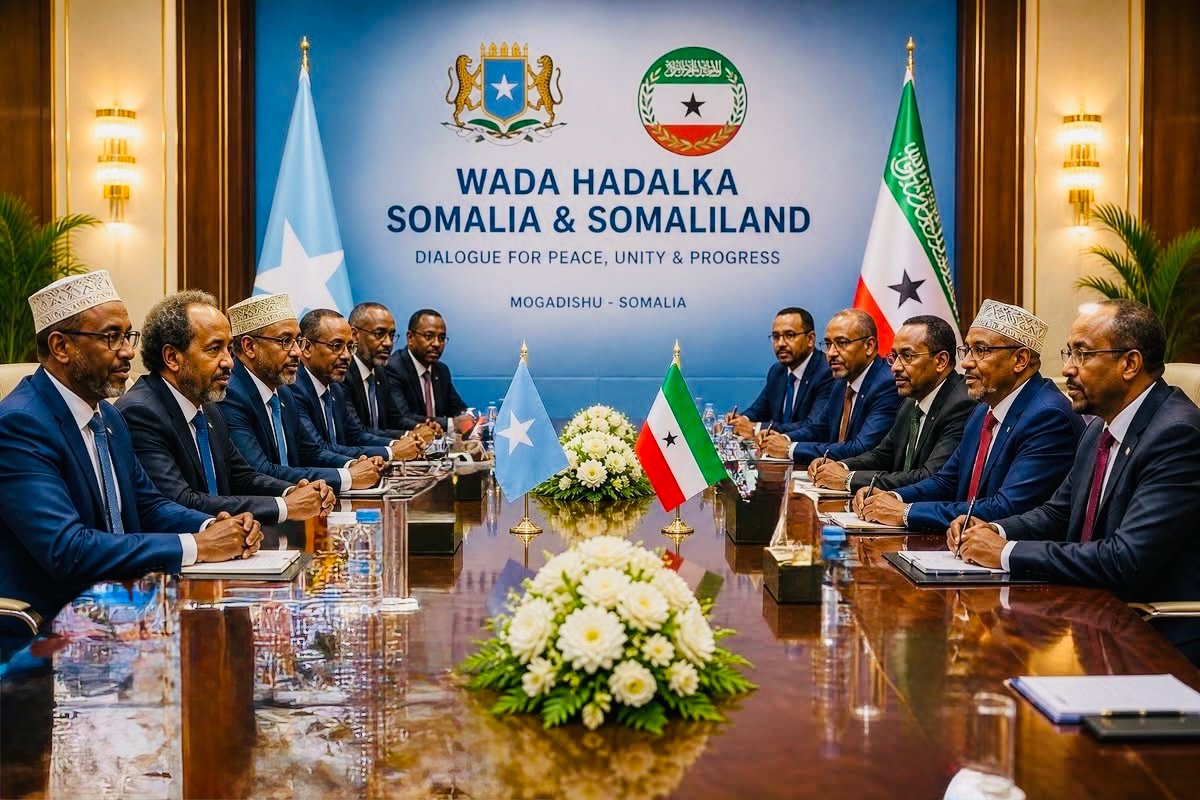
MOGADISHU – Fresh diplomatic contacts between leaders of Somalia and Somaliland are raising cautious hopes of easing long-running tensions, amid reports that the United Arab Emirates may be recalibrating its approach to the Horn of Africa.
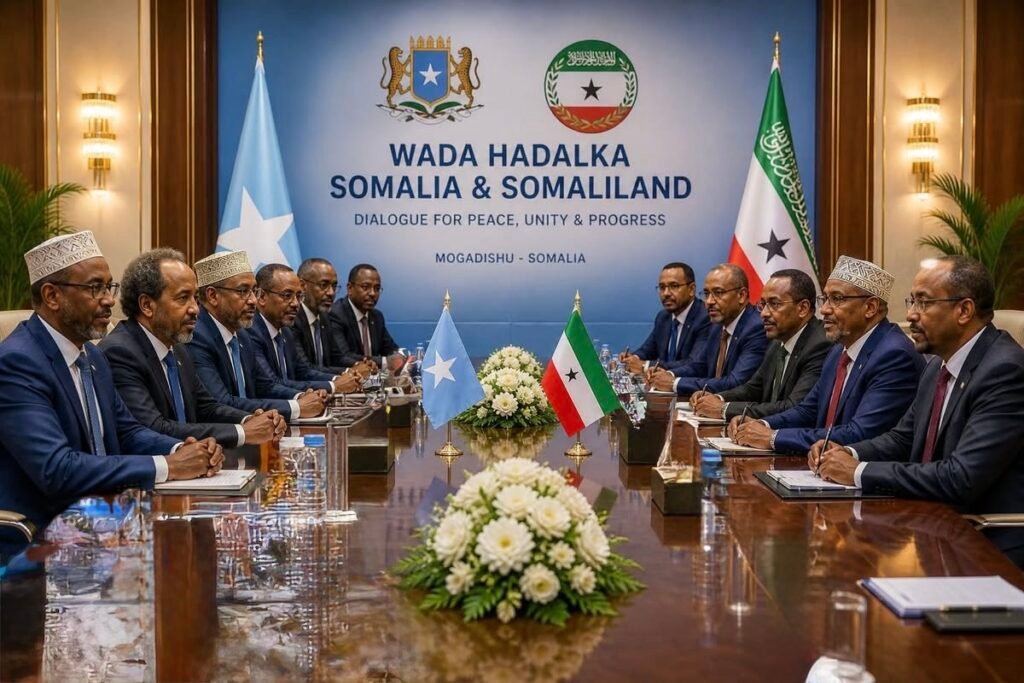
Officials on both sides have confirmed that preliminary discussions are underway, though details remain limited. The engagement marks one of the most notable attempts in recent years to revive dialogue between Mogadishu and Hargeisa, whose relations have been strained by disputes over sovereignty, security cooperation, and international partnerships.
Somaliland declared independence from Somalia in 1991 following the collapse of the central government, but it has not gained international recognition. Periodic talks over the past decade have failed to produce a lasting framework for resolving the status question, often stalling over issues of political legitimacy and power-sharing.
Analysts say the current moment appears more favorable than previous rounds, pointing to a relative decline in hostile rhetoric and an apparent willingness to re-engage diplomatically.
“There is a noticeable shift in tone,” said a regional political observer based in Nairobi. “Both sides seem to understand that continued stalemate carries economic and security costs.”
Residents in border regions, who have borne the brunt of intermittent tensions, expressed cautious optimism. “If they are talking, that is better than confrontation,” said a trader in a disputed area who requested anonymity due to security concerns.
The evolving role of the United Arab Emirates is also drawing attention. The Gulf state has been a key player in the region through investments in ports, security partnerships, and political ties with both Somalia’s federal government and Somaliland authorities.
Diplomatic sources suggest Abu Dhabi may be adjusting its posture to support broader regional stability, though no official statement has confirmed a policy shift. Observers caution that external actors often pursue strategic interests that may not always align with local reconciliation efforts.
“The UAE’s influence is significant,” said another analyst. “Any change in its engagement could either facilitate dialogue or complicate it, depending on how it is managed.”
Despite the renewed contacts, major challenges persist. Deep-seated mistrust, unresolved constitutional questions, and competing visions of statehood continue to hinder progress.
Experts warn that previous negotiations have faltered due to a lack of sustained political commitment and clear implementation mechanisms. Without confidence-building measures and inclusive dialogue, they say, the current momentum could prove short-lived.
For now, the talks remain at an early stage, with no timeline announced for formal negotiations or agreements. Still, the combination of reduced tensions and potential shifts in regional dynamics has created a narrow window of opportunity.
Whether that window leads to a breakthrough—or another cycle of disappointment—will depend largely on the willingness of both sides to compromise and prioritize long-term stability over entrenched positions.
Reporting by regional correspondents; additional reporting from Nairobi.