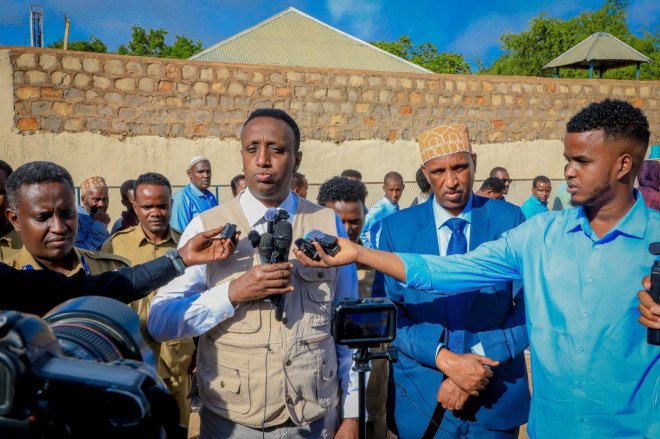
BAIDOA — Voters in Somalia’s South West State of Somalia began casting ballots on Sunday in direct elections for the regional House of Representatives and district councils, marking a significant shift from the country’s long-standing indirect electoral system.
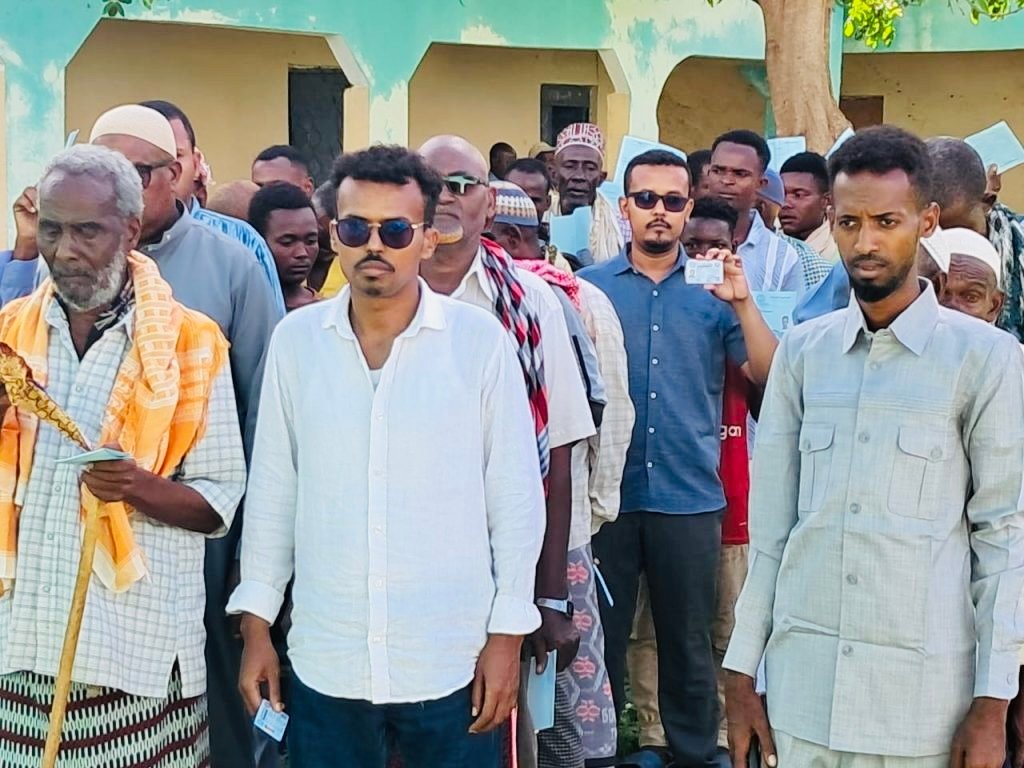
The vote took place across 13 districts spanning the Bay, Bakool and Lower Shabelle regions, in what officials described as one of the most ambitious attempts to introduce one-person, one-vote elections at the regional level in decades.
The National Independent Electoral and Boundaries Commission (NIEBC) said a total of 376,212 voters had registered, including 164,716 men and 211,496 women. Among them were 4,781 people with special needs, reflecting efforts to expand participation among marginalized groups.
Speaking in Baidoa, the commission’s chairman, Abdikariin Ahmed Hassan, formally declared the opening of the polls, describing the exercise as a “historic milestone” in Somalia’s gradual transition toward universal suffrage.
The elections aim to fill seats in the regional House of Representatives as well as local district councils, representing one of the largest direct voting exercises conducted in Somalia since the collapse of the central government in 1991.
For the regional parliament, 394 candidates from 15 political organizations are contesting seats, including 322 men and 72 women. Meanwhile, 1,297 candidates from 18 political groups are competing for positions in local councils across the 13 districts, including 1,022 men and 275 women.
Election officials said the coordinated rollout was designed to strengthen grassroots democratic governance and reduce reliance on the indirect system, in which political representatives have traditionally been selected through clan elders and negotiated power-sharing arrangements.
“This process is about giving citizens a direct voice in their governance,” one election official said, emphasizing the long-term goal of transitioning Somalia toward a full one-person, one-vote system nationwide.
However, the elections have been overshadowed by a boycott from opposition groups. The Somali Future Council, one of the country’s main opposition coalitions, refused to participate, arguing that the process lacked political consensus and transparency.
Opposition leaders accused the federal government of influencing the electoral framework and alleged that the outcome had been effectively predetermined. They also raised concerns about the neutrality of electoral bodies and the broader political environment.
Authorities at both federal and regional levels have rejected these claims, maintaining that the elections are a key step in Somalia’s democratization process. Officials insist that moving toward direct elections is essential to improving accountability, legitimacy, and citizen participation.
The vote comes amid broader national disagreements over Somalia’s electoral model, constitutional amendments, and the future structure of political parties. These disputes have intensified tensions between the administration of Hassan Sheikh Mohamud and opposition figures, who accuse the government of pushing forward major political reforms without sufficient consultation.
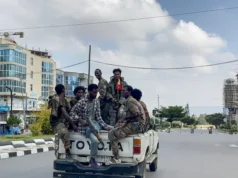
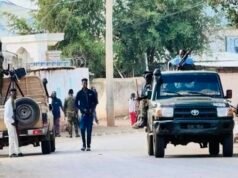
Security remains another concern, particularly in parts of Lower Shabelle and Bakool regions, where the Islamist militant group Al-Shabaab continues to carry out attacks. Authorities said additional security measures had been deployed to protect polling stations and voters during the election period.
Despite the challenges, analysts say the Southwest State vote could serve as a test case for Somalia’s broader ambition to move away from its clan-based indirect electoral system toward a more inclusive and democratic framework.
“If successful, this could be a turning point,” said one regional observer. “But without political consensus, the risk is that such reforms could deepen divisions rather than resolve them.”
Results are expected to be announced in the coming days, though disputes over their legitimacy may persist as Somalia continues to navigate its complex political transition.