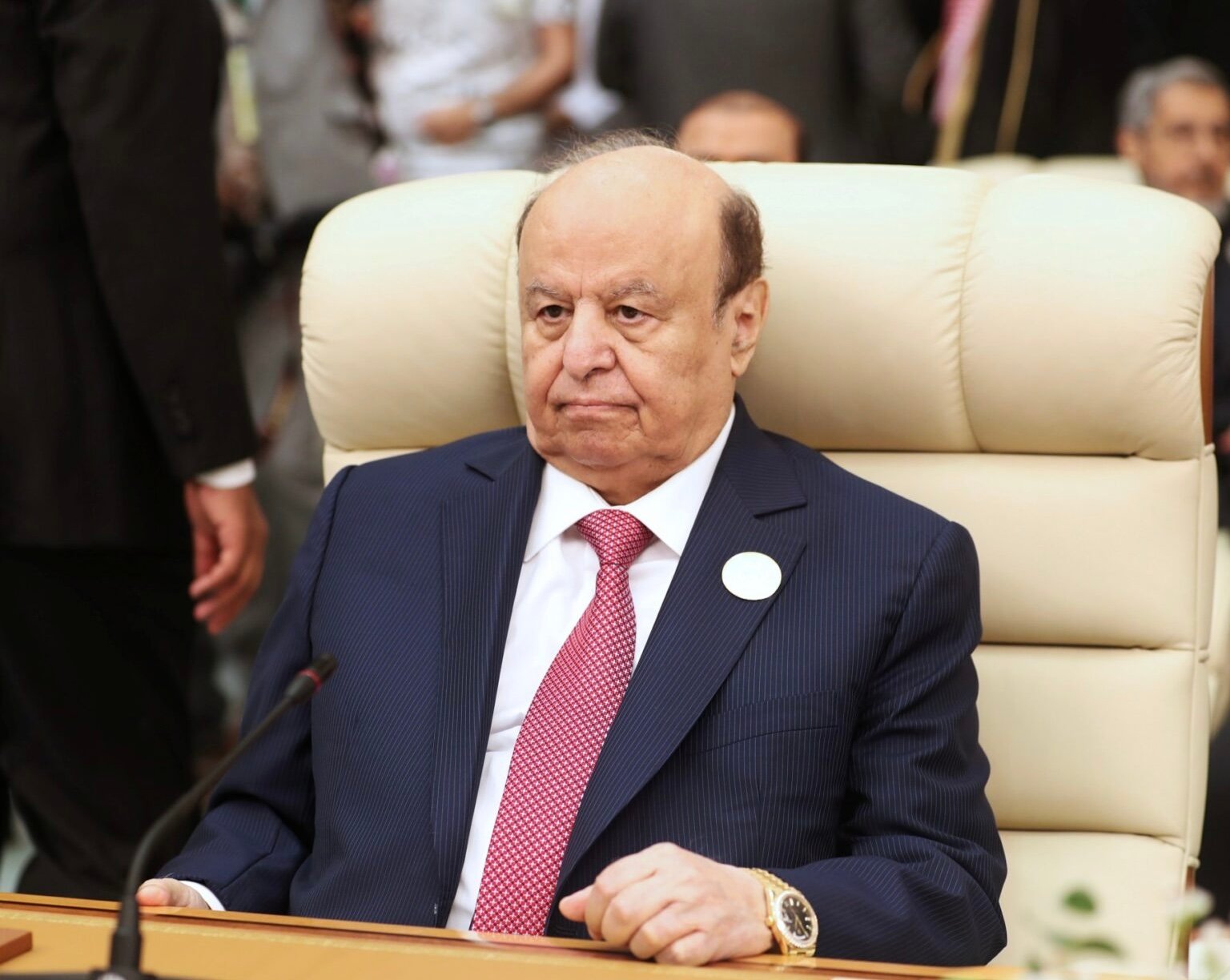
RIYADH — Former Yemeni president Abd Rabbuh Mansur Hadi has died in the Saudi capital Riyadh, Yemeni state media reported on Thursday, ending the life of a leader whose presidency was overshadowed by civil war and regional conflict.
Hadi, who had been living in exile in Saudi Arabia for several years, died after a period of illness, according to reports carried by Yemeni television and regional media. He was 81.
The former president came to power in 2012 following a popular uprising that forced longtime ruler Ali Abdullah from office during the wave of Arab Spring protests that swept the Middle East.
Seen at the time as a transitional leader tasked with stabilising the impoverished Arabian Peninsula country, Hadi struggled to contain growing political divisions, economic collapse and armed insurgencies.
During his presidency, Yemen descended into a devastating civil war after the Iran-aligned Houthi movement seized large parts of the country, including the capital Sanaa, in 2014. The advance forced Hadi’s internationally recognised government to relocate first to the southern city of Aden before he later fled to Saudi Arabia.
In 2015, a Saudi-led military coalition intervened in support of Hadi’s government, launching a campaign against the Houthis that turned Yemen into one of the world’s worst humanitarian crises, according to the United Nations.
Millions of Yemenis were displaced during the conflict, while widespread hunger, disease outbreaks and destruction of infrastructure pushed the country deeper into instability.
Hadi formally transferred presidential powers in April 2022 to a newly formed Presidential Leadership Council backed by Gulf Arab states, effectively ending his decade-long rule.
Born in Abyan province in southern Yemen in 1945, Hadi served for decades in Yemen’s military and political institutions. He held several senior positions, including vice president under Saleh, before assuming the presidency during the country’s fragile political transition.
Reactions to his death quickly spread across Yemen and the wider Middle East, with politicians, diplomats and supporters describing him as a key figure in one of the region’s most turbulent periods.
Funeral arrangements had not yet been officially announced by Yemeni authorities or his family.