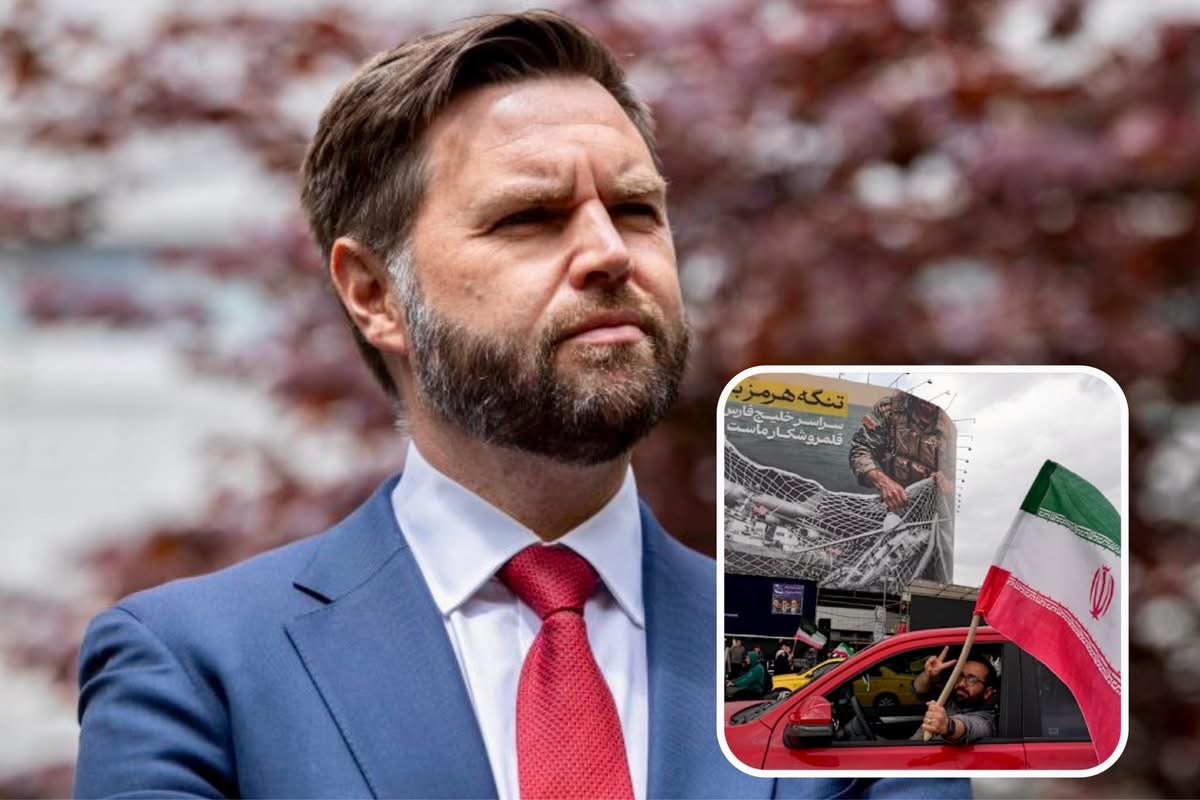
WASHINGTON — US Vice President J.D. Vance has said Iran could potentially access a massive reconstruction and economic support package estimated at around $300 billion, but stressed that any such assistance would be strictly conditional on Tehran meeting specific obligations.
Speaking amid ongoing diplomatic maneuvering involving Western powers and Iran, Vance cautioned that the figure circulating in media reports should not be viewed as a confirmed commitment, but rather as a theoretical framework dependent on future negotiations.
“Any large-scale reconstruction or economic reintegration would depend entirely on Iran’s compliance with its responsibilities,” Vance was quoted as saying, without detailing the exact conditions under discussion.
He suggested that such a package could be part of broader efforts to stabilize tensions in the Middle East, including potential agreements related to Iran’s nuclear activities, regional security posture, and cooperation with international oversight mechanisms.
However, he emphasized that no funding would be released unless Iran demonstrates “clear and verifiable steps” toward meeting international expectations.
The remarks come as diplomatic channels between Washington and Tehran remain active but fragile, with intermittent talks focusing on sanctions relief, nuclear monitoring, and regional de-escalation measures.
US officials have not confirmed any finalized proposal involving a $300 billion figure, and Iranian authorities have also not publicly commented on the reported discussions.
Analysts note that even the discussion of such a large reconstruction package reflects shifting diplomatic calculations, but warn that significant political and technical obstacles remain before any agreement could materialize.
The United States and Iran have had strained relations for decades, with multiple rounds of sanctions, nuclear negotiations, and regional proxy tensions shaping their relationship.