HARGEISA — A senior Somaliland official has said the conflict between Israel and the Palestinians is rooted in political and territorial disputes rather than religion, while defending Somaliland’s growing diplomatic engagement with Israel following the country’s recent recognition of the self-declared republic.
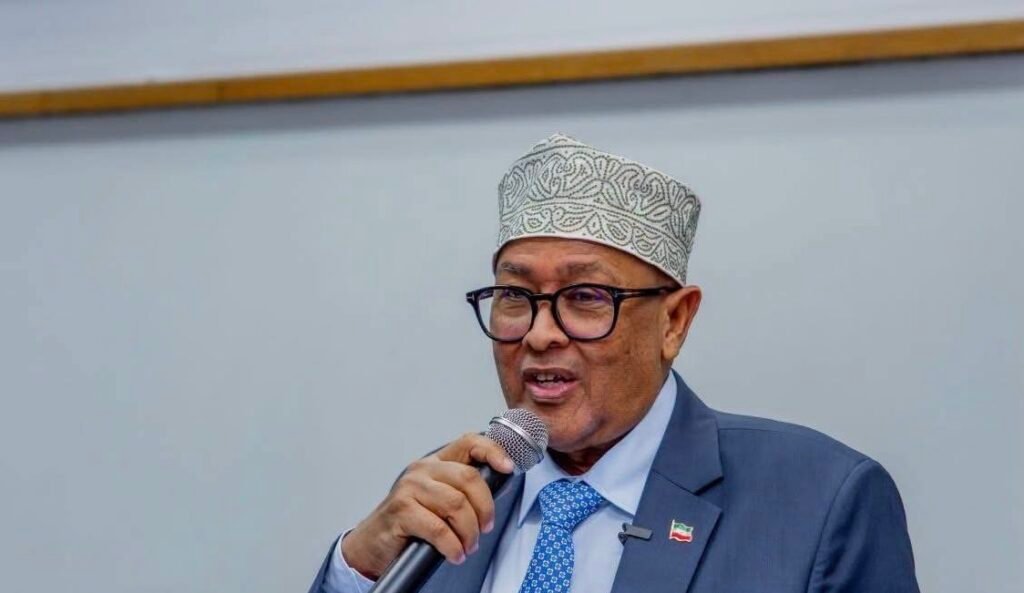
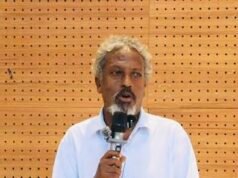
Speaking in Hargeisa after Somaliland President Abdirahman Mohamed Abdullahi’s return from Israel, Minister of the Presidency Khadar Hussein Abdi said Somaliland’s foreign policy should be guided by national interests while continuing to support the Palestinian cause.
“It is right for us to support the Palestinian cause,” Khadar told reporters. “But the dispute between Israel and the Palestinians is not about religion. They are fighting over land and other political interests.”
His remarks come amid intense debate in Somaliland and across the Horn of Africa over the territory’s expanding relations with Israel, which recently recognized Somaliland, a move welcomed by officials in Hargeisa but criticized by some regional observers.
Khadar described Israel’s recognition as a significant diplomatic breakthrough for Somaliland, which declared independence from Somalia in 1991 but has not gained widespread international recognition.
“The greatest injustice we have faced is that the world has told us we do not exist,” he said. “Israel acknowledged that injustice.”
The minister argued that international relations should be viewed through the lens of national interests and geopolitical realities rather than solely through religious considerations. Referring to Middle Eastern diplomacy, he said governments often combine religious messaging with strategic political objectives.
“What comes from Saudi Arabia is not only religion,” he said. “We also need to understand it through the lens of politics and foreign policy.”
Khadar also pointed to ongoing contacts between Israeli and Palestinian representatives, arguing that engagement and dialogue remain part of international diplomacy despite the long-running conflict.
“Even Palestinian leaders continue to engage in dialogue with Israel,” he said, adding that countries should not be condemned simply for maintaining diplomatic relations with the Israeli government.
The comments are likely to generate debate among Somalis and across the wider Muslim world, where support for the Palestinian cause remains strong. Somaliland officials, however, have increasingly argued that expanding international partnerships is essential to advancing their long-standing quest for recognition and economic development.
Neither Somalia’s federal government nor Palestinian officials immediately responded to the minister’s remarks.
Somaliland has operated with its own government, parliament and security institutions for more than three decades, but Mogadishu continues to regard the territory as an integral part of Somalia.