
MOGADISHU — The administration of U.S. President Donald Trump has announced that Washington will discontinue its financial support for the United Nations Support Office in Somalia (UNSOS) after 2026, a decision that could have far-reaching implications for security operations in Somalia and the future of the African Union Support and Stabilization Mission in Somalia (AUSSOM).
The move signals a significant shift in U.S. policy toward Somalia after nearly two decades of substantial international investment aimed at rebuilding the country’s security institutions and combating the Al-Shabaab insurgency.
According to U.S. officials, the decision was driven by concerns that progress in Somalia’s security-sector reforms has fallen short of expectations despite years of international assistance. Washington has argued that Somali authorities must take greater responsibility for the country’s security and accelerate efforts to develop capable and sustainable national security forces.
The United States also urged Somalia’s federal and regional leaders to overcome political disputes that have often complicated efforts to coordinate security operations and state-building initiatives. Officials emphasized that national unity remains essential in confronting Al-Shabaab, which continues to control or influence parts of rural central and southern Somalia and regularly carries out bombings, assassinations, and other attacks.
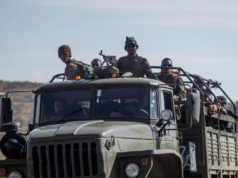
UNSOS plays a central role in supporting peace and security operations in Somalia. Established by the United Nations, the office provides logistical and operational support to AUSSOM and Somali security institutions, including air transport, medical evacuation services, engineering projects, fuel supplies, communications systems, infrastructure development, and the delivery of equipment and provisions to troops deployed in some of the country’s most remote and insecure areas.
The support office has long been regarded as one of the most critical components of international stabilization efforts in Somalia. Without its extensive logistical network, military operations against Al-Shabaab could face significant challenges.
Security experts warn that the loss of U.S. funding may create a substantial financial gap for UNSOS and AUSSOM at a time when Somali and African Union forces remain engaged in active operations against the militant group. The United States has historically been among the largest contributors to international security assistance for Somalia, supporting peacekeeping missions, training programs, intelligence-sharing initiatives, and counterterrorism efforts.
Questions are now emerging about whether other international partners will step forward to replace the funding. Potential contributors could include the European Union, Gulf countries, the United Kingdom, Turkey, or other international donors, although no alternative financing arrangement has yet been publicly announced.
The decision comes amid growing international debate over the sustainability of foreign-funded security operations in Somalia. While Somali security forces have expanded in recent years and taken part in several offensives against Al-Shabaab, challenges remain in areas such as force integration, command and control, logistics, recruitment, and long-term financing.
AUSSOM, which replaced the African Union Transition Mission in Somalia (ATMIS), was designed to support Somalia’s gradual assumption of greater responsibility for its own security. However, analysts note that the mission continues to rely heavily on external financial and logistical assistance to maintain troop deployments and operational capabilities.
Some observers fear that reductions in international support could slow military operations against Al-Shabaab and potentially create security vulnerabilities that the group could exploit. Others argue that the decision may increase pressure on Somali authorities to implement long-delayed reforms and develop more self-reliant security institutions.
The announcement has prompted concern among diplomats, aid organizations, and regional security experts, many of whom view Somalia’s stability as critical to the security of the wider Horn of Africa. A deterioration in security conditions could have broader implications for regional trade, humanitarian operations, migration flows, and counterterrorism efforts.
As discussions continue among international partners, the future of AUSSOM and the mechanisms that will replace U.S. support remain uncertain. The coming months are expected to be crucial in determining whether alternative funding sources can be secured and whether Somalia’s security forces can sustain pressure on Al-Shabaab without the level of international backing that has supported operations for much of the past two decades.