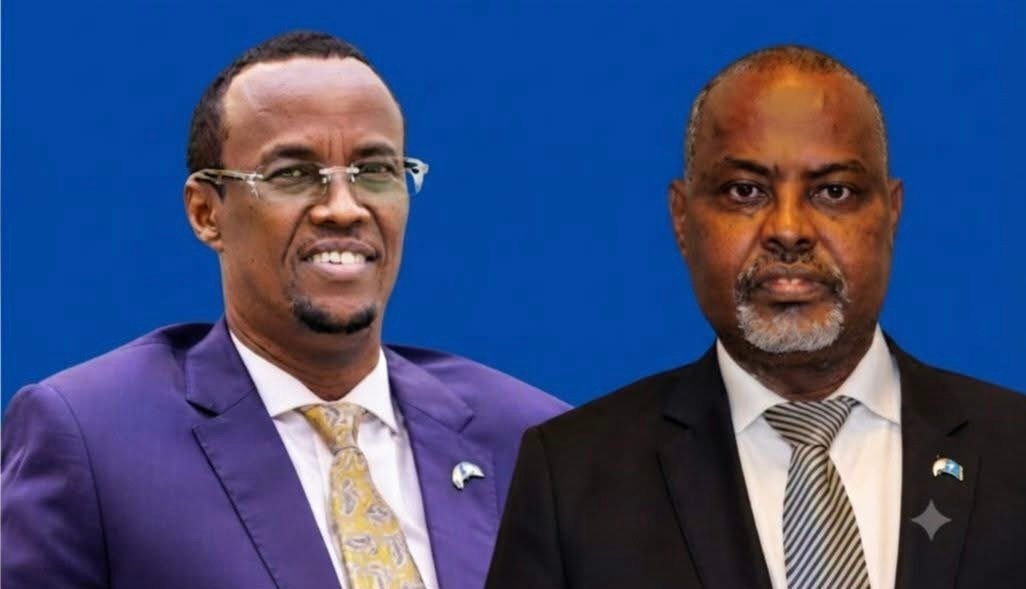
MOGADISHU — Former Mogadishu Mayor and veteran Somali politician Mohamed Ahmed Nur “Tarsan” has launched a scathing criticism of Hirshabelle leader Ali Abdullahi Hussein (Ali Gudlaawe), claiming that the leader no longer enjoys political support in the Hiiraan region and insisting that residents will not vote for him in any future election.
Speaking at a public gathering, Tarsan asserted that while some individuals might accept financial incentives from politicians, such payments would not translate into genuine electoral support for Ali Gudlaawe.
“There is no one from Hiiraan, regardless of clan affiliation, who will vote for Ali Gudlaawe. Some people may accept money, but they will not give him their vote. Do not allow yourselves to be misled—stay away from him,” Tarsan said.
The outspoken politician’s remarks come as political activity intensifies across Hirshabelle ahead of anticipated leadership negotiations and electoral preparations. The state has witnessed increasing political debate over governance, representation, and the balance of power between its two constituent regions, Hiiraan and Middle Shabelle.
For several years, sections of the political leadership and traditional elders in Hiiraan have voiced concerns over what they describe as unequal political representation and limited influence in key decision-making within the Hirshabelle administration. These grievances have periodically fueled political disputes between leaders from Hiiraan and the regional government based in Jowhar.
Although Ali Gudlaawe has defended his administration’s record and sought to strengthen cooperation between communities across the state, critics continue to argue that the government has not adequately addressed longstanding concerns over political inclusion, development priorities, and the distribution of senior government positions.
Tarsan’s latest comments are expected to add momentum to the ongoing political debate surrounding Hirshabelle’s future leadership. His statement also reflects the increasingly polarized political environment as influential figures and local leaders begin positioning themselves ahead of the region’s next political transition.
Mohamed Ahmed Nur “Tarsan” remains one of Somalia’s most recognizable and outspoken political figures. Throughout his career, he has earned a reputation for openly criticizing government officials and expressing his views without reservation. His supporters praise his candor and willingness to address controversial issues, while opponents argue that his confrontational style can heighten political tensions.
Neither leader Ali Gudlaawe nor officials from the Hirshabelle administration immediately responded publicly to Tarsan’s remarks.
The comments highlight the continuing political contest over influence in Hirshabelle, where questions surrounding leadership, regional representation, and power-sharing remain central to the state’s evolving political landscape.