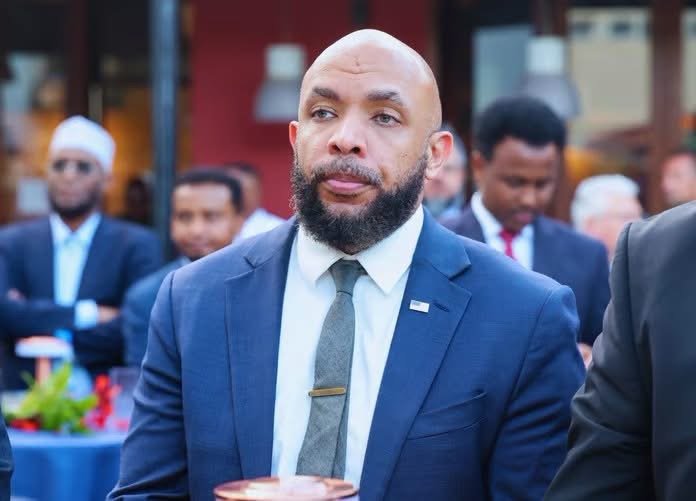
MOGADISHU — Justin Davis is leaving Mogadishu with a series of questions about Somalia’s political future, national unity and the country’s ability to take greater responsibility for its own affairs.
In remarks likely to generate further debate among Somalia’s political stakeholders, Davis questioned why Somalis can unite around specific political and national issues but continue to struggle to build a broader consensus around the country’s long-term future.
Davis specifically referred to the controversy surrounding Judge Omar Artan, describing it as an issue that brought Somalis together across political and social divisions.
“Somalis were united by the issue of Judge Omar Artan. Even Hassan Sheikh asked us questions. Why can’t they unite around their future?”
His comments raise a broader question over whether Somalia’s political divisions are preventing the country from developing a shared national vision and a common direction for the future.
Opposition Remains Divided
Davis also addressed the fragmented nature of Somalia’s political opposition.
While opposition groups remain divided over a range of political issues, he suggested that they share a common position in calling for President Hassan Sheikh Mohamud to leave office.
“The opposition is divided, but what unites them is the call for Hassan Sheikh to leave. What will happen when that leadership is gone?”
The question points to a wider challenge within Somalia’s political landscape: whether opposition forces that currently share a common position can eventually develop a unified political programme and a clear vision for governing beyond opposition to the current administration.
Somalia Must Take Greater Responsibility
Davis also emphasized the importance of Somali ownership of the country’s political, security and development agenda.
While acknowledging the role of the United States in supporting Somalia, he stressed that international assistance cannot replace domestic responsibility.
“Somalia must take responsibility for Somalia.”
“America is helping Somalia, but Somalia must also help itself.”
Davis further argued that Somalia’s future should ultimately be shaped by Somalis themselves rather than determined by external actors.
“Somalia’s future is not for sale.”
He also emphasized that Somalia should be viewed as a partner rather than a dependent state, describing the relationship with international partners as one based on cooperation.
“Somalia is not a child; it is a country with which we have a partnership.”
A Critical Question for Somalia’s Political Future
Davis’s remarks come amid continuing political debate in Somalia over governance, national unity, relations between the federal government and opposition forces, and the country’s broader political direction.
His central message is that while international partners can provide assistance and support, Somalia must ultimately take ownership of its political choices, institutions and national future.
The remarks leave Somalia’s political actors with a fundamental question:
If different political groups can unite around opposition to a particular leader, can they also unite around a shared vision for what comes next?