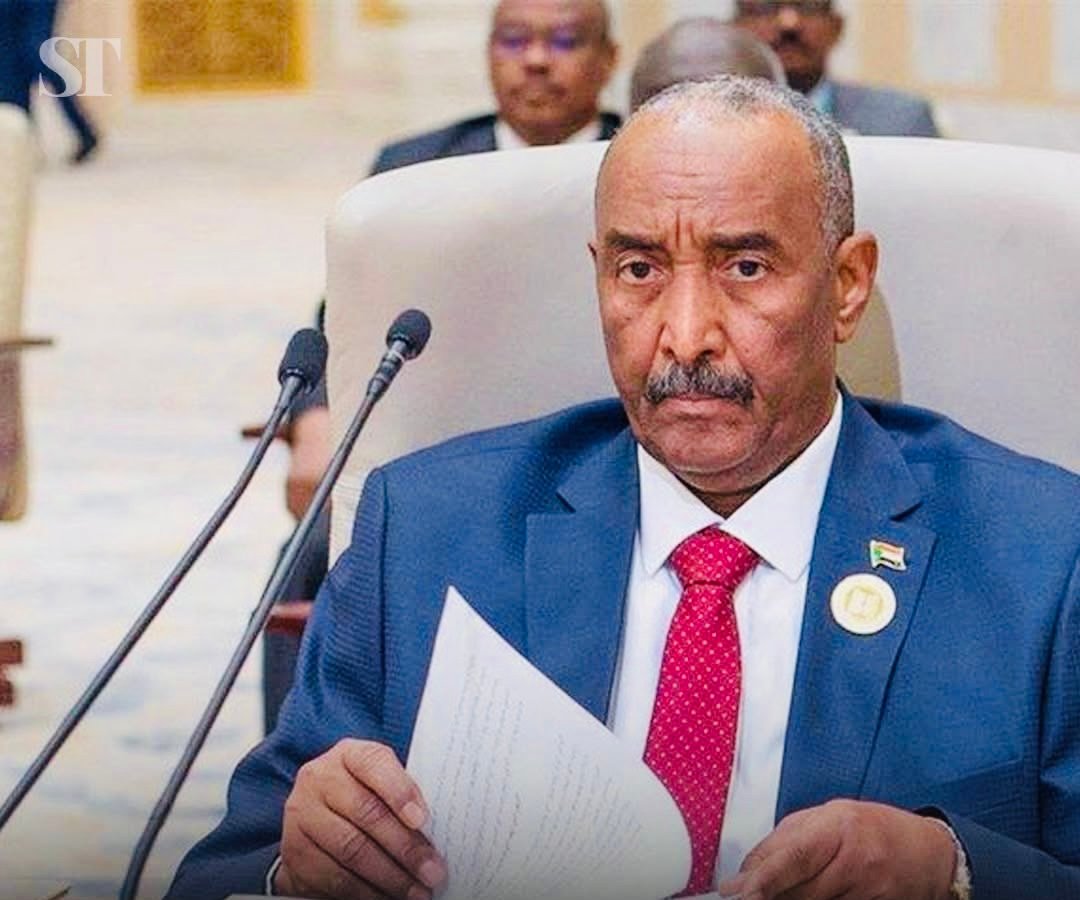
KHARTOUM — Sudanese army chief General Abdel Fattah al-Burhan has rejected calls for him to run for president, while denying any connection to a committee preparing a proposed national political dialogue aimed at addressing the country’s political future.
Al-Burhan’s comments come as Sudan remains embroiled in a devastating conflict between the Sudanese Armed Forces (SAF) and the Rapid Support Forces (RSF), with competing political and military actors seeking to shape the country’s future.
The army chief’s rejection of a potential presidential bid comes amid political discussions over what leadership structure should emerge after the conflict. His supporters have portrayed him as a possible national leader, while critics have raised concerns about the continued political influence of the military.
Opposition Raises Concerns Over Dialogue
Opposition figures have strongly criticized the proposed national political dialogue, arguing that a process led or dominated by the SAF could be used to consolidate military influence over Sudan’s political system.
Critics have described the initiative as an SAF-led dialogue designed to entrench military rule, rather than establishing a genuinely inclusive political process involving Sudan’s civilian forces and other stakeholders.
Al-Burhan, however, has denied having any connection to the committee reportedly preparing the dialogue, distancing himself from allegations that the military leadership is directly controlling the initiative.
Sudan’s Political Crisis Deepens
The dispute comes against the backdrop of a prolonged war that has devastated Sudan, displaced millions of people and created competing centers of authority.
The conflict, which began in April 2023 after a power struggle between the SAF and RSF, has developed into one of the world’s most serious humanitarian crises. The United Nations has reported that more than 14 million people have been displaced by the war.
The international community has repeatedly called for an end to the fighting and a political settlement that can restore civilian governance.
Regional Implications for the Horn of Africa
Sudan’s political crisis has consequences beyond its borders, with neighboring countries and other regional actors closely monitoring developments. The conflict has also attracted significant foreign involvement, including military, logistical and political support to the opposing sides, according to a recent UN investigation.
Al-Burhan’s latest position — rejecting calls for a presidential run and denying links to the dialogue committee — is likely to fuel further debate over the role of Sudan’s military in the country’s eventual political transition.
For Sudanese civilian groups, the key issue remains whether the country can move toward inclusive civilian-led governance after the war, or whether military institutions will retain a dominant role in determining Sudan’s political future.