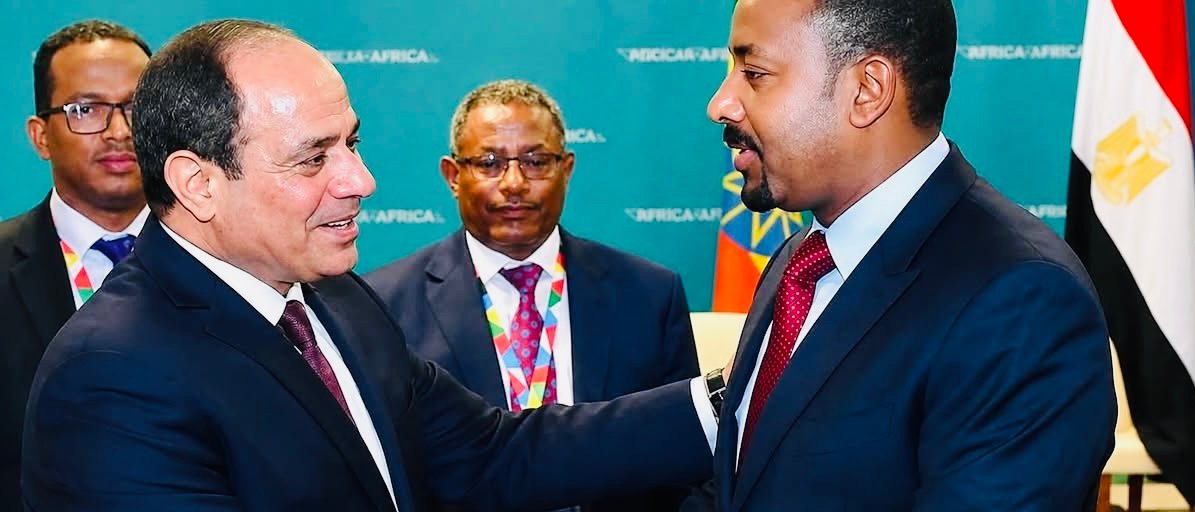
CAIRO — Egypt has renewed its warning to Ethiopia over the operation of the Grand Ethiopian Renaissance Dam (GERD), saying Cairo considers Ethiopia’s unilateral approach to the dam unacceptable and will continue to use all measures available under international law to protect its water security.
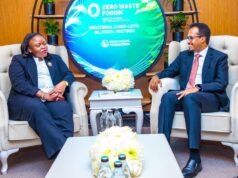
Egyptian Minister of Water Resources and Irrigation Hani Sewilam made the remarks while speaking to regional and international media and foreign correspondents in Cairo.
Sewilam said Egypt considers the GERD “illegal,” arguing that Ethiopia proceeded with the construction, filling and operation of the dam without reaching a binding agreement with downstream countries.
“The GERD is illegal and will remain illegal,” Sewilam said.
He stressed that the passage of time or completion of the project would not, in Egypt’s view, amount to acceptance of its current operation.
Egypt Says It Does Not Oppose Development
Sewilam said Egypt does not oppose development projects or dam construction in Nile Basin countries, but objects to what it describes as unilateral actions involving shared water resources.
He warned that an uncoordinated operation of the GERD could result in significant changes in the volume and timing of water reaching Egypt and Sudan.
According to the minister, sudden increases or decreases in downstream flows could affect the operation of dams and other water infrastructure in downstream countries, creating what he described as risks of “artificial flooding” and “artificial drought.”
Egypt has repeatedly called for a legally binding agreement with Ethiopia and Sudan governing the filling and operation of the GERD.
Cairo Highlights Cooperation Across the Nile Basin
Sewilam also sought to emphasise Egypt’s involvement in development projects across the Nile Basin, arguing that Cairo’s opposition to the GERD is not opposition to development itself.
He said Egypt has supported efforts to mobilise financing for a package of 36 development projects in the southern Nile Basin following technical studies, consultations and information-sharing.
The projects include hydropower facilities, electricity interconnections, transmission lines, water-supply systems and multipurpose infrastructure.
The minister cited the proposed Grand Fula Dam in South Sudan as an example of what he described as cooperative development, saying Egypt supports such projects when they are discussed through established regional mechanisms.
He said Egypt believes Nile Basin countries should follow principles including prior notification, consultation, information-sharing and environmental impact assessments when undertaking major projects on shared waterways.
Egypt Reports More Than $120 Million in African Water Projects
Sewilam also highlighted Egypt’s water-related cooperation programmes across Africa.
According to the minister, Egypt has supported the construction of approximately 365 groundwater wells, solar-powered water stations, rainwater-harvesting facilities, river ports and rainfall and flood-forecasting centres.
The programmes also include water-quality laboratories, flood-protection projects and aquatic-weed-control initiatives.
Egypt has additionally provided training to approximately 1,650 participants from Nile Basin and other African countries, while the total value of its water cooperation projects has exceeded $120 million, according to Sewilam.
Cairo has also established a financing mechanism with an initial capital of $100 million to support development projects in Nile Basin countries, including infrastructure and dam projects.
Egypt Faces Severe Water Pressure
The minister said Egypt faces significant water challenges because more than 98% of its renewable water resources originate outside the country, leaving it heavily dependent on transboundary water sources.
Sewilam said Egypt has approximately 56.8 billion cubic metres of renewable water resources annually, compared with demand estimated at about 123 billion cubic metres.
He said annual renewable water availability per person has declined to approximately 472 cubic metres, a level below the internationally recognised threshold for absolute water scarcity.
Egypt has responded by expanding water recycling and treatment programmes. Sewilam said the country currently reuses approximately 23.2 billion cubic metres of water annually and has added around 4.8 billion cubic metres of annual wastewater-treatment capacity through major national projects.
Cairo Expands Desalination and Water Recycling
Sewilam said Egypt is also investing in desalination, groundwater extraction, wastewater treatment and technological systems designed to improve the management of limited water resources.
However, he stressed that desalination cannot replace the Nile as Egypt’s primary source of water.
Cairo is developing what Sewilam described as “Water Management System 2.0,” incorporating automated monitoring, satellite imagery, artificial intelligence, mathematical modelling and improved forecasting of Nile flows.
The system is also intended to strengthen strategic management of the Aswan High Dam and improve Egypt’s ability to respond to climate-related and water-security risks.
Egypt Calls for Continued Nile Basin Dialogue
Sewilam said Egypt supports establishing a permanent institutional framework that brings together all Nile Basin countries.
He also reiterated Cairo’s support for continued dialogue over the Cooperative Framework Agreement, which remains a major point of disagreement among Nile Basin states.
According to Sewilam, Egypt participated in consultations launched in 2024 aimed at addressing differences among the basin countries and restoring consensus around a regional water framework.
He said Cairo wants all Nile Basin countries to operate within a unified framework based on international law.
The latest comments underline Egypt’s continued opposition to what it considers unilateral management of shared Nile waters, while Ethiopia maintains that the GERD is primarily a development and power-generation project and has rejected Egyptian concerns that the dam threatens its water security.
The GERD dispute remains one of Africa’s most significant transboundary water disagreements, involving Ethiopia, Egypt and Sudan and continuing to shape diplomatic relations across the Nile Basin.