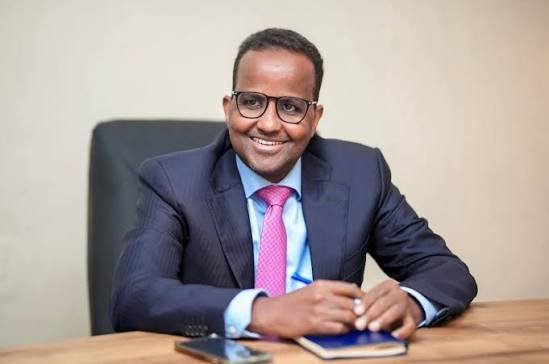
MOGADISHU — Somali Member of Parliament Abdirahman Odawaa has issued a pointed statement criticizing members of the Hawiye community over what he described as their failure to adequately respond to alleged injustice involving former Somali President Sheikh Sharif Sheikh Ahmed and the actions of current President Hassan Sheikh Mohamud.
In his remarks, Odawaa expressed concern that members of the community were watching the situation unfold without taking a sufficiently strong position. He argued that it was embarrassing for the community to remain silent in the face of what he characterized as injustice against Sheikh Sharif.
“Hawiye, it is a disgrace that you are watching what I regard as Hassan Sheikh’s injustice against Sheikh Sharif without speaking out. Otherwise, you will return to the old divisions that once pitted you against one another, when people used to say, ‘Ali is on one side and Aidid is on the other,’” Odawaa said.
His statement invoked a painful chapter in Somalia’s political history, when rival political and military factions associated with different leaders contributed to deep divisions and violent conflict, particularly during the collapse of the Somali state in the early 1990s.
Warning Against a Return to Clan-Based Divisions
Odawaa’s remarks appear to reflect concerns about the potential consequences of political disagreements being interpreted through clan identity rather than democratic principles, accountability and the rule of law.
By referring to the historical rivalry associated with Ali Mahdi Mohamed and General Mohamed Farah Aidid, the lawmaker recalled a period when competing political allegiances and armed confrontations devastated Mogadishu and caused widespread suffering among civilians.
The reference carries particular historical significance because the rivalry between factions associated with Ali Mahdi and Aidid became one of the defining features of the conflict that followed the collapse of the central government in 1991.
Odawaa’s warning suggests that political disputes involving prominent Somali leaders should not be allowed to revive the divisions that previously contributed to violence and instability. His remarks also raise questions about the responsibility of political leaders and community figures to prevent contemporary disagreements from escalating into broader social or clan-based confrontations.
Political Tensions Between Hassan Sheikh and Sheikh Sharif
President Hassan Sheikh Mohamud and former President Sheikh Sharif Sheikh Ahmed are prominent figures in Somali politics. Both have held the country’s highest office and have played significant roles in debates over governance, constitutional arrangements, national reconciliation and the direction of the federal government.
Differences between political leaders are not unusual in Somalia’s competitive political environment. However, disagreements can become particularly sensitive when they involve former presidents, influential political constituencies and questions about the exercise of presidential authority.
Odawaa’s statement frames the issue as one that extends beyond the individuals involved. His criticism suggests that the response of the wider community could influence whether political disagreements remain peaceful and institutional or become entangled with historical grievances and communal loyalties.
The specific actions by Hassan Sheikh Mohamud that Odawaa was referring to, however, were not detailed in the supplied statement. His characterization of those actions as unjust should therefore be understood as his political position rather than an independently established finding.
A Call for Political Responsibility
The lawmaker’s remarks also underscore the importance of political accountability and restraint in a country that continues to face significant security, governance and reconciliation challenges.
Somalia’s experience demonstrates the dangers of allowing political rivalries to become organized around clan identity. Analysts and reconciliation advocates have frequently emphasized the need for political institutions, dialogue and peaceful dispute resolution to take precedence over collective blame or retaliatory mobilization.
Odawaa’s reference to past divisions serves as a reminder of the consequences of political fragmentation. His statement can be interpreted as a warning that communities should avoid repeating historical patterns in which disagreements among leaders became broader confrontations among their supporters.
At the same time, constructive political engagement requires that allegations of injustice be examined on the basis of specific actions and available evidence. Public criticism, parliamentary debate and peaceful political opposition can provide avenues for addressing disagreements without resorting to intimidation or collective hostility.
Conclusion
Abdirahman Odawaa’s statement has brought attention to the sensitive relationship between political leadership, community responsibility and Somalia’s history of internal conflict.
By invoking the rivalry between Ali Mahdi Mohamed and General Mohamed Farah Aidid, the lawmaker warned against a return to divisions that once had devastating consequences for the country. His message appears to be that political disagreements involving Hassan Sheikh Mohamud and Sheikh Sharif Sheikh Ahmed should not be allowed to revive the destructive rivalries of the past.
The broader question is whether Somalia’s political leaders and their supporters can address their differences through dialogue, accountability and democratic institutions rather than allowing historical grievances to deepen existing divisions.
Editorial note: The report reflects the statement attributed to MP Abdirahman Odawaa. The specific incident prompting his remarks should be confirmed before publication, and the allegation of injustice should remain attributed to him unless independently substantiated.