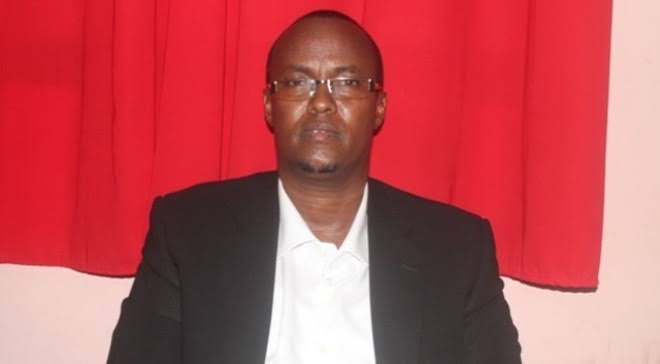
JOWHAR — Hirshabelle State President Ali Gudlawe Hussein has dismissed Hiiraan Regional Governor Mohamed Hussein Mohamed Arab and appointed Muse Salad Weheliye as his replacement, according to a presidential decree announced on Monday.
The decision comes amid growing political tensions over the distribution of revenue collected from Beledweyne’s livestock market, concerns about Hiiraan’s representation within the Hirshabelle administration, and debate surrounding the state’s upcoming presidential election.
The governor’s removal has also raised questions about the scope of Gudlawe’s executive authority during the current political transition, particularly if his presidential mandate has expired or is subject to dispute.
Questions Over Gudlawe’s Presidential Mandate
The dismissal has prompted questions about whether Gudlawe retains the legal authority to appoint and remove regional governors during the current political transition.
The central issue is whether Hirshabelle’s constitution and applicable legal framework permit an incumbent president to continue exercising executive powers until a successor is elected and assumes office.
However, the validity of the appointment cannot be determined solely by questions about the expiration of a presidential mandate. A proper assessment would require examining the relevant constitutional provisions, applicable legislation, and any transitional arrangements governing the continuation of executive authority.
The Hirshabelle administration has yet to provide sufficient public clarification, as presented in the available account, to resolve these questions conclusively.
Dispute Over Beledweyne Livestock Market Revenue
The governor’s dismissal comes amid disagreements over the distribution of revenue collected from Beledweyne’s livestock market, an important source of commercial activity in Hiiraan.
Before his removal, Mohamed Hussein Mohamed Arab reportedly raised concerns about how revenue generated in Beledweyne was being allocated and whether the distribution adequately reflected the interests and needs of the local population.
The dispute has brought renewed attention to the management of locally generated public revenue, including questions about which authorities collect the funds, who controls their allocation, and whether the distribution process follows transparent and consistent rules.
For residents and business communities in Beledweyne, the issue extends beyond the amount of money collected. It also concerns whether revenue generated locally contributes fairly to public services, infrastructure, and development in the area.
Public disclosure of revenue figures, expenditure records, and the criteria used to distribute the funds would help establish the facts and strengthen accountability.
Was the Dismissal Connected to the Revenue Dispute?
The timing of the governor’s removal has raised speculation about whether his reported criticism of revenue distribution contributed to the decision.
According to the account provided, the Hirshabelle presidency said the dismissal followed a recommendation from the minister responsible for interior affairs and local government. However, the information presented does not independently establish that the revenue dispute was the direct cause of the governor’s removal.
The presidency’s explanation, the former governor’s account, and any relevant administrative documents would be important in determining whether the dismissal was connected to disagreements over public revenue.
Until further evidence becomes available, any claim that the governor was removed specifically because he challenged the distribution of Beledweyne’s revenue should be treated as an allegation rather than an established fact.
Political Tensions and Hiiraan’s Representation
The leadership change comes amid broader political debate over Gudlawe’s bid for another term as president of Hirshabelle.
Some politicians and community leaders from Hiiraan have called for greater political inclusion, fairer representation, and stronger consultation between the region and the state administration based in Jowhar.
Critics have also raised concerns about development priorities, public services, and the distribution of political and financial resources within Hirshabelle.
These concerns reflect a wider debate over how the state’s institutions should serve its different regions and communities. Assessing the extent of any unequal treatment, however, requires reliable evidence concerning budget allocations, public spending, political appointments, and development outcomes.
The appointment of Muse Salad Weheliye therefore comes at a politically sensitive moment, when disagreements over governance, regional representation, and financial accountability remain unresolved.
What Happens Next?
The new governor will face the challenge of engaging local stakeholders, addressing public concerns, and helping clarify the arrangements governing revenue collected from Beledweyne’s livestock market.
The authorities will also face pressure to explain the legal basis for the appointment and demonstrate that decisions affecting regional leadership and public finances are made in accordance with applicable laws and transparent procedures.
Several key questions remain:
- Does Gudlawe retain the legal authority to appoint and dismiss regional governors during the current political transition?
- What legal and administrative rules govern the collection and distribution of revenue from Beledweyne’s livestock market?
- Did disagreements over revenue allocation contribute to the former governor’s removal?
- What steps will the Hirshabelle administration take to address Hiiraan’s concerns about political representation and resource distribution?
Conclusion: Transparency and Accountability Are Essential
At the heart of this dispute are questions of constitutional authority, responsible financial management, and equitable political representation within Hirshabelle.
The people of Hiiraan have a legitimate interest in ensuring that revenue generated in their region is managed transparently and allocated fairly, with due consideration for local development priorities and public needs.
They should not have to accept allegations of clan-based discrimination or unequal treatment without answers from the authorities. Equally, such allegations should be examined through credible evidence, transparent financial records, and an accountable political process.
The Hirshabelle administration can help restore public confidence by clarifying the legal basis for the governor’s dismissal, publishing relevant information about the management of Beledweyne’s livestock market revenue, and engaging meaningfully with Hiiraan’s political and community representatives.
Ultimately, resolving the dispute will require more than a change in regional leadership. It will require clear rules, transparent institutions, and a credible commitment to ensuring that public resources serve the people from whom they are collected.