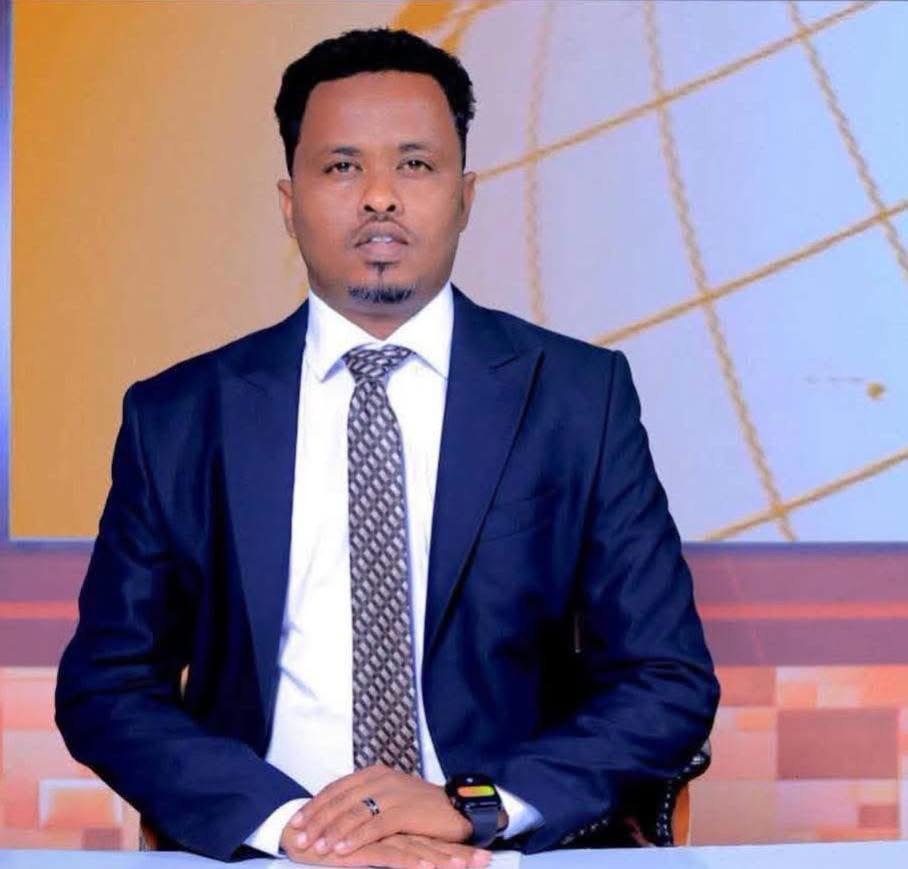
HARGEISA — Somali human rights defender (HRD) Ahmedsadik Yusuf Mohamed, currently living in exile in Uganda, has strongly condemned the reported arrest of Horn Cable TV journalist Abdirahman Cige in Hargeisa, raising serious concerns over press freedom, freedom of expression and the protection of media professionals in Somaliland, northern Somalia.
Ahmedsadik expressed concern that Cige’s reported detention may be linked to an interview he conducted with Abdulkadir Sharaay, who has been described as a prospective candidate for the Somali presidency and who was also reportedly arrested in Hargeisa.
The circumstances surrounding the two reported arrests remain unclear, including whether the cases are directly connected and what allegations, if any, have been formally brought against either individual.
“The arrest of journalist Abdirahman Cige raises serious questions about whether the authorities are attempting to punish him for carrying out his professional responsibilities. Interviewing an individual involved in a politically sensitive matter does not, by itself, constitute a crime,” Ahmedsadik said in a statement.
The human rights defender questioned the justification for the journalist’s reported detention, emphasizing that interviewing political figures and individuals involved in controversial events is part of legitimate journalistic work.
“Why should a journalist be arrested simply for interviewing a political figure? The responsibility for investigating alleged criminal activities belongs to law enforcement authorities, while journalists have a professional duty to inform the public about matters of legitimate public interest,” he said.
Ahmedsadik warned that detaining journalists over their reporting activities could undermine public confidence in institutions, discourage investigative journalism and create an atmosphere of fear among media professionals.
He emphasized that journalists must be free to investigate allegations, interview political figures and report on matters affecting public safety and governance without facing unlawful interference.
“Journalists should not be treated as criminals simply because they interview controversial individuals or report on sensitive political and security matters. Press freedom is a fundamental human right, and media professionals must be protected from arbitrary detention, intimidation and harassment,” he added.
Human Rights Concerns and International Standards
Ahmedsadik, who has a background in journalism and human rights advocacy, emphasized that independent media plays an essential role in promoting democratic governance, transparency, accountability and the protection of fundamental freedoms.
He referred to Article 19 of the Universal Declaration of Human Rights and Article 19 of the International Covenant on Civil and Political Rights, which recognize freedom of opinion and expression, including the right to seek, receive and impart information.
The exiled activist stressed that any detention of a journalist must have a lawful basis, respect due process and comply with applicable human rights standards.
He called on the Somaliland authorities to publicly clarify the circumstances surrounding the reported arrests of Abdirahman Cige and Abdulkadir Sharaay, including the legal grounds for their detention.
“If Abdirahman Cige has been detained solely for conducting an interview or performing legitimate journalistic work, he should be released immediately and unconditionally. Journalists must be able to carry out their duties without fear of retaliation,” Ahmedsadik said.
Appeal to International Press Freedom Organizations
Ahmedsadik appealed to international and regional organizations working to protect journalists and human rights to closely monitor the reported detention.
He called on the Committee to Protect Journalists (CPJ), Reporters Without Borders (RSF), Amnesty International and other human rights organizations to pay attention to the case and advocate for the protection of journalists working in Somaliland.
According to Ahmedsadik, independent journalism plays a vital role in documenting human rights concerns, promoting public accountability and ensuring access to reliable information.
He warned that restrictions on legitimate reporting could have broader consequences for civil society, democratic participation and public trust.
“Silencing journalists does not strengthen national security or public confidence. Protecting freedom of expression, ensuring accountability and respecting independent journalism are essential foundations of a peaceful and democratic society,” he said.
Call for Transparency, Accountability and Protection of Journalists
Ahmedsadik urged the Somaliland authorities to ensure that journalists are treated in accordance with the law and that any allegations against media professionals are handled through transparent and fair legal procedures.
He emphasized that interviewing a political figure or an individual suspected of criminal conduct does not automatically establish criminal responsibility on the part of the journalist.
The human rights defender also called for stronger safeguards against arbitrary detention, intimidation and harassment, stressing that the media must remain free to investigate and report on matters of public interest.
“The protection of journalists is essential to the protection of society itself. Freedom of the press must be respected, and no journalist should face punishment merely for informing the public,” he concluded.