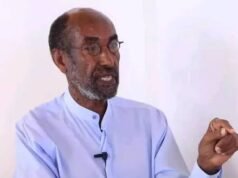
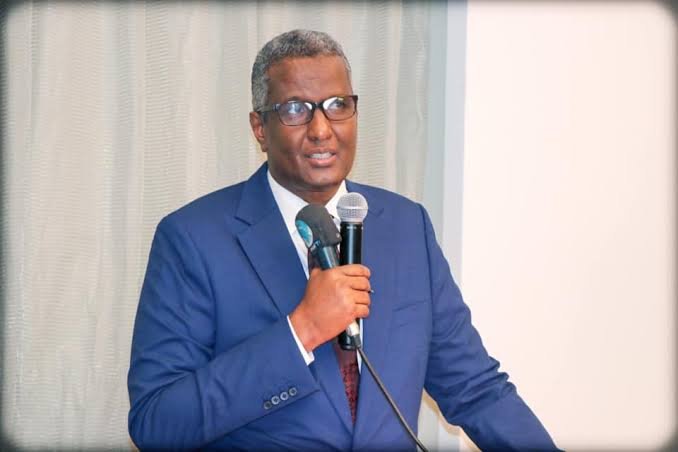
MOGADISHU — For the past four years, Somali opposition leader Abdirahman Abdishakur Warsame, chairman of the Wadajir Party, has repeatedly warned the federal government about the country’s deteriorating political direction, security challenges and weaknesses in state-building.
His warnings, which focused on governance, military strategy, national reconciliation and Somalia’s growing dependence on foreign support, appear increasingly relevant amid the country’s continuing political and security challenges.
A Government Cannot Be Built on Propaganda
Four years ago, Abdishakur argued that a government cannot be built through lies, political tours and social media videos accompanied by background music.
He maintained that building a functioning state requires serious leadership, institutional capacity, accountability and a clear national strategy.
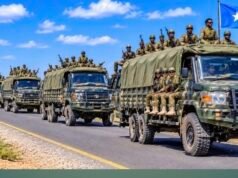
On military matters, he stressed that an effective army requires a unified command structure, professional training, discipline and morale. He further argued that successful military operations depend on strategy, logistics, intelligence gathering and reconnaissance.
He urged the government to reconsider its military strategy against Al-Shabaab, warning that propaganda and publicity campaigns could not substitute for effective military planning and operational success.
Political Reconciliation Is Essential for National Security
Abdishakur also warned that improvements in security in Mogadishu could not be sustained without a comprehensive political agreement.
He argued that lasting security requires political consensus, national reconciliation and solutions to the disputes dividing Somalia’s political leadership.
According to his position, security cannot be separated from political stability, public confidence and cooperation among different communities and political stakeholders.
State-Building Must Not Become a Business
Another central theme of his warnings was the danger of mixing national responsibilities with personal and financial interests.
He repeatedly argued that state-building and the pursuit of private wealth cannot go together.
He also reminded the government that Somalia is not Mogadishu alone, insisting that communities and regions excluded from national decision-making must be given meaningful political representation.
He called for a political system that protects the public interest rather than treating government institutions as opportunities for personal enrichment.
Political Marginalisation Creates Opportunities for Extremist Groups
Abdishakur further warned against the use of state power to punish political opponents and marginalise communities.
He argued that people who are politically targeted, oppressed or displaced from their homes could develop grievances that extremist organisations might exploit.
His position was that the government should address public grievances, protect citizens’ rights and avoid policies that deepen divisions within Somali society.
Foreign Support Cannot Be Guaranteed Forever
Perhaps one of his most significant warnings concerned Somalia’s dependence on international security assistance.
He argued that the international political environment was changing and that no foreign power could guarantee permanent military support or continued financial assistance.
He cautioned that foreign governments would ultimately prioritise their own national interests.
Consequently, he urged Somalia to prepare for a changing security environment by strengthening its own institutions, developing sustainable security arrangements and building political consensus at home.
Warnings That Were Dismissed
Over the past four years, Abdishakur repeatedly presented these arguments to the country’s political leadership. However, his warnings were often viewed through the lens of opposition politics rather than as serious assessments of the challenges facing the nation.
Today, amid continuing political disagreements, security concerns, institutional weaknesses and uncertainty surrounding international support, his earlier statements are attracting renewed attention.
His critics and supporters may disagree on his political positions, but the questions he raised about governance, military effectiveness, reconciliation and national sovereignty remain central to Somalia’s future.
Has Somalia Run Out of Time?
The central question now is whether the government can still address the problems Abdishakur warned about four years ago, or whether political divisions and missed opportunities have already brought the country to a more difficult turning point.
Somalia needs more than political speeches, publicity campaigns and competing narratives. It needs effective leadership, accountable institutions, professional security forces, national reconciliation and a political settlement that gives all communities a stake in the country’s future.
Were these warnings simply opposition rhetoric, or was Abdishakur identifying a political and security crisis before it became impossible to ignore?
And perhaps the most important question: Has Somalia reached the point where the damage can no longer easily be reversed?