By HAN News Desk
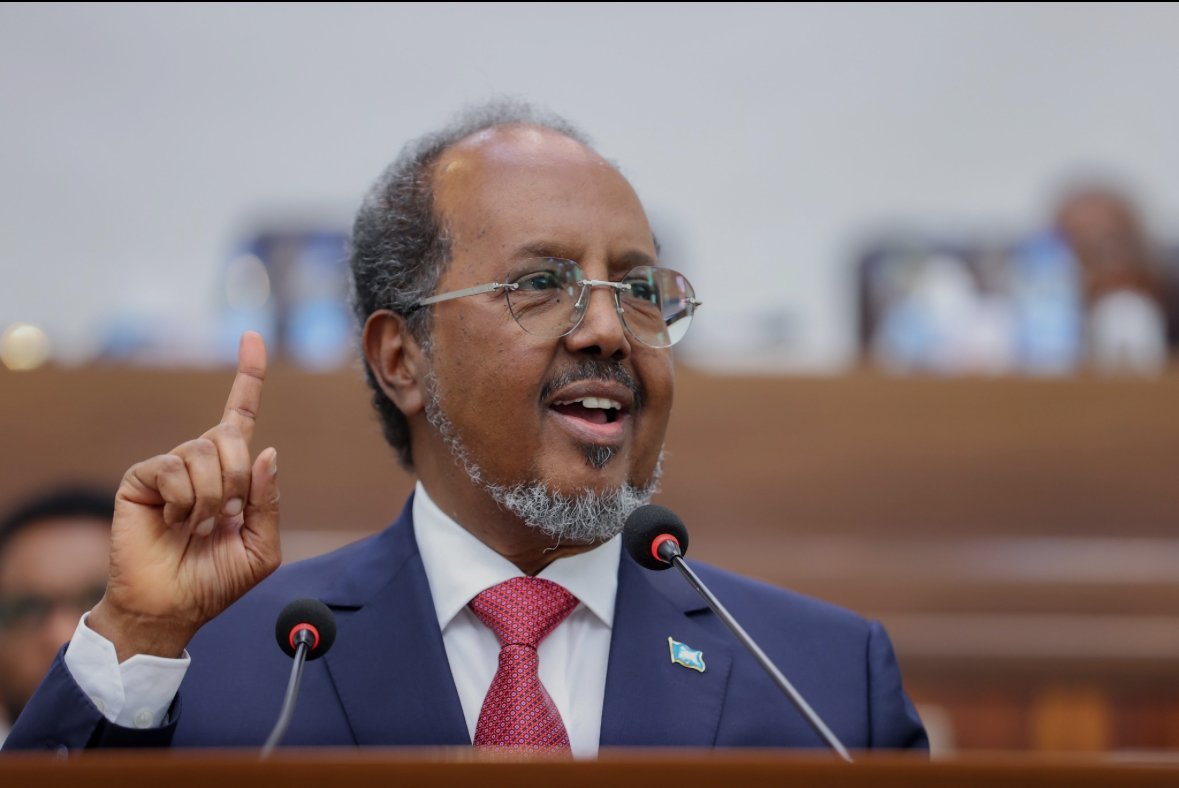
MOGADISHU – Somali President Hassan Sheikh Mohamud has reiterated that he has no fears or hesitation about leaving office once his mandate ends, stressing that political leadership is a responsibility entrusted by the people, not a personal privilege to be protected. In an exclusive interview with the BBC Somali Service, the president made clear that occupying public office should never create anxiety or attachment for any leader, nor should it become a position that individuals cling to at the expense of national progress.
His remarks come at a sensitive time, as Somalia continues to navigate an evolving and often fragile political landscape. The country faces a combination of institutional reforms, federal-state tensions, clan-based political dynamics, and ongoing security challenges, particularly the threat of Al-Shabaab. In such an environment, public reassurance from the head of state regarding respect for constitutional limits carries particular weight.
President Hassan Sheikh emphasized that his administration’s attention remains firmly fixed on strengthening national institutions and advancing the federalization process. He explained that Somalia cannot rely on individual personalities to maintain stability; rather, the nation must build strong systems that guarantee continuity and effectiveness regardless of who holds power. He highlighted ongoing efforts to harmonize relations between the federal government and the member states, to move forward with constitutional finalization, to reform the security sector, and to promote financial transparency and good governance. According to him, such institutional foundations are the only sustainable path toward securing Somalia’s future.
The broader political environment surrounding his comments is marked by competition among clans and political groups, each seeking influence in the country’s federal system. Debates continue about election timelines and the transition toward a more democratic, one-person–one-vote system. In Somalia, where political transitions have historically been tense and unpredictable, the president’s public willingness to leave office at the end of his mandate is seen by some observers as an attempt to build trust and signal commitment to constitutional order.
As Somalia strives to consolidate democratic norms, the media plays a vital role in shaping public understanding and holding leaders accountable. Independent journalism has become central to promoting transparency and political dialogue, despite the significant risks that Somali journalists face from both extremist groups and political actors. The president’s decision to share these remarks through a respected Somali media platform underscores the importance of open communication and the growing influence of media in guiding the country’s democratic journey.