By HAN News Desk
HARGEISA — Tensions in Somaliland’s western regions escalated on Sunday after rival clan elders in Awdal declared they were prepared to mobilise for conflict, while the military announced it was investigating reports that foreign gunmen may have been involved in the killing of civilians during unrest in Borama town.
The warnings followed the Somaliland administration’s cancellation of the controversial Issa Covenant ceremony, which had been scheduled for 14 December in the coastal town of Zeila. Elders supporting the covenant convened in Dire Dawa, Ethiopia, where they declared they were ready for war. Hours later, elders opposing the covenant gathered in Borama and issued a similar call. Local leaders say supporters on both sides have begun mobilising, raising fears that a political dispute could escalate into a broader clan confrontation.
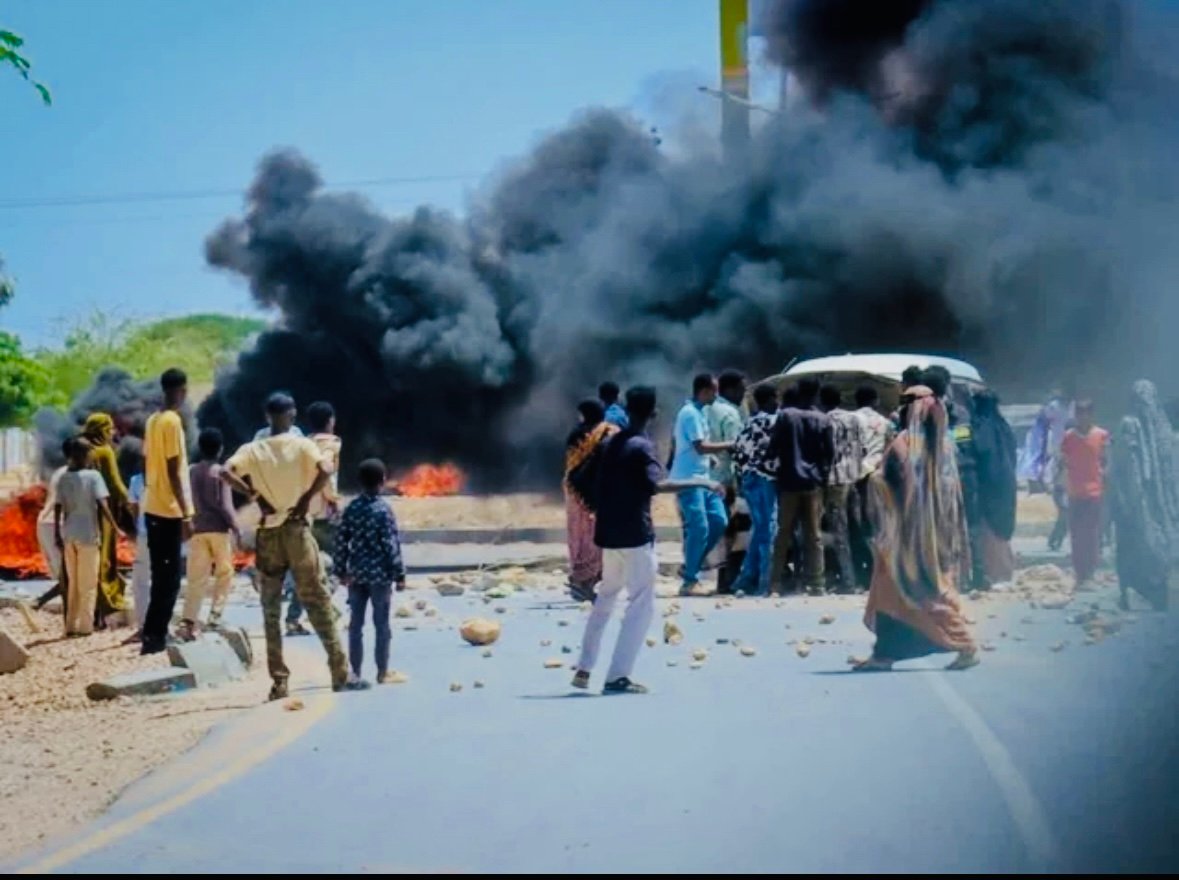
Borama is still reeling from two days of violent unrest that left more than ten young people dead and dozens injured. Hospitals continue to treat gunshot victims, and several bodies remain unclaimed in morgues as authorities work to identify those killed and determine the circumstances of their deaths.
Somaliland’s president, Abdirahman Abdullahi (Irro), condemned the killings on Friday. He ordered the withdrawal of military units from Borama and announced a formal investigation into the violence. The president also urged the public to avoid spreading unverified information and addressed long-standing grievances in Awdal, assuring residents that no community would lose its land or historical identity under his leadership.
Efforts to defuse tensions continued on Saturday when the president cancelled the Issa Covenant ceremony altogether, citing a request from mediating elders who had travelled to Borama for urgent consultations. He expressed support for a peace conference scheduled for 10 December, saying he was prepared to back any initiative that served Somaliland’s interests. Traditional leaders urged residents to return home, although armed men continued to occupy hilltops surrounding the town.
Political tensions deepened later that evening when Information Minister Ahmed Yasin Sheikh Ali Ayanle resigned from his post. He said he had been tasked with defending the government’s approval of the covenant ceremony—a decision he argued was directly linked to the deaths in his home region. He described the situation as dangerous and urged Awdal residents to avoid internal divisions that could fuel further instability.
The Somaliland military said on Sunday it was investigating claims that unidentified snipers may have targeted civilians during the clashes. Colonel Mohamed Abdi Abdille denied that soldiers intentionally fired at residents and urged the public not to assume military involvement without evidence. He said early information suggested individuals positioned at a distance used sniper rifles against civilians, though no evidence has been released and no arrests have been made. MP Mohamed Abiib Yusuf previously told local media that security forces did fire live ammunition as protests escalated.
Military medical teams and ambulances have been dispatched to Borama to support emergency operations. Rumours on Sunday morning that officials intended to remove cash from the Central Bank branch in Borama prompted crowds to gather outside the building, but bank managers denied the claims and urged residents to disperse. Elders also condemned the gathering and called for restraint.
Despite appeals from community and religious leaders, armed men remain positioned in the hills outside Borama. Residents say the mobilisation reflects deepening mistrust surrounding the Issa Covenant, which has become symbolic of broader clan divisions.
Regional and national leaders continue to urge calm, warning that Awdal and Salal—long regarded as stable regions of Somaliland—could face prolonged unrest if mediation efforts fail. Authorities say the situation remains fragile as investigations into the Borama killings continue and elders hold parallel meetings whose outcomes may determine whether the crisis worsens or begins to ease.
Somaliland, which unilaterally declared independence from Somalia in 1991, maintains its own government, security forces, and currency but lacks international recognition. While it has often been viewed as a relatively stable and democratic enclave in the Horn of Africa, recent internal clashes—including the SSC-Khatumo conflict in the northeast—and shifting regional dynamics involving Ethiopia have placed renewed pressure on its political landscape.