By HAN News Desk
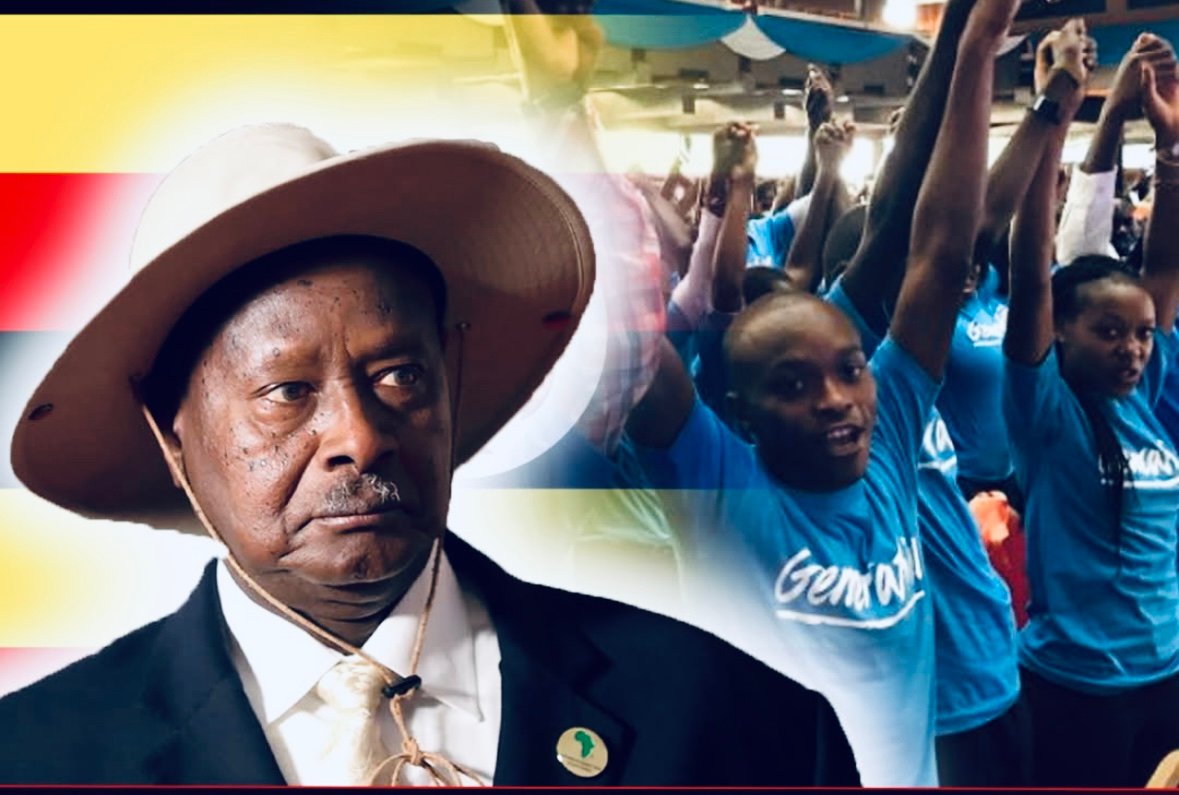
KAMPALA — President Yoweri Museveni has criticized Uganda’s younger generation, particularly those born in the 1990s and 2000s—often referred to as Gen Z—for being overly focused on entertainment, social media, and lifestyle trends, rather than engaging with important national and regional issues.
Speaking on a national radio talk show, Museveni described the youth as a “lost generation” preoccupied with trivial matters instead of civic engagement and nation-building. His remarks come at a time when Uganda is preparing for its next general elections, with young voters expected to play a pivotal role in shaping the country’s political landscape.
Reflecting on his own youth, Museveni said that at the age of 26, he was already deeply involved in politics and armed struggle, notably through his participation in FRONASA (Front for National Salvation), a rebel movement that contributed to the liberation of Uganda. He emphasized that he was actively involved in discussions about national security, governance, and regional issues, including Uganda-Rwanda relations.
“When I was 26, I did not waste my time talking about football. I focused on the affairs of Uganda and Rwanda,” Museveni said. “But today, what I see from young people is just entertainment and ‘vibes’. What is this obsession with vibes?”
The president’s comments underscore what he perceives as a generational divide, contrasting his politically engaged youth with the perceived apathy and focus on social trends among contemporary Ugandan youth. Analysts note that Museveni’s critique reflects broader concerns about civic responsibility, political awareness, and engagement among young people, particularly in a country where social media plays an increasingly influential role in shaping opinions and interests.
Observers say Museveni’s remarks may also be aimed at encouraging greater participation by young voters in the upcoming elections, as the youth demographic constitutes a significant portion of Uganda’s electorate. Critics, however, argue that his comments fail to acknowledge the pressures, economic challenges, and limited opportunities that young Ugandans face today, which may affect their engagement with politics.
The remarks have sparked wide discussion on social and traditional media platforms, with some praising Museveni for urging youth to take greater responsibility for the country’s future, while others have highlighted the need for policies that empower young people and give them a meaningful voice in governance.
Political analysts suggest that the president’s comments may also serve as a reminder to Uganda’s youth that their engagement is critical in shaping both local and national governance, especially as the country prepares for elections expected to test the government’s ability to manage youth expectations and participation.