MOGADISHU — Recent political and security developments in southwest Somalia, particularly in the city of Baidoa, have raised fresh concerns among analysts and observers about whether similar tensions could emerge in other federal member states, including Puntland.
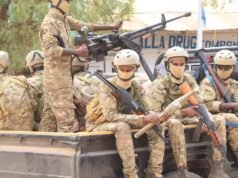
In recent weeks, Baidoa — the interim administrative capital of Southwest State — has witnessed a surge in tensions involving federal government troops and forces aligned with the regional administration. The situation, marked by troop movements and rising political disputes, sparked fears of an armed confrontation before last-minute de-escalation efforts helped restore a fragile calm.
The developments have renewed scrutiny of the often delicate relationship between Somalia’s federal government and its semi-autonomous member states, where disputes over power-sharing, security control, and political authority remain unresolved.
Analysts warn that while Puntland has long been regarded as one of Somalia’s more stable regions, underlying political dynamics and security sensitivities mean it is not entirely insulated from similar crises.
“Puntland has relatively strong governance structures and a unified security apparatus compared to other regions,” said a Horn of Africa analyst based in Nairobi. “However, the presence of competing political interests and the broader national context means the risk of tension cannot be dismissed.”
Particular attention is focused on key urban centers such as Garoowe, the administrative seat of the Puntland government, Bosaso, a vital economic hub and port city on the Gulf of Aden, and Galkayo, which has historically been divided along administrative and clan lines. These cities are seen as strategically and politically sensitive, where any escalation could have wider regional implications.
Security analysts note that Bosaso, in particular, holds significant importance due to its commercial infrastructure and its role in regional trade, making stability there a priority for both local authorities and international stakeholders.
Unconfirmed reports of federal-aligned forces operating near Puntland territory, or maintaining links with local actors, have fueled speculation about potential friction, although no direct confrontation has been reported. Officials at both federal and regional levels have refrained from publicly confirming such deployments.
A senior Puntland security official, speaking on condition of anonymity, said the administration is maintaining heightened vigilance. “We are closely monitoring developments across the country, especially what happened in Baidoa,” the official said. “Puntland has well-established security forces, and we remain committed to safeguarding stability in our مناطق.”
Local residents in Bosaso and Garoowe described a sense of cautious normalcy. While markets remain open and daily activities continue, some community members expressed concern about the broader political climate. “We are not seeing fighting here, but people are discussing what happened in Baidoa,” said a trader in Bosaso. “There is always worry that political disagreements could escalate if not handled carefully.”
Experts point out that Somalia’s security landscape remains complex, with multiple armed actors operating across different regions. These include federal forces, regional قوات, clan-based militias, and specialized units, sometimes with overlapping mandates. In such an environment, even minor misunderstandings or uncoordinated troop movements can trigger wider confrontations.
“The risk is not always intentional conflict,” said a regional security researcher. “Sometimes it is miscommunication, lack of coordination, or political signaling that leads to escalation.”
The federal government in Mogadishu has consistently emphasized cooperation with federal member states, while also asserting its constitutional role in overseeing national security. However, disagreements over jurisdiction and command structures have periodically strained relations.
International partners, including the African Union mission in Somalia and the United Nations, have repeatedly called for dialogue, restraint, and stronger coordination mechanisms to prevent internal conflicts that could undermine ongoing stabilization efforts and the fight against militant groups.
Diplomatic sources say there is growing concern among international observers that internal political tensions, if left unresolved, could divert attention from broader security priorities and weaken fragile gains made in recent years.
Despite these concerns, there is currently no indication of imminent clashes in Puntland. Observers say the region’s leadership and security institutions have so far managed to maintain control and prevent spillover from conflicts elsewhere.
Still, analysts caution that the situation remains fluid and could shift depending on political developments at the national level. “What happened in Baidoa serves as a warning,” the Nairobi-based analyst said. “Preventive diplomacy, clear communication between actors, and disciplined command structures will be critical in ensuring that tensions do not spread.”
For now, Puntland remains calm, but like much of Somalia, it continues to navigate a complex and evolving political and security landscape.