By Horn Africa News
Juba – The Sudan People’s Liberation Movement-in-Opposition (SPLM-IO) is grappling with a leadership crisis as internal divisions threaten to fracture the movement that played a central role in South Sudan’s peace process.
Despite being under effective house arrest, Dr. Riek Machar remains the constitutionally recognized First Vice President of South Sudan and the official Chairman of the SPLM-IO. His legitimacy stems from the 2018 Revitalized Peace Agreement, where he signed as leader of the main opposition faction that later joined the unity government.
However, Machar’s limited mobility—reportedly due to political pressures both domestic and international—has prompted concerns over a leadership vacuum. His continued claim to leadership, though uncontested through formal party mechanisms, is now facing a direct internal challenge.
Par Kuol’s Declaration Sparks Controversy
In a surprise move, Hon. Stephen Par Kuol declared himself the “Interim Chairman” of the SPLM-IO during Machar’s detention, igniting a firestorm of political tension within the party. For some party loyalists, the declaration is seen as a betrayal—an opportunistic power grab in a moment of institutional vulnerability. Others, however, interpret it as a strategic move aimed at preserving the movement’s political relevance.
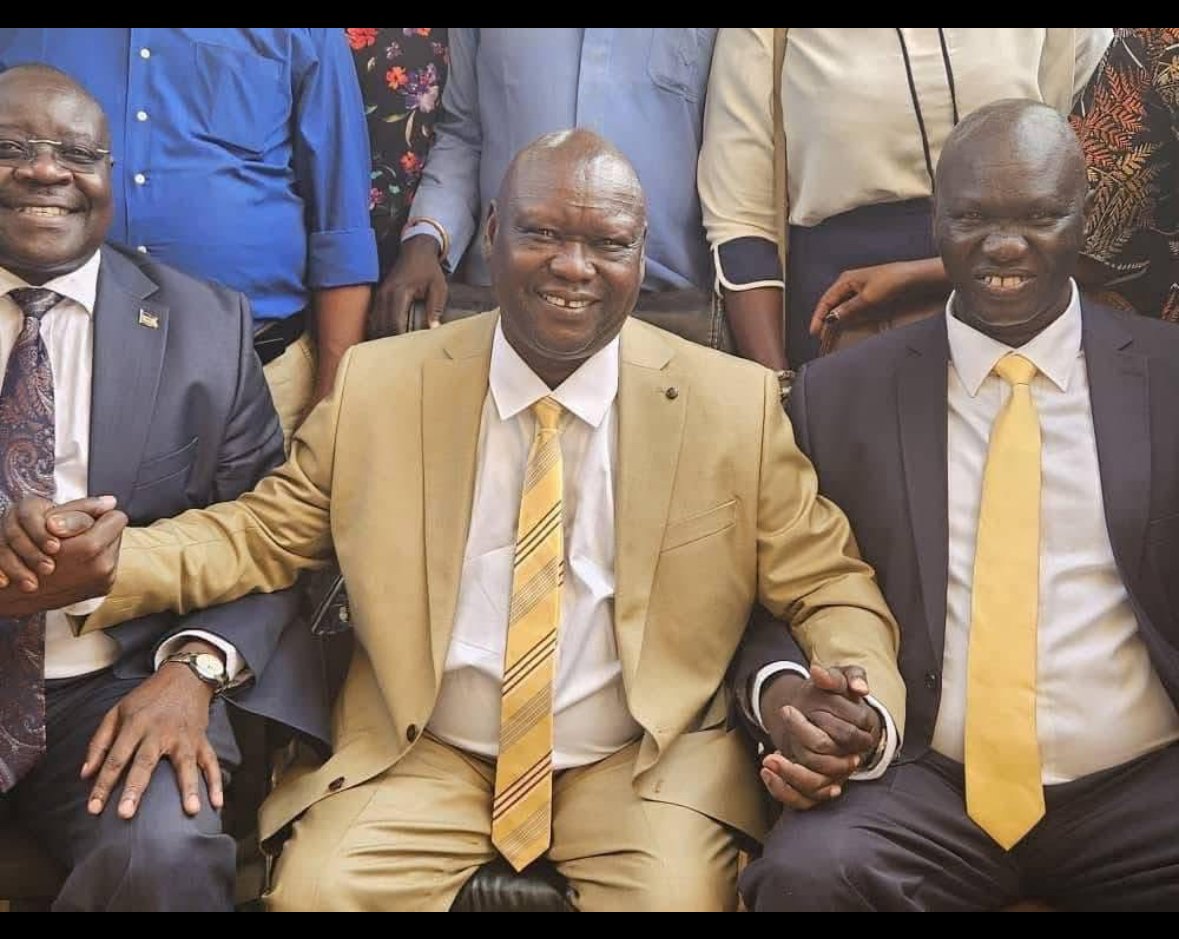
Par Kuol’s recent arrival in Juba and the welcoming reception by senior SPLM-IO figures such as Losuba Loduro Wongo and Agok Makur Kur point to growing internal support for his leadership—at least within certain factions of the movement.
Factional Divide Emerges
The SPLM-IO now finds itself split between two camps:
• Machar Loyalists, who view him as the sole legitimate leader and custodian of the movement’s original vision.
• Pragmatists and Reformists, who back Par Kuol’s interim leadership as a means to re-energize the party and maintain influence in Juba’s shifting political terrain.
This deepening schism threatens to erode the SPLM-IO’s cohesion and may undercut its negotiating strength within the transitional government. Without a clear path to reconciliation, the party risks sliding into fragmentation at a time when unity is vital for both internal stability and effective governance.
Calls for Mediation and Reunification
Observers warn that if the dispute escalates, regional bodies such as IGAD—the Intergovernmental Authority on Development—may be forced to intervene to preserve the integrity of the peace process.
Political analysts note that backers of Par Kuol may be positioning themselves for greater leverage within the capital, while Machar’s supporters continue to rely on legal legitimacy and his longstanding base of popular support.
Conclusions
Dr. Riek Machar remains, in principle, both the First Vice President of South Sudan and the Chairman of the SPLM-IO. Yet, the leadership claim by Stephen Par Kuol has exposed underlying fractures within the movement and triggered a legitimacy crisis that could reshape the SPLM-IO’s role in the country’s future.
As South Sudan moves through a delicate political transition, the SPLM-IO faces a decisive choice: pursue internal reconciliation or risk irreparable division.