By HAN News Desk
KHARTOUM/CAIRO/ANKARA — Heavy explosions have shaken the Sudanese capital, Khartoum, in what residents described as some of the most intense drone attacks since the country’s civil war began in April 2023. The strikes, claimed by the paramilitary Rapid Support Forces (RSF), hit several Sudanese army installations and energy sites, marking a sharp escalation in a conflict that is increasingly being shaped by foreign involvement.
In Omdurman, north of Khartoum, locals reported prolonged power blackouts after drone strikes targeted key electricity stations. Witnesses said the attacks were followed by heavy gunfire, heightening fears that the war is entering a new and more dangerous phase.
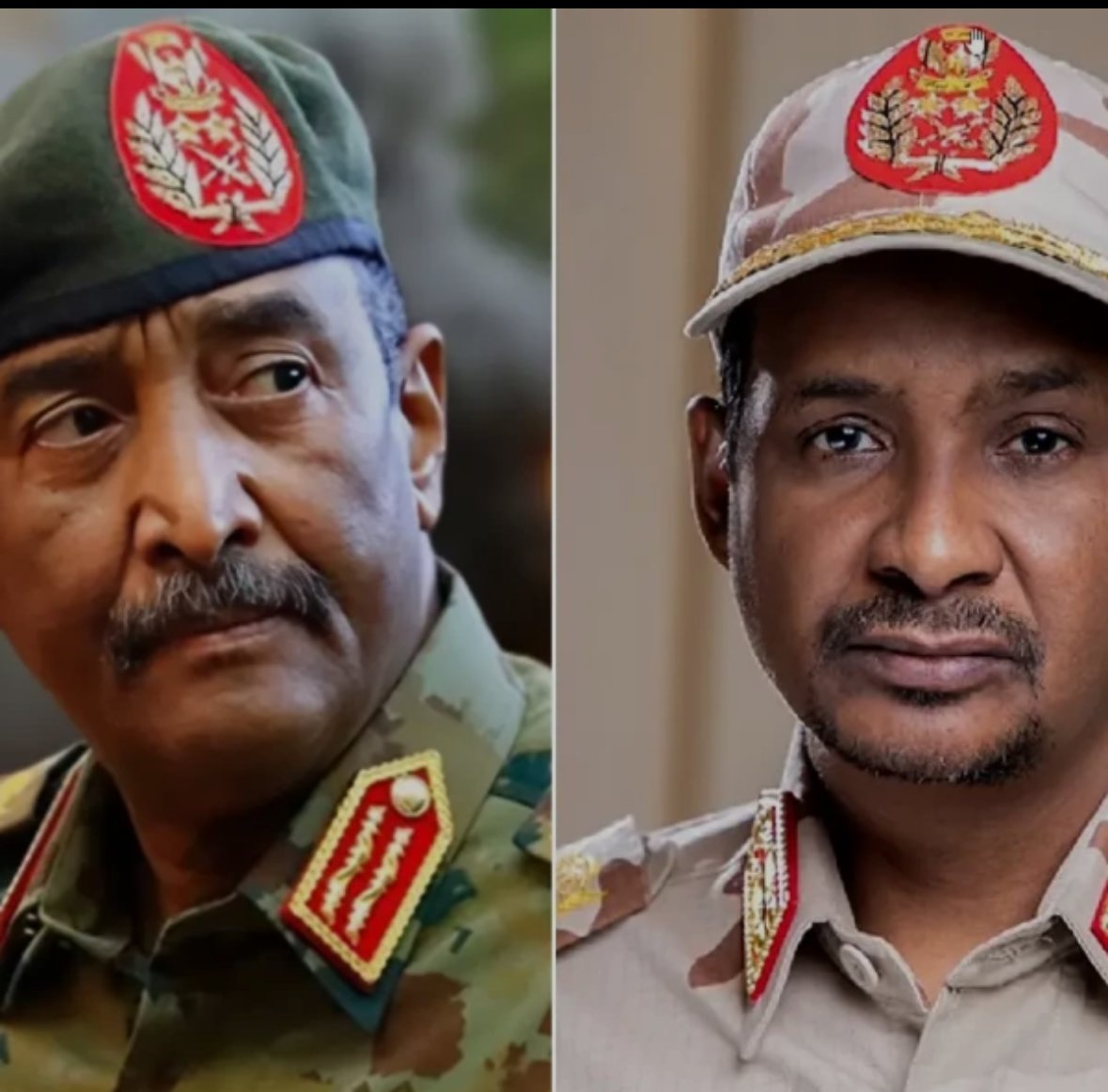
What began as a fierce power struggle between General Abdel Fattah al-Burhan, leader of the Sudanese Armed Forces (SAF), and Mohamed Hamdan Dagalo, known as Hemeti, head of the RSF, has now evolved far beyond domestic rivalry. Military analysts say Sudan has become a testing ground for foreign-made weapons, as regional and international powers quietly back different sides in the conflict.
“This is no longer just Sudan’s war,” a regional security expert told the BBC from Cairo. “It’s turning into a proxy conflict where outside actors are gauging their technologies and influence.” Explosions near the Wadi Seidna military base and the Al-Markhiyat power station have revealed a growing use of modern warfare tools — particularly drones and precision missiles that analysts believe could not have been obtained without foreign assistance.
Sources close to military observers suggest that the RSF has recently begun using advanced drones and guided missiles, some reportedly sourced from China. The use of these weapons has altered the balance of power, drawing comparisons with wars in Syria, Libya, and Yemen, where global powers used local battlegrounds to test their weaponry and tactics.
Meanwhile, Turkey, which has long maintained close military cooperation with Sudan, is reportedly worried that the Sudanese army’s weakening position could damage Ankara’s defense reputation and its growing arms market in Africa. In response, Turkish officials have entered joint military talks with Egypt to help rebuild Sudan’s formal army and supply it with new defense systems, missiles, and communications equipment.
This unexpected Cairo-Ankara alignment reflects a broader regional concern that Sudan’s collapse could destabilize the Red Sea corridor, a critical route for global trade and security. Yet the same alignment underscores Sudan’s transformation into a proxy battlefield, where rival powers are competing for influence, testing weapons, and shaping the future of regional security.
“Sudan has become a mirror of regional rivalries,” said a Sudanese analyst based in Port Sudan. “Each actor wants to project its power — but ordinary Sudanese are paying the price.” As foreign drones and rocket systems continue to arrive, Sudan is increasingly being described by experts as a live weapons laboratory, a place where new technologies are tested in real-time combat.
The United Nations says the conflict has created one of Africa’s largest humanitarian crises. More than 10 million people have been displaced, while entire neighborhoods in Khartoum and Omdurman lie in ruins. Electricity cuts, food shortages, and repeated air strikes have left civilians trapped and terrified, with humanitarian aid struggling to reach the worst-affected areas.
The Sudanese army’s diminishing control has also eroded public trust, while the RSF’s expanding arsenal — backed by foreign technology — has strengthened its battlefield position and propaganda appeal. Analysts warn that as long as the flow of foreign weapons from China, Turkey, and Egypt continues, Sudan will remain locked in a prolonged and complex war that could reshape the region’s security landscape for years to come.
What began as a domestic struggle for power has now evolved into a multi-layered contest for influence, involving advanced technology, shifting alliances, and competing geopolitical agendas. “The question is no longer when Sudan’s war will end,” one analyst said. “It’s how far the destruction will spread — and who stands to gain from it.”
Sudan today sits at the heart of a new kind of warfare in Africa — one not only fought with bullets, but with foreign technology, political ambition, and competing visions of power.