By HAN News Desk
TEHRAN — Iran’s government said Friday that a major U.S. aircraft carrier strike group moved farther away from Iranian waters after what Tehran described as a missile threat from its armed forces, a claim that could not be independently verified.
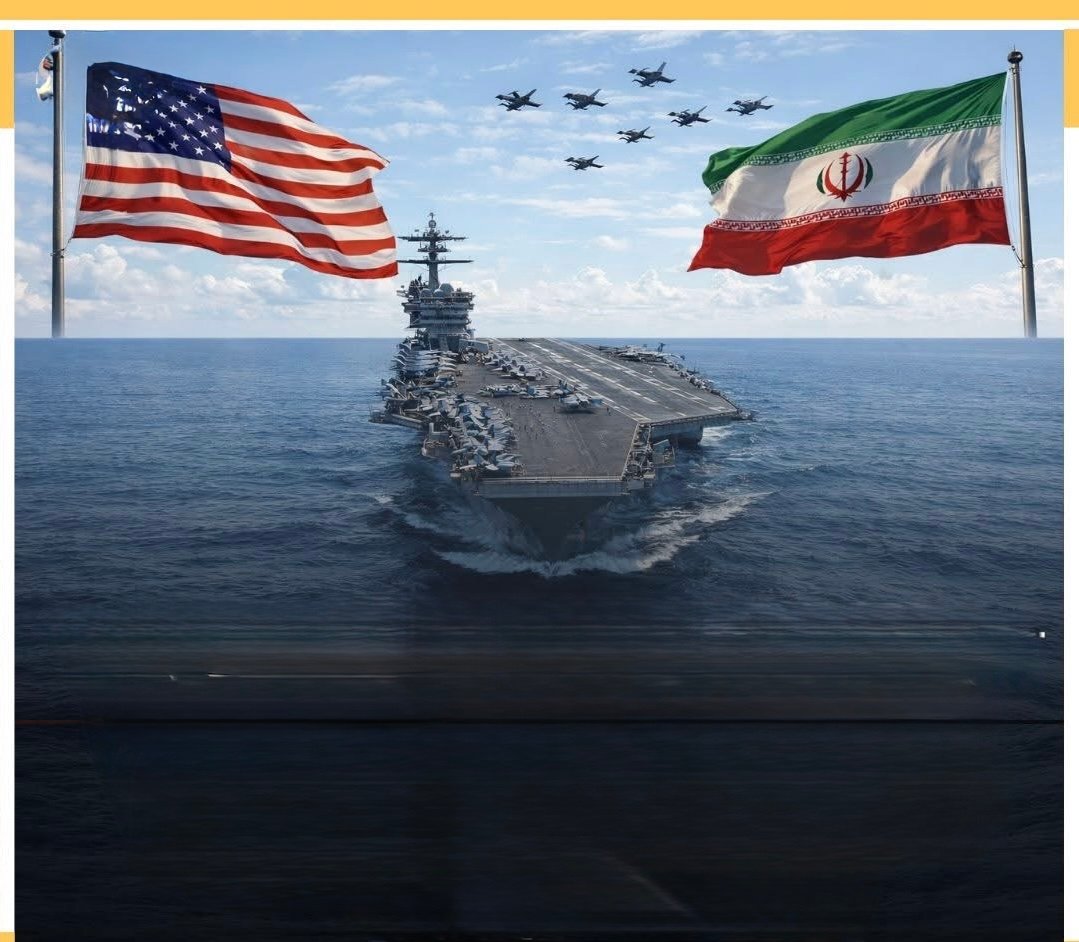
Iranian military officials said the U.S. aircraft carrier USS Abraham Lincoln (CVN-72) had been operating about 340 kilometers (211 miles) from Iran’s maritime borders before repositioning to roughly 1,000 kilometers (621 miles) from the country’s coastline.
According to Iranian state media, the carrier group changed its position after Iran’s armed forces conducted missile operations and warned that the vessel could be targeted by advanced Iranian weapons if it approached closer to Iranian territory.
Iranian defense officials said the missiles used in the operation were part of the country’s long-range and precision-guided missile systems, which Tehran says are capable of striking naval targets far from its shores.
“The American aircraft carrier was forced to retreat from the region near Iran after our forces demonstrated their missile capabilities,” Iranian officials said in statements carried by state television.
The USS Abraham Lincoln (CVN-72) is one of the U.S. Navy’s most powerful warships and serves as the centerpiece of a carrier strike group that typically includes guided missile destroyers, cruisers and support vessels. Aircraft carriers are capable of launching dozens of fighter jets for combat operations.
U.S. military officials have not immediately confirmed Iran’s account of the carrier’s movement. The United States frequently adjusts the positioning of naval forces in the region for operational and security reasons.
The U.S. Navy has maintained a significant presence in waters around the Middle East for decades, particularly in the Persian Gulf and nearby sea lanes, which are critical for global energy shipments and international trade.
Tensions between Iran and the United States have escalated in recent weeks amid growing regional conflict and heightened military activity. Iranian leaders have repeatedly warned that any U.S. or allied military presence close to Iranian territory could face retaliation.
Security analysts say that while naval repositioning is common during periods of heightened tension, claims made by governments during conflicts are often difficult to independently verify.
Both countries have previously avoided direct large-scale military confrontation, but the latest developments highlight the fragile security situation in the region and the risk of further escalation.