By HAN News Desk
MOGADISHU — A recent visit by Kenya’s Cabinet Secretary for Defence, Soipan Tuya, to several locations in southern Somalia has sparked debate and criticism among Somali political observers, raising questions about diplomatic protocol, federal authority and national sovereignty.
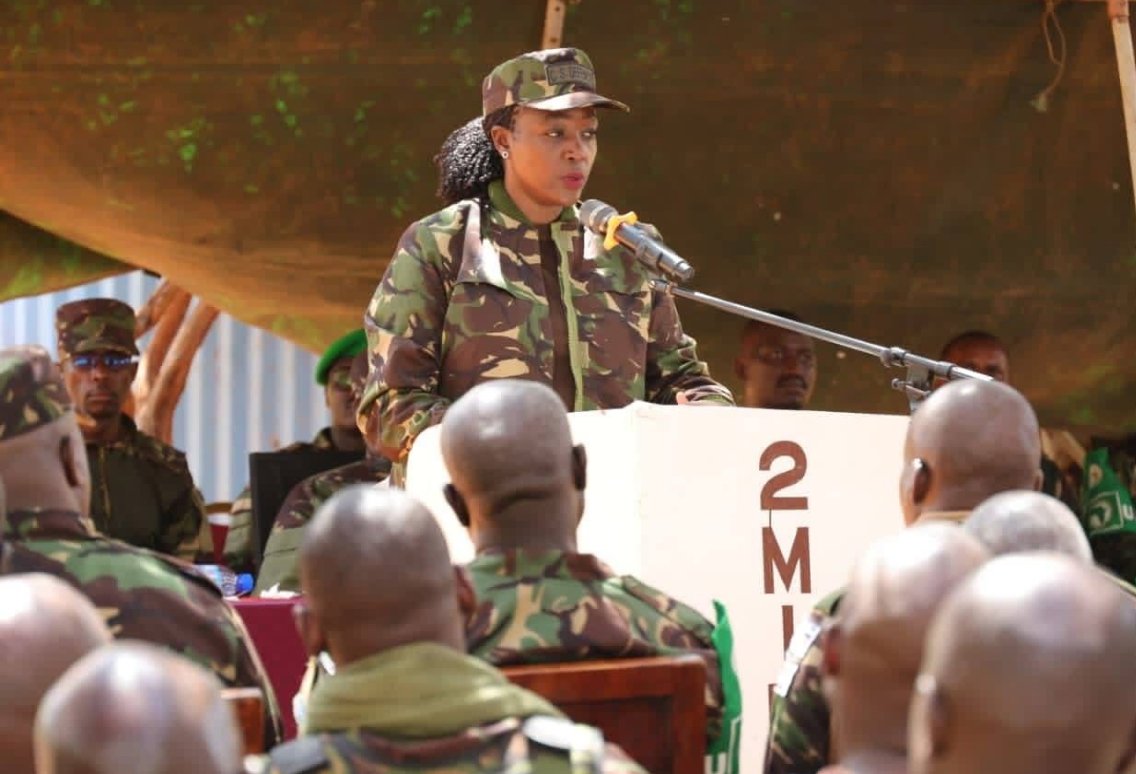
Tuya traveled to parts of the Jubbaland region, including the port city of Kismayo and the strategic areas of Kuday and Dhobley, without being accompanied by Somalia’s defense minister or senior officials from the Federal Ministry of Defense, according to Somali officials familiar with the matter.
While Kenya is a key regional ally and an important contributor to Somalia’s security through international peacekeeping missions, the manner in which the visit was conducted has been viewed by some Somali analysts as a departure from established diplomatic norms.
Under customary international protocol, visits by foreign defense ministers to another sovereign state are typically coordinated through the host country’s central government and conducted alongside their official counterparts. The absence of Somali federal defense officials during the visit has fueled concerns that Somalia’s authority over parts of its territory is being sidelined.
Critics argue that such visits risk sending a negative signal about Somalia’s statehood and governance, reinforcing perceptions that certain regions remain under the influence of neighboring countries rather than under the full authority of the federal government in Mogadishu.
Observers noted that Tuya did not make a stop in the Somali capital before traveling to regional locations, and that her itinerary included inspections of troops and infrastructure projects in areas where Kenyan forces are deployed. This, they argue, undermines the federal government’s role in overseeing security and development activities within its borders.
The visit has also intensified concerns about the balance of power within Somalia’s federal system, with some warning that unilateral engagements with regional administrations could weaken public confidence in national institutions and territorial integrity.
The focus on Kismayo and other strategically located coastal areas such as Kuday has further fueled speculation that Kenya’s priorities are driven primarily by border security and regional influence, rather than by strengthening state-to-state relations with Somalia at the federal level.
Somali officials and commentators have also expressed concern that Somalia’s defense leadership was either excluded from or not formally consulted on the visit, describing the situation as a symbolic setback to the authority of Somalia’s constitutional institutions and national flag.
The controversy comes at a sensitive moment, as the African Union Support and Stabilization Mission in Somalia (AUSSOM) begins a new phase. Some analysts fear the developments may signal an attempt by Kenya to exercise autonomous control over areas where its troops are stationed, without sufficient coordination with Somalia’s federal authorities or respect for international diplomatic norms.
Neither the Kenyan government nor Somalia’s Federal Ministry of Defense has issued an official statement addressing the concerns as of publication.