By HAN News Desk
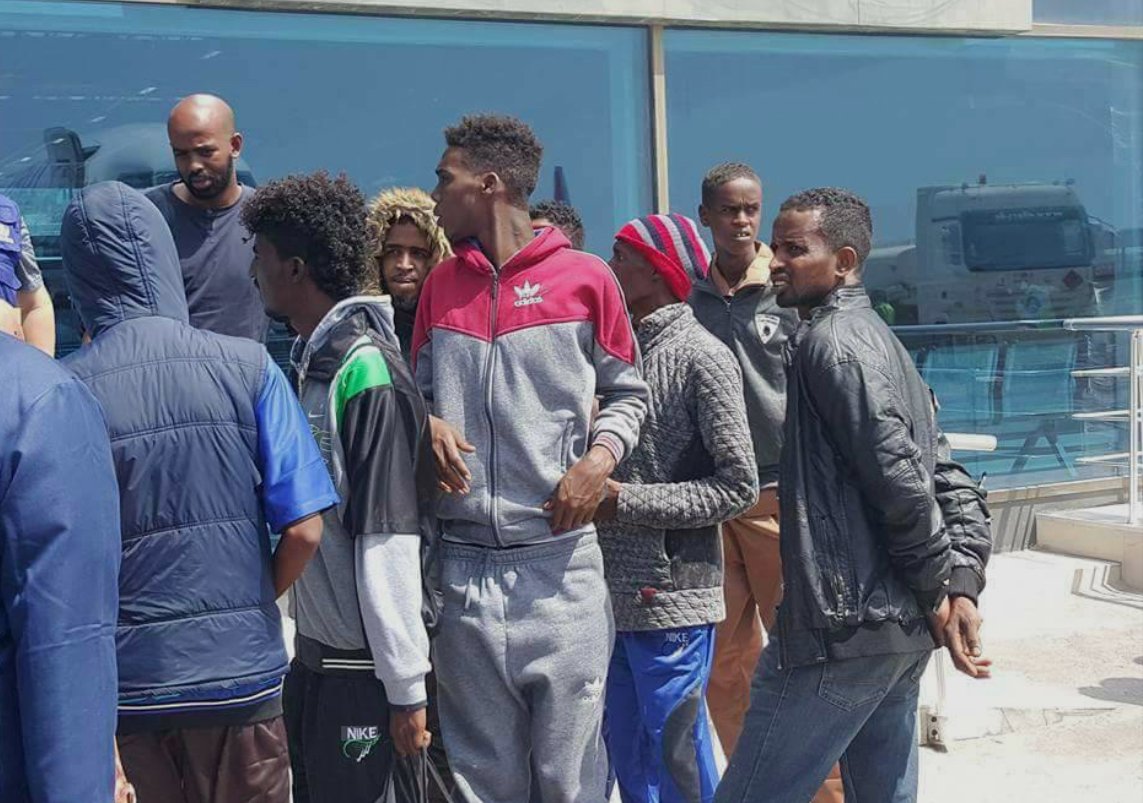
KUFRA — Libyan security forces on Sunday announced the release of more than 200 migrants who had been detained in a secret underground facility in the southeastern city of Kufra for an extended period. According to multiple sources, most of the released migrants were African nationals, including Somalis, who had endured harsh and prolonged conditions.
Authorities discovered the facility during a targeted security operation. The detention center was located underground and reportedly extended nearly three meters below the surface, with small, overcrowded rooms specifically designed to hold migrants in confinement. Officials say the site was operated by a Libyan national allegedly involved in human trafficking and migrant smuggling networks, although the suspected operator has not yet been arrested.
One senior security official described the conditions inside the prison as “extremely dire.” Some of the migrants had been held in underground rooms for up to two years, experiencing severe physical hardship and psychological trauma. The detainees reportedly suffered from inadequate food, poor sanitation, and lack of medical care, underscoring the dangerous realities of clandestine migrant detention in Libya.
The operation involved a coordinated raid on the secret facility, during which security forces uncovered several underground chambers used to imprison migrants. Many of the detainees appeared to be in urgent need of medical and humanitarian assistance. Security forces worked quickly to provide immediate care and transfer the freed migrants to temporary shelters for recovery.
This incident shines a spotlight on the ongoing human rights crisis faced by migrants in Libya, a country that remains a key transit point for thousands of Africans seeking passage to Europe. Migrants are often subjected to exploitation, forced labor, sexual abuse, and arbitrary detention by criminal networks and smugglers.
Human rights groups say the Kufra case highlights the urgent need for greater protections for migrants, more robust law enforcement against human trafficking, and stronger international support for Libya to address the systemic abuses affecting irregular migrants. Analysts warn that without coordinated action, secret detention facilities and abuse along migration routes are likely to continue, putting thousands of vulnerable individuals at risk.
The release of these migrants has drawn attention both domestically and internationally, as governments and humanitarian organizations call for investigations into trafficking networks and measures to prevent future human rights violations. The freed migrants are now receiving humanitarian assistance, but the psychological and physical impact of prolonged detention may take months or years to address.
This incident once again underscores the dangers faced by migrants attempting to cross the Sahara and Mediterranean, highlighting the need for safer, legal migration pathways and stronger mechanisms to hold traffickers accountable.