
By HAN News Desk
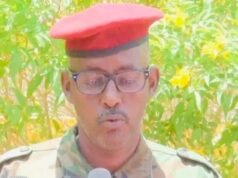
GALKAYO — Somalia’s Minister of Defence, Ahmed Moallim Fiqi, on Tuesday officially registered as a voter at a National Independent Electoral Commission (NIEC) centre in Galkayo, Mudug region, in what he described as a major milestone in Somalia’s long-delayed democratic transition.
Fiqi’s registration comes at a time when Somalia is preparing to shift from an indirect electoral model to a universal suffrage system, where citizens across the nation can cast their ballots directly for their local, state, and national representatives.
After receiving his voter registration card, Fiqi urged Somalis—especially communities in rural and conflict-affected areas—to participate actively in the ongoing voter registration exercise. He emphasized that widespread public involvement is crucial for building legitimate institutions rooted in popular consent.
“Today I arrived in Galkayo, and it is an honour to formally register and receive my voter card for the district, federal member state, and national elections,” Fiqi said.
“Elections are a constitutional right that has been absent from the hands of the people for 56 years, and today that right has been restored to the citizens of Somalia.”
The minister described the moment as “historic,” calling it a critical step in strengthening Somalia’s state-building efforts and democratic consolidation after decades of conflict, political instability, and clan-based power-sharing arrangements.
Somalia’s last national election in 2022 used the long-standing 4.5 clan-based power-sharing formula, in which the four major clans receive equal representation and minority groups share a half allocation. Critics argue that the system entrenches clan divisions, restricts democratic choice, and limits political participation.
The current government, led by President Hassan Sheikh Mohamud, has pledged to replace the 4.5 model with a one-person-one-vote system, marking the most ambitious electoral reform in Somalia since the 1960s.
Despite government assurances, the reform process has been met with resistance from key opposition figures, including former presidents Sharif Sheikh Ahmed and Mohamed Abdullahi Mohamed Farmaajo. Both leaders accuse the government of moving ahead without sufficient consultation or national consensus.
They have warned that they may organise a parallel election process if the government continues with its plan unilaterally—a move that could inflame political tensions and deepen existing divisions.
Political analysts say the voter registration exercise, though significant, faces major challenges including insecurity in some regions, limited administrative capacity, and disagreements between federal and regional administrations over electoral timelines and procedures.
Even so, the Defence Minister’s participation is seen by many as a symbolic gesture aimed at boosting public confidence and encouraging citizens to take part in shaping the country’s political future.
Fiqi concluded by reaffirming the government’s commitment to ensuring a peaceful, inclusive, and credible electoral process that gives Somalis the opportunity to elect leaders who genuinely represent their needs and aspirations.