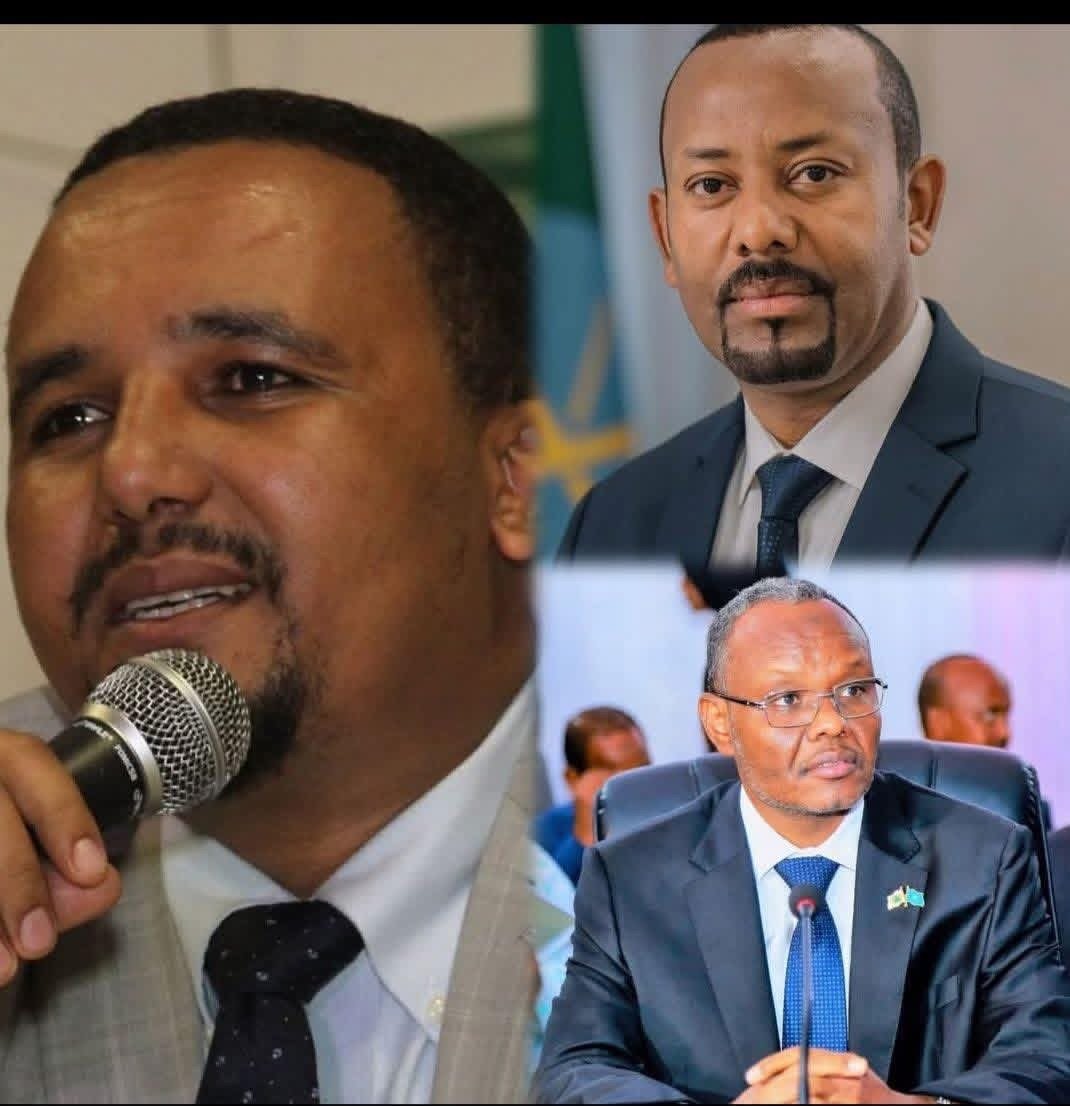
MOGADISHU — Prominent Oromo politician Jawhar Mohammed has weighed in on political developments in southwestern Somalia, alleging that shifting regional alliances and external influence played a role in the reported removal of Abdiaziz Hassan Mohamed Laftagareen.
In comments shared online, Jawhar claimed that Laftagareen — long seen as aligned with Ethiopian security interests in Southwest State — was pressured to leave office under influence from Somali President Hassan Sheikh Mohamud, whom he said is backed by Turkey and Egypt.
Jawhar alleged that Laftagareen traveled to Addis Ababa days before the reported decision, where he met Prime Minister Abiy Ahmed and received assurances of support. However, he said forces aligned with Ethiopia in the region did not intervene as pressure mounted.
Neither the Somali federal government nor Ethiopian authorities have publicly confirmed Jawhar’s account. There has also been no official statement clarifying the circumstances surrounding Laftagareen’s status, and independent verification of the claims remains limited.
Jawhar argued that the developments could signal a broader shift in influence in Somalia, particularly in the strategic city of Baidoa, which serves as the interim administrative capital of Southwest State. He suggested that Ethiopian influence in the area, built over years of security cooperation, may be declining.
He further claimed that emerging actors — particularly Turkey and Egypt — could expand their roles in Somalia’s security and political landscape, reflecting wider regional competition for influence in the Horn of Africa.
Analysts say such claims reflect growing perceptions of geopolitical rivalry in Somalia, where multiple external actors support different institutions and security sectors. “Somalia has become a space where regional and international interests intersect,” said a Horn of Africa analyst based in Nairobi. “But it is important to distinguish between verified developments and political narratives.”
Jawhar also pointed to Puntland as a region to watch, suggesting that similar shifts in influence could unfold there. Key cities such as Garoowe, Bosaso, and Galkayo have historically been influenced by a mix of local governance structures and external partnerships.
A Puntland official, speaking on condition of anonymity, said there were no immediate signs of instability. “Puntland maintains its own security and governance systems,” the official said. “We are monitoring regional developments, but the situation here remains stable.”
Jawhar also referenced what he described as recent signals suggesting that both Ethiopia and the United Arab Emirates could see reduced influence in parts of Somalia, though he did not provide evidence.
He linked these developments to tensions surrounding Ethiopia’s recent engagement with Somaliland, particularly a controversial maritime access agreement that has drawn strong opposition from Mogadishu.
Observers say the situation remains fluid, with limited confirmed information and competing narratives. While no immediate security deterioration has been reported, analysts warn that political tensions — if not carefully managed — could have broader implications for Somalia’s fragile federal system and regional stability.
For now, officials and residents alike say calm prevails on the ground, even as uncertainty continues over the country’s evolving political dynamics.