By HAN News Desk
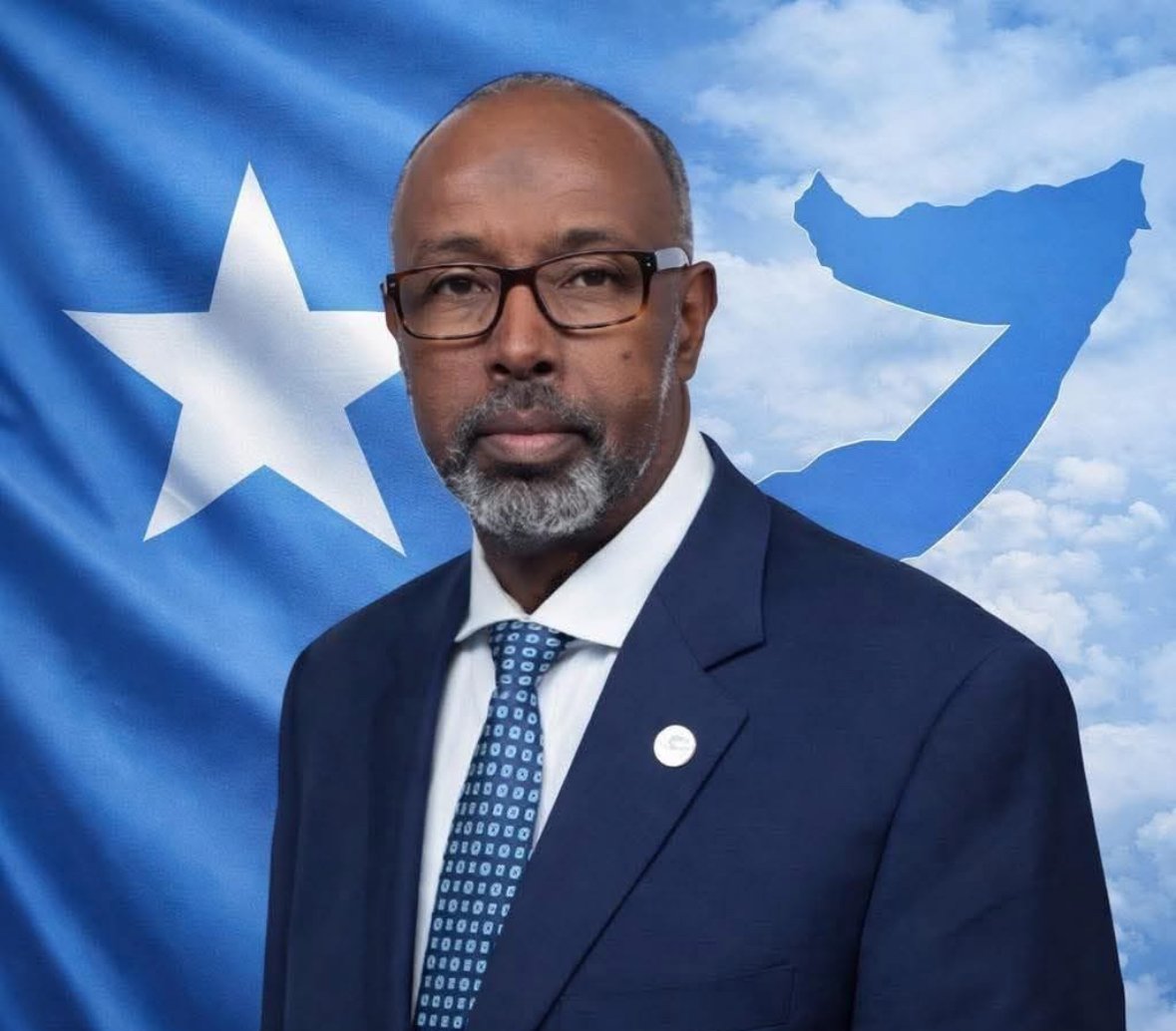
MOGADISHU — Ambassador Abukar Dahir Osman, widely known as Baalle, is one of Somalia’s most experienced diplomats and public servants, with a career spanning decades in government planning, international civil service and high-level diplomacy.
Born on June 11, 1959, in Mahadaay town in Somalia’s Middle Shabelle region, Baalle comes from a well-known family in southern Somalia. His parents, Dahir Osman and Amina Ahmed Hassan, known as “Maama Axado,” emphasized religious education, Somali culture and patriotism, values that would later shape his public life.
Baalle completed his primary education in Qoryooley district and attended both middle and high school in Jowhar, the regional capital of Middle Shabelle. In 1981, he traveled to the United States to pursue higher education, earning a bachelor’s degree in statistics from the University of Illinois.
He returned to Somalia in 1985 and joined the Ministry of National Planning, where he was appointed director of the National Statistics Office. In that role, he became one of the early architects of Somalia’s national statistical systems and participated in some of the country’s first formal census-related efforts. He later served as director general in the office of then–Vice President Hussein Kulmiye Afrah during Afrah’s tenure as minister of national planning.
In 1988, Baalle received a scholarship to pursue graduate studies at the University of Wisconsin in the United States, where he earned a master’s degree. While he was studying, Somalia descended into state collapse, forcing many professionals into exile. Baalle subsequently joined the United Nations, working in several assignments in Eastern Europe and gaining extensive experience in international public service.
He later pursued further education, earning a Master of Business Administration degree from Franklin University in Columbus, Ohio. During this period, he also worked for the state of Ohio, balancing public service with family responsibilities.
Baalle re-entered Somalia’s public sector in 2010, when he was appointed director of the office of then–Prime Minister Mohamed Abdullahi Farmaajo. In 2012, he became director general at the Ministry of Interior and National Security, a key institution during Somalia’s fragile post-transition period.
In 2017, Baalle was appointed Somalia’s permanent representative to the United Nations. During his tenure in New York, he played a central role in restoring Somalia’s diplomatic standing after decades of conflict and isolation. He was known for forcefully defending Somalia’s sovereignty, territorial integrity and national interests in international forums, particularly during periods of heightened diplomatic pressure on the country.
Colleagues and observers describe Baalle as a technocrat with deep institutional memory, combining academic training, international experience and strong nationalist convictions. His career is often cited as an example of how education, public service and commitment to national unity can converge in rebuilding a post-conflict state.
Ambassador Baalle’s professional journey reflects the broader story of Somalia’s struggle to recover state institutions and reassert its place in the international community, while drawing on the expertise of a generation shaped by both pre-collapse governance and decades of exile.