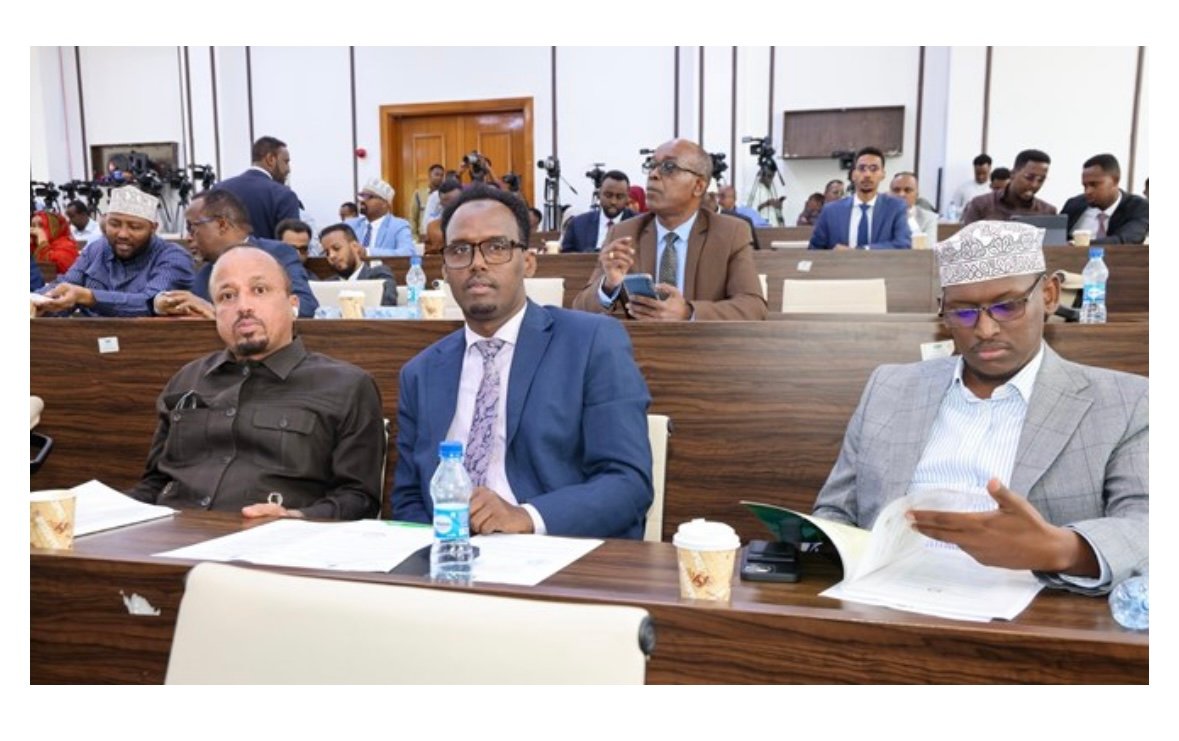
DJIBOUTI — Somali President Hassan Sheikh Mohamud met on Sunday with Djiboutian President Ismail Omar Guelleh in Djibouti to discuss strengthening diplomatic coordination aimed at defending Somalia’s unity, sovereignty, and territorial integrity, according to an official statement.
The talks focused on aligning regional diplomatic efforts to counter initiatives viewed by Mogadishu as threatening Somalia’s national unity. The two leaders emphasized the importance of common positions among neighboring states and international partners in opposing any actions that could lead to the fragmentation of Somalia.
President Hassan Sheikh expressed appreciation for Djibouti’s government and people, praising what he described as Djibouti’s brotherly support and leadership role in regional diplomacy. He highlighted Djibouti’s continued advocacy for Somalia’s sovereignty and its longstanding involvement in peacebuilding and mediation efforts.
Both leaders agreed to intensify diplomatic consultations and bilateral cooperation, stressing that close coordination is essential to maintaining stability in the Horn of Africa. They reaffirmed their commitment to core principles governing interstate relations, including respect for sovereignty, territorial integrity, and non-interference.
The meeting comes amid growing geopolitical competition in the Horn of Africa, a region of increasing strategic importance due to its proximity to key global shipping lanes linking the Red Sea, the Gulf of Aden, and the Indian Ocean. Major global and regional powers have expanded their political, military, and economic engagement in the area, heightening sensitivities around sovereignty and territorial disputes.
Somalia’s position has gained renewed attention following international discussions related to Somaliland, a self-declared republic that separated from Somalia in 1991 after the collapse of the central government. While Somaliland has maintained relative stability and its own governing institutions, it has not been recognized by the United Nations or the African Union. Mogadishu argues that any move toward recognition would violate international law and undermine the principle of respecting inherited colonial borders, a cornerstone of African Union policy.
The African Union has consistently affirmed Somalia’s territorial integrity, while regional blocs such as the Intergovernmental Authority on Development (IGAD) have emphasized dialogue and regional consensus in addressing disputes. Djibouti, a founding member of IGAD, has often positioned itself as a diplomatic bridge between Somalia and the wider international community.
The Horn of Africa has also been shaped by tensions involving Ethiopia, Eritrea, Sudan, and South Sudan, as well as by internal conflicts and political transitions. Ethiopia’s regional ambitions, Sudan’s ongoing instability, and Red Sea militarization have added layers of complexity to regional diplomacy. Analysts say these dynamics make issues of recognition, borders, and sovereignty particularly sensitive, as they could set precedents affecting other fragile states.
Djibouti occupies a strategic geopolitical position, hosting multiple foreign military bases operated by the United States, France, China, and other countries. Its role as a security and logistics hub has given it disproportionate diplomatic influence, especially on matters related to maritime security, counterterrorism, and regional stability.
Somalia continues to face security challenges posed by the militant group al-Shabab, alongside efforts to rebuild national institutions and strengthen federal governance. Regional cooperation remains central to Somalia’s stabilization strategy, particularly through collaboration with neighboring states and international partners supporting peacekeeping and state-building efforts.
Against this backdrop, Somali officials say maintaining strong regional alliances is critical to preventing further political fragmentation and ensuring that external actors respect Somalia’s internationally recognized borders.
The Federal Government of Somalia reiterated its firm commitment to safeguarding national unity and independence, expressing confidence in continued regional solidarity—particularly from Djibouti—in defending Somalia’s sovereignty amid evolving geopolitical pressures in the Horn of Africa.