By HAN News Desk
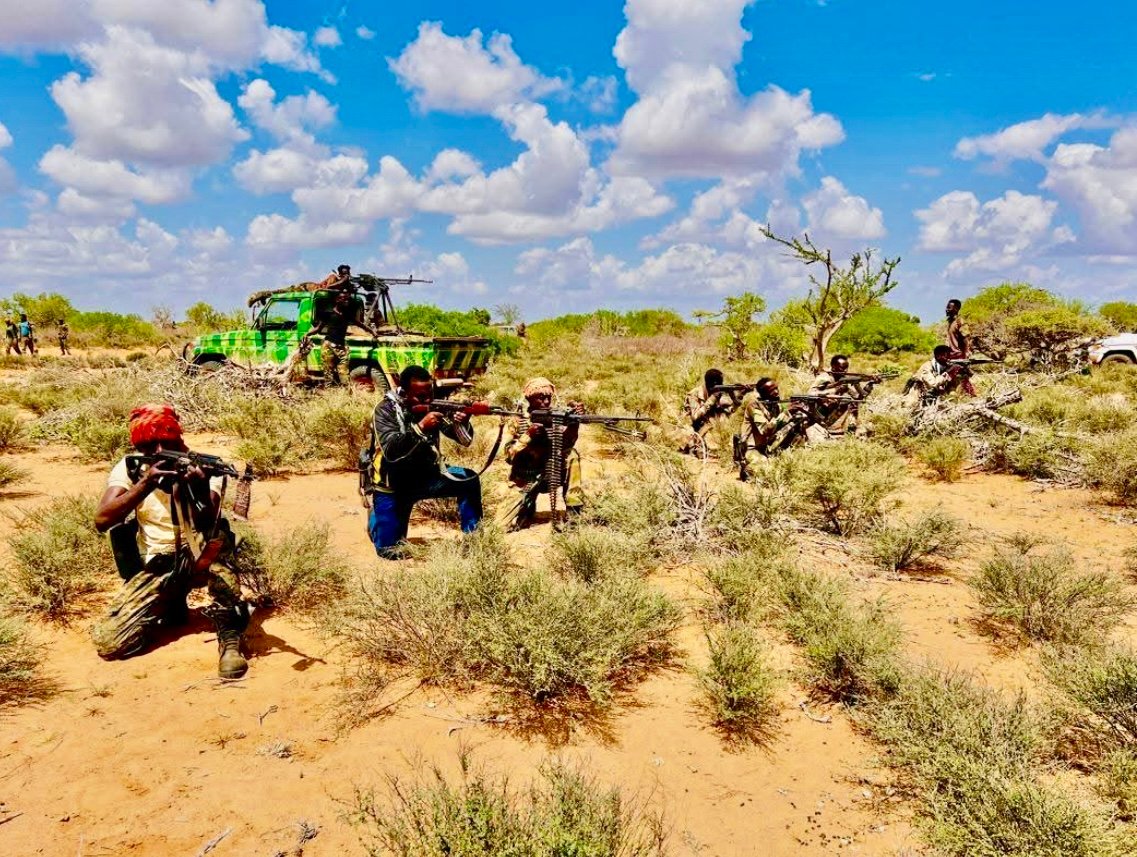
HIIRAAN – Somali National Army (SNA) forces, working in coordination with local militias known as Ma’awisley, have conducted joint security operations for the second consecutive day in eastern Hiiraan, following reports that Al-Shabaab militants were attempting to expand into nearby districts.
The most intense clashes occurred yesterday in the village of Teedaan, where government troops and Ma’awisley militias confronted Al-Shabaab fighters. Although official casualty figures have not been released, eyewitnesses reported multiple deaths and injuries among both combatants, with some civilians reportedly caught in the crossfire. Residents expressed fear of potential retaliatory attacks by the insurgents, highlighting ongoing insecurity in the region.
Military officials speaking to Horn Africa News described the operations as part of a broader campaign to prevent Al-Shabaab from carrying out planned offensives in districts including Matabaan and Baladweyne. The coordinated effort seeks to reclaim strategic villages, secure key supply routes, and deny militants freedom of movement in areas where the group has long exerted influence.
Al-Shabaab, which seized several towns in eastern Hiiraan province last year—including Maxaas and Moqokori—continues to pose a major security threat, carrying out ambushes, roadside attacks, and forced recruitment of youths. Security sources say the militants are attempting to consolidate their positions in rural areas where government presence has historically been limited.
These joint operations align with a wider push by the Somali Federal Government to restore stability in Hiiraan. This strategy includes closer collaboration with community-based militias, local elders, and regional authorities, with the long-term goal of gradually reclaiming areas under Al-Shabaab control and disrupting the group’s operational capacity.
Analysts emphasize that the operations are part of a sustained effort to strengthen local security structures, enhance intelligence gathering, and rebuild trust with communities who have repeatedly suffered from insurgent attacks. Success in these operations could be pivotal in reducing Al-Shabaab’s influence in central Somalia and creating conditions for long-term stability.