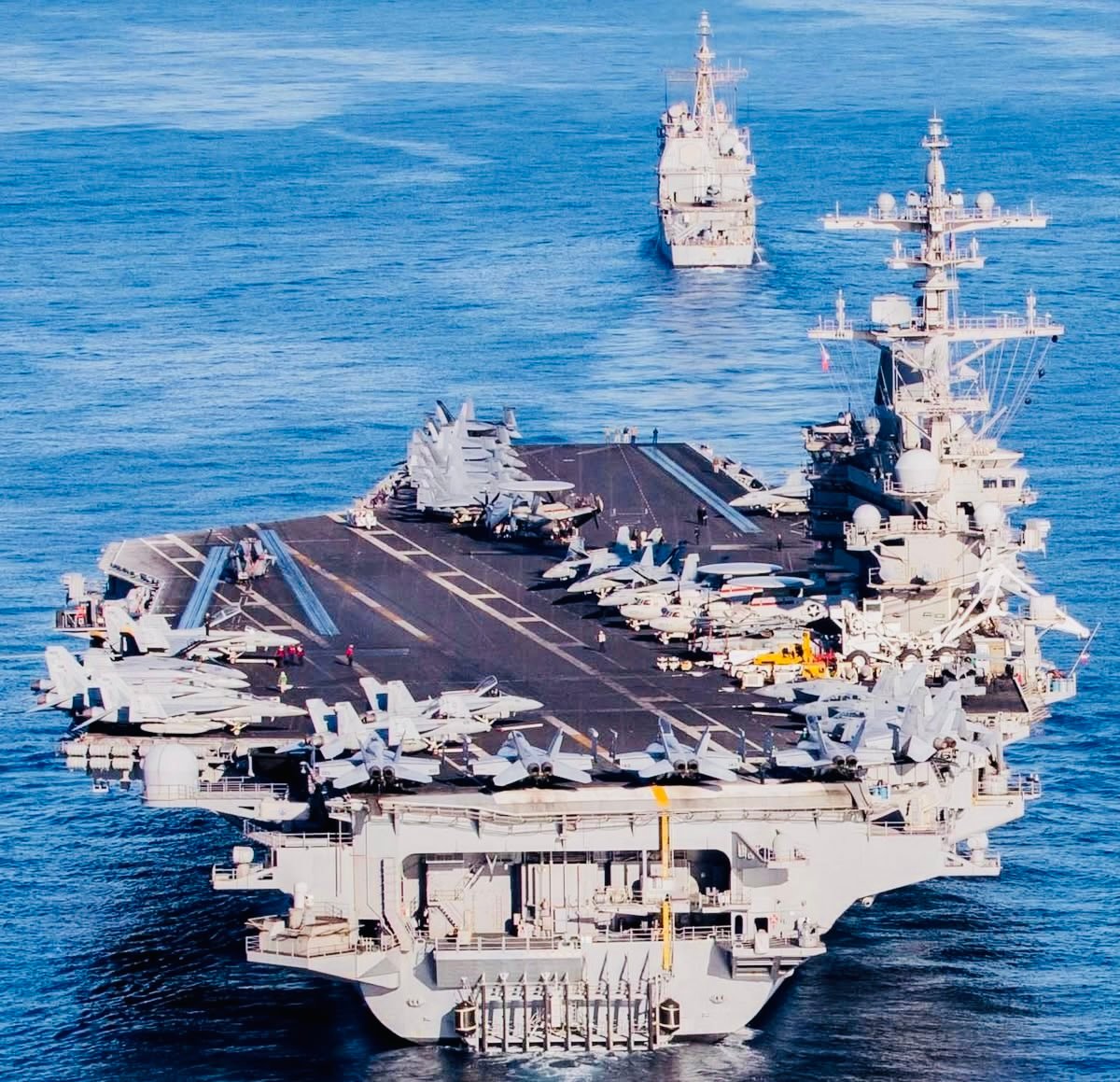
WASHINGTON — The US aircraft carrier USS George H.W. Bush has reportedly altered its planned route in the Middle East region, amid heightened security risks in nearby waterways, according to defense sources.
The vessel, a nuclear-powered carrier capable of launching combat aircraft, was expected to operate in areas linked to maritime security operations in the Red Sea and surrounding regions.
However, reports indicate it has taken a longer alternative route via southern waters around Africa, a move analysts say reflects growing concerns over threats to naval operations in contested maritime zones.
The shift comes amid ongoing tensions involving Houthi movement attacks on commercial and military-linked shipping in the Red Sea, as well as broader regional instability involving Iran and other naval powers operating in the Gulf region.
Military analysts note that modern naval deployments increasingly require flexible routing to reduce exposure to missile, drone, and asymmetric warfare threats in strategic chokepoints such as the Bab el-Mandeb Strait and the Strait of Hormuz.
Separately, regional maritime activity remains closely monitored by multiple global powers, including the United States, China, and Iran, as competition over shipping lanes and energy corridors continues to shape naval strategy.
US officials have not publicly confirmed any operational withdrawal or permanent change in deployment strategy.
Experts say the situation reflects the evolving nature of naval warfare, where advanced surface fleets must adapt to low-cost but high-impact asymmetric threats in volatile maritime regions.