while the Mogadishu-based Hawiye opposition coalition was addressing the public at the Jazeera Hotel—following weeks-long consultations with a broad cross-section of Somali society, including traditional elders, religious leaders, women and youth representatives, and representatives of an estimated 350,000 forcibly displaced families evicted from public land without compensation or resettlement—President Hassan Sheikh Mohamud issued a press release inviting the Council of Somalia’s Future, comprising the National Salvation Forum, Puntland, and Jubbaland, to a meeting scheduled for May 10, 2026.
The timing alone strips the invitation of credibility. The May 10 meeting comes just four days before the expiration of the President’s mandate, and nearly three weeks after the Federal Parliament’s mandate officially ended. The Somali government is already operating in a constitutional vacuum. In such circumstances, any attempt to convene a high-level political dialogue on the future of the state raises a fundamental question: what legitimacy remains to initiate it?
This is not a gesture of genuine leadership—it is a belated and hollow maneuver to project expired authority.
The President is not acting in ignorance. He is fully aware of the unconstitutional course he has pursued, the entrenched disagreements that have repeatedly derailed negotiations over the past two years, and the clearly and consistently articulated preconditions set by the opposition for any return to credible dialogue on elections and the restoration of institutional legitimacy. Yet today’s press release makes no attempt—none—to address or remove these obstacles or to focus directly on the central issue of elections.
Instead, it recycles familiar, exhausted language devoid of good-faith intent. The meeting, as presented, will discuss “state-building, elections, national unity, and the political future of Somalia” in a spirit of “good faith, openness, and responsibility.” It further claims that the moment presents an “opportunity” for “mutual understanding.” The President also reaffirms a commitment to an “inclusive political process” grounded in consensus and cooperation. But these claims collapse under scrutiny. These overused phrases no longer persuade; they expose a widening gap between rhetoric and reality.
The invitation is effectively void for three decisive reasons.
First, there is no legitimate temporal or constitutional basis for serious negotiation with a president whose mandate expires in four days, particularly in the absence of a functioning Federal Parliament. A caretaker authority is tasked with preserving continuity—not redesigning the political future of the state.
Second, the press release amounts to a systematic erasure of the President’s own record—one marked by unilateralism, authoritarian tendencies, denigration of opponents, obstruction, delay tactics, and repeated disregard for genuine dialogue despite sustained appeals from Somali political actors and international partners. The opposition has been subjected to profound frustration and repeated humiliation.
More critically, the President has deliberately avoided addressing the core barriers to any credible electoral process, including:
*Recognition of the 2012 Provisional Federal Constitution as the governing framework;
*Suspension of contested constitutional amendments and related electoral, party, and commission laws, and all actions derived from them;
*Recognition of Jubbaland’s election and respect for the constitutional autonomy of Federal Member States;
*Non-interference in the electoral processes of Southwest, Galmudug, and Hirshabelle to allow free and fair elections for the renewal of state institutions;
*Depoliticization of the security forces;
*Acceptance of an active facilitation role for international partners;
*Formal acknowledgment of, and issuance of a dissolution decree for, the expiration of the Federal Parliament’s mandate.
Third, engaging in such a process at this late stage—without credible mediation or enforceable, time-bound guarantees—risks deepening the crisis. It opens the door to renewed wrangling over term extension, prolonged political deadlock, and the introduction of issues that lack both legal and political foundation.
Therefore, in light of the above, the proposed meeting is neither feasible nor politically justifiable as a basis for participation.
The timing of the meeting further suggests calculation. The invitation appears to have been issued on the eve of an anticipated visit by a high-level international delegation scheduled to meet with President Hassan on Sunday, May 3, 2026. This raises a reasonable conclusion: the move is less about genuine dialogue and more about manufacturing the appearance of engagement to deflect mounting pressure and sow both domestic and international confusion.
President Hassan’s broader objective has never been ambiguous. It points to a deliberate strategy to retain power beyond constitutional limits, even as institutional legitimacy has visibly eroded.
Meanwhile, the Hawiye opposition has issued a stark warning, accusing the Federal Government of operating outside the constitutional framework and calling on the Somali people to reclaim the political future of their country. This is not ordinary political disagreement—it is a stark manifestation of a deepening legitimacy crisis.
After more than two decades of fragile state-building, Somalia now faces a condition where authority is claimed
without legality, and governance is exercised without legitimacy.
This is not a moment for rhetorical appeals to “state-building,” a far more complex and long-term undertaking. The immediate and practical priority is the organization of credible, lawful, and peaceful elections within a clear and accelerated timeframe.
The most responsible first step—however difficult—would be for President Hassan to step aside and allow a neutral, caretaker-led process, supported by Somali political stakeholders and facilitated by international partners, to oversee a transitional election. Such a decision would not diminish his legacy; it would define it. It would place him alongside Abdullahi Yusuf Ahmed, who stepped down at a critical moment of national tension.
President Hassan’s invitation to this meeting is not an effort to save Somalia—it is a last-ditch power play, a calculated move to cling to authority as legitimacy expires.
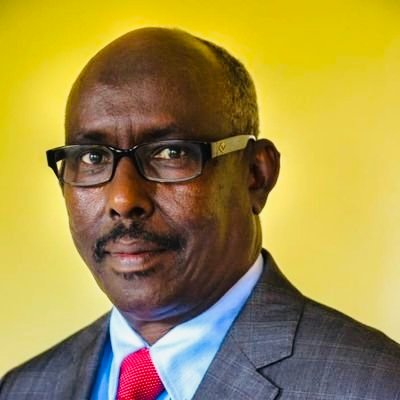
Dr. Mohamud Uluso, inside Somalia Columnist.