MOGADISHU — Somali President Hassan Sheikh Mohamud and senior government officials met opposition leaders in Mogadishu on Wednesday for crucial talks aimed at defusing a mounting political crisis over elections and proposed constitutional reforms.
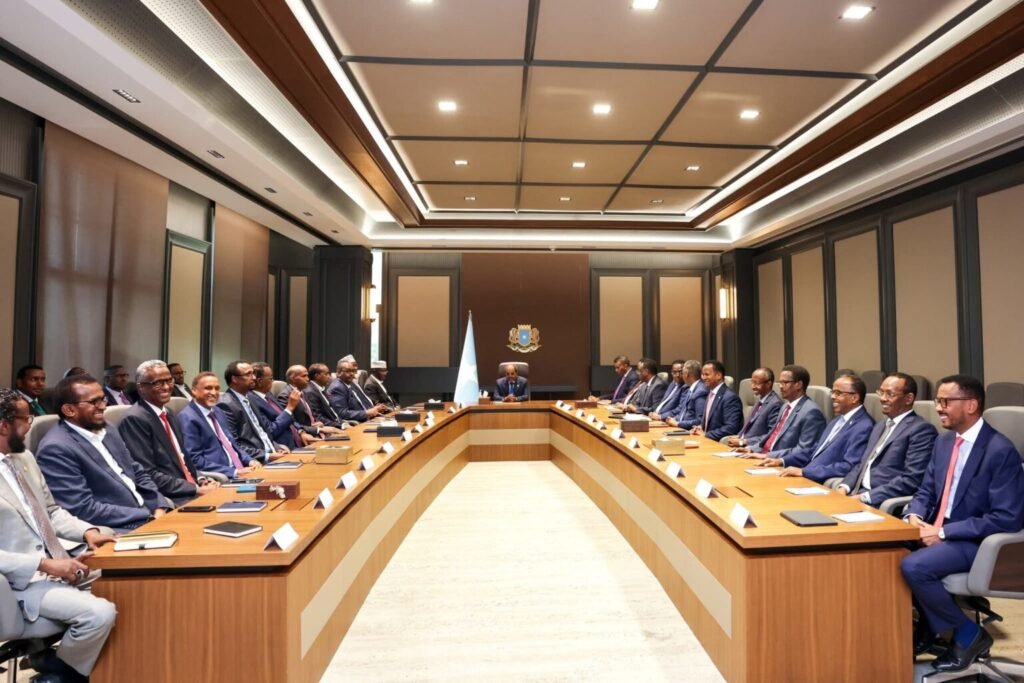
The meeting, facilitated by international partners, comes at a sensitive moment for Somalia, with tensions escalating between the federal government and opposition figures who accuse the administration of reshaping the country’s political system without broad consensus.
At the centre of the dispute is the Somali Salvation Council, a grouping of prominent political actors that has openly challenged the government’s reform agenda, warning it could undermine the fragile federal structure agreed upon after years of conflict.
The federal government delegation was led by Hassan Sheikh, accompanied by Deputy Prime Minister Salah Ahmed Jama and other senior officials, while the opposition team included former president Sheikh Sharif Sheikh Ahmed, Puntland President Said Abdullahi Deni and Somali Future Council Secretary Abdirahman Aynte.
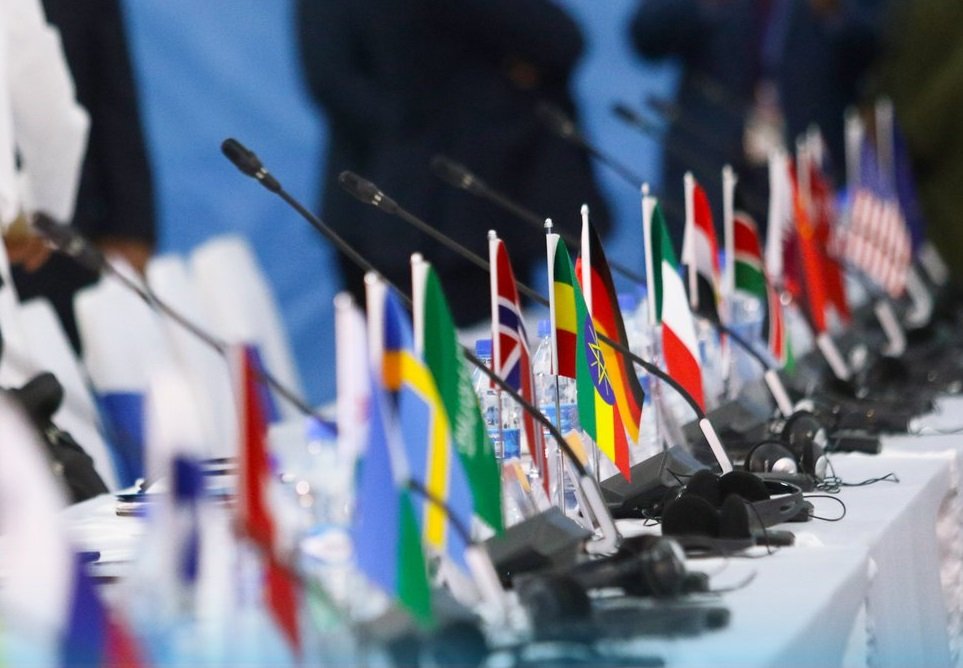
Diplomats from the United Nations, European Union, United States and United Kingdom were also present, playing a mediating role in an effort to bridge differences between the rival sides and prevent further escalation.
Dispute over elections and constitution
The talks are expected to focus on disagreements surrounding Somalia’s electoral model and proposed constitutional amendments, which have become a flashpoint in recent months.
Opposition leaders accuse the government of pushing ahead with reforms that could centralize power in Mogadishu and weaken the authority of federal member states, arguing that such changes risk reversing years of political توافق-building.
The government, however, maintains that the reforms are essential to move Somalia away from its complex indirect voting system toward a more stable and democratic framework, potentially paving the way for universal suffrage.
Rising political tensions
The standoff has raised fears of renewed political instability in a country that has struggled for decades to rebuild functioning state institutions after the collapse of central government in 1991.
Somalia’s political landscape has frequently been marked by disputes over elections, with delays, contested processes and disagreements between federal and regional leaders often triggering crises.
Analysts warn that failure to reach consensus could deepen divisions between Mogadishu and federal member states, potentially affecting security cooperation and governance across the country.
International concern
The presence of international partners at the talks underscores growing concern among Somalia’s allies about the risk of political fragmentation at a time when the country continues to face threats from Islamist insurgents and ongoing humanitarian challenges.
Western diplomats have repeatedly called for inclusive dialogue and consensus-based decision-making, stressing that political stability is critical for maintaining security gains and advancing state-building efforts.
High-stakes outcome
The outcome of the Mogadishu meeting is expected to play a decisive role in shaping Somalia’s political trajectory in the coming months, particularly with future elections on the horizon.
Observers say a توافق-based agreement could ease tensions and strengthen cooperation among Somali stakeholders, while failure to reach common ground may lead to a prolonged political impasse with wider implications for stability in the Horn of Africa.
For many Somalis, the talks represent a critical test of whether political leaders can overcome entrenched divisions and prioritise national unity at a pivotal moment in the country’s recovery.