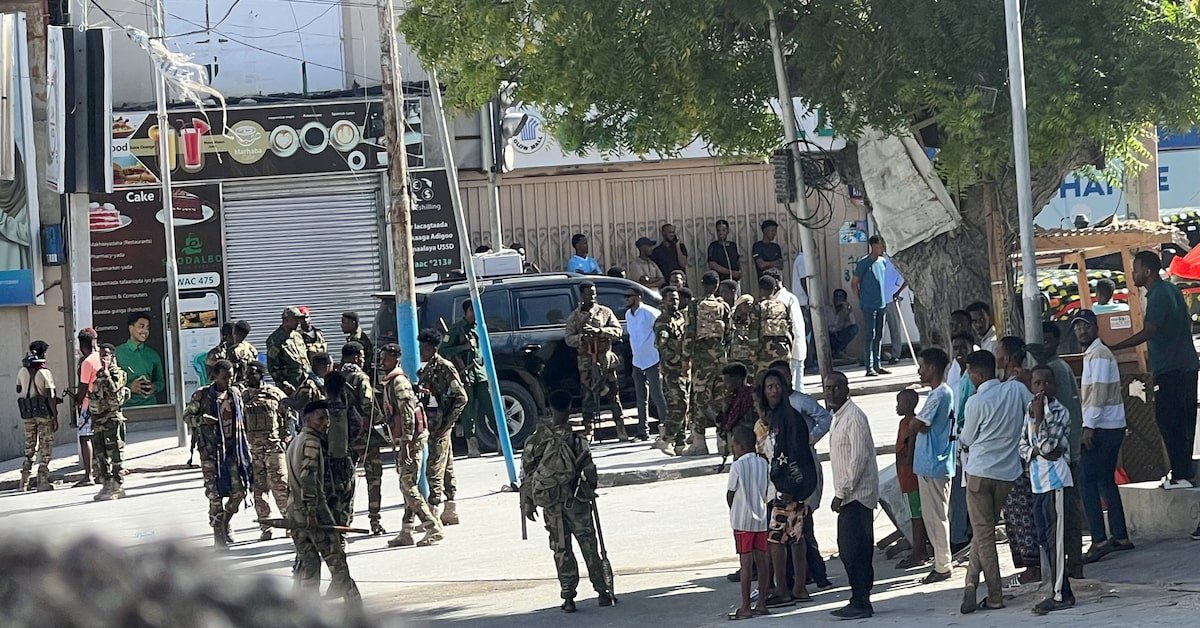
MOGADISHU — At least 13 people were killed, 189 injured and around 12,500 households displaced after armed clashes erupted in Mogadishu this week between Somali government forces and an opposition-linked armed group, according to a protection report supported by the United Nations.
The Protection of Civilians note, prepared by the Protection Cluster and UNHCR Somalia and dated June 4, said the fighting began on the evening of June 3 near the Dabka junction before spreading into several densely populated districts of the capital.
The violence affected neighborhoods including Hawlwadaag, Abdiaziz, Hodan, Wardhigley and parts of Karaan, causing widespread fear among residents and forcing thousands to flee their homes.
Although active fighting has largely subsided, humanitarian agencies warned that the impact on civilians remains severe.
According to preliminary figures contained in the report, those displaced include women, children, elderly people, persons with disabilities, refugees and asylum seekers, many of whom already faced significant vulnerabilities.
The report said many civilians were unable to escape during the fighting and remained trapped in affected areas as gunfire and clashes spread through residential neighborhoods.
Protection agencies described the situation as a multi-dimensional humanitarian and protection crisis, citing civilian casualties, damage to infrastructure, unsafe displacement conditions and restricted access to humanitarian assistance.
The clashes occurred amid heightened political tensions over Somalia’s electoral transition and constitutional reforms championed by President Hassan Sheikh Mohamud.
The president has defended recent constitutional amendments extending the mandate of federal institutions, arguing that the measures were approved through legal parliamentary procedures.
Opposition leaders, however, have criticized the move, accusing the government of attempting to consolidate power and alter the country’s political framework without broad consensus.
Federal authorities later announced that security forces had restored order in the affected areas, although residents reported lingering fears and uncertainty.
The protection report warned that the violence disrupted family and community support structures, increasing the risk of family separation, particularly among children, older persons and people living with disabilities.
Movement restrictions imposed by insecurity also limited access to healthcare, humanitarian assistance and other essential services, according to the report.
Humanitarian organizations expressed concern about the psychological impact of the violence, warning of increased risks of trauma and psychosocial distress among affected communities.
The report further highlighted concerns over potential protection violations, including gender-based violence, exploitation and abuse, particularly among displaced populations.
Refugees and asylum seekers were identified as among the most vulnerable groups because of legal and documentation challenges that may hinder access to assistance and protection services.
Female-headed households, elderly people and persons with disabilities were also considered at heightened risk because of limited mobility and disrupted support networks.
Protection actors called for an urgent and inclusive humanitarian response to address the needs of those affected by the fighting and to ensure access to essential services.
The report urged all parties involved in the conflict to comply with international humanitarian and human rights law, including obligations to protect civilians and civilian infrastructure.
It also called for measures to reduce civilian harm during military operations and to guarantee safe humanitarian access and civilian movement.
Protection agencies said they would continue monitoring developments, verifying casualty and displacement figures and assessing humanitarian needs as the situation evolves.