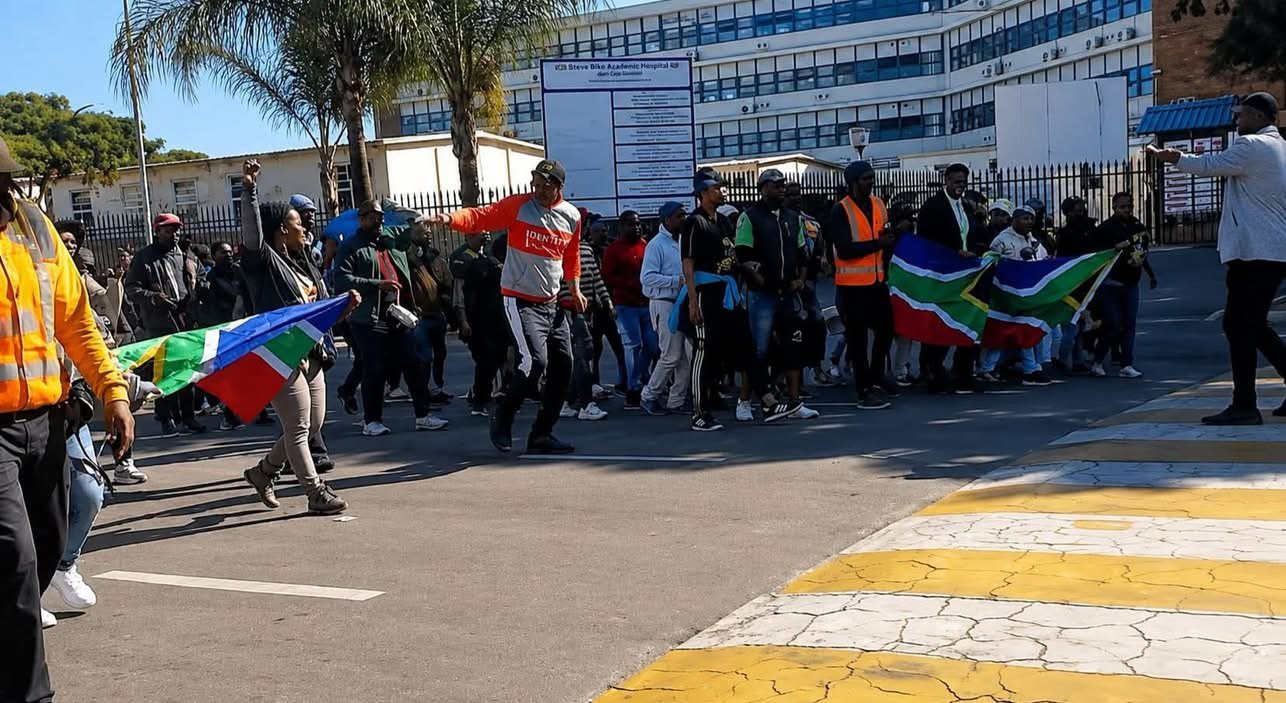
POLOKWANE — Protest marches organized by two separate groups, ActionSA and March and March, continued on Monday in Polokwane, Limpopo Province, as tensions intensified over immigration policy and the presence of undocumented migrants in South Africa.
The demonstrations have drawn participants from different parts of the city and surrounding areas, with both groups voicing sharply contrasting views on how the government should respond to undocumented migration, border control, and public safety concerns.
ActionSA supporters have called for tighter immigration enforcement, arguing that undocumented migration is placing pressure on public services such as healthcare, housing, and employment opportunities. They also linked the issue to rising concerns over crime and security, urging authorities to take stronger action against illegal entry and overstays.
In contrast, March and March participants emphasized what they described as the need for a more balanced and human-rights-based approach to migration policy. They argue that many migrants are driven by economic hardship and regional instability, and have called for policy reforms that protect vulnerable groups while still maintaining border management.
Authorities in Limpopo said police units were deployed early in the day to monitor the marches, manage crowd movement, and prevent any potential confrontation between opposing groups. Officers were seen stationed at key intersections and around central routes in Polokwane to ensure that both processions remained separated.
Traffic disruptions were reported in parts of the city, with temporary road closures affecting access to the central business district and surrounding streets. Commuters were advised to use alternative routes as congestion built up during peak hours.
At this stage, police confirmed that no major violent incidents had been recorded, although they remained on high alert due to the presence of competing demonstrations in close proximity. Authorities also urged organizers to maintain discipline among participants and to ensure that all protest activities remain within the bounds of the law.
“We are monitoring the situation closely and ensuring that both groups exercise their constitutional right to peaceful protest without infringing on public order,” a local police spokesperson said.
Community members in Polokwane have been advised to avoid areas where the marches are taking place, particularly in the event of sudden route changes or escalating tensions. Businesses in affected areas have also taken precautionary measures, with some temporarily closing or limiting operations for the day.
Local officials have not yet released figures on the total number of participants or reported any arrests related to the demonstrations. However, security assessments are expected to continue throughout the day as both groups maintain a visible presence across different parts of the city.
The protests come amid a broader national debate in South Africa over immigration policy, economic pressure, unemployment, and public service delivery challenges—issues that have increasingly shaped political discourse in recent years.
Analysts say that while protests of this nature are not uncommon, the parallel mobilization of opposing groups highlights the growing polarization around migration policy in the country.
Police and municipal authorities are expected to maintain heightened surveillance until both marches conclude, with contingency plans in place should tensions escalate unexpectedly.