
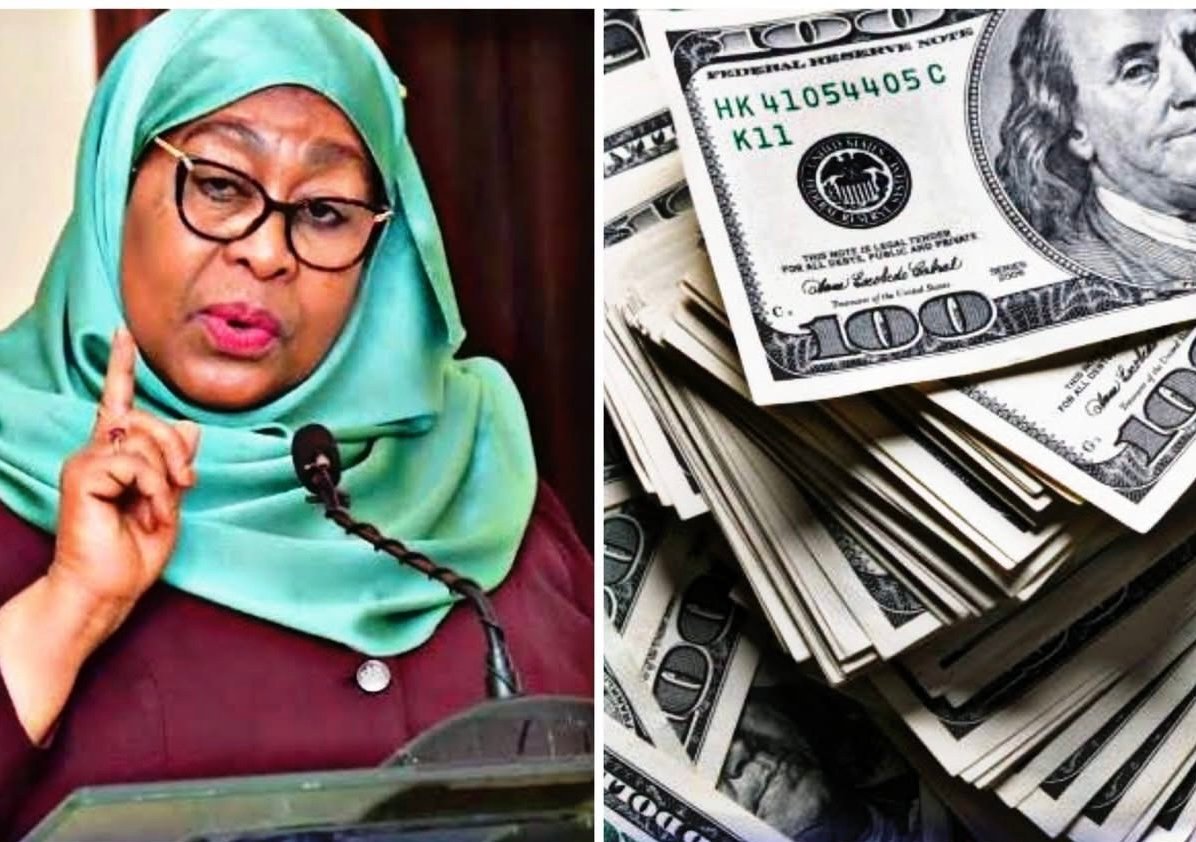
DAR ES SALAAM – The government of Tanzania has announced a sweeping ban on the use of the U.S. dollar and other foreign currencies in all domestic transactions, in a major policy shift aimed at strengthening the Tanzanian Shilling.
Under the new directive, effective immediately, all payments within Tanzania—including for goods and services, rent, salaries, business contracts, and retail transactions—must be conducted exclusively in Tanzanian Shillings (TZS).
Authorities say the measure is intended to reduce reliance on foreign currencies, curb capital flight, and stabilize the local economy by increasing demand for the national currency. The government also hopes the policy will restore public and investor confidence in the shilling amid ongoing currency pressures.
Officials warned that individuals and businesses who continue to use foreign currencies for local transactions risk fines and other legal penalties. The directive specifically targets the widespread practice of “dollarization,” which has been common in sectors such as real estate, tourism, import-export trade, and high-value commercial transactions.
Government Rationale
According to financial authorities, the use of foreign currency in domestic markets has weakened monetary policy effectiveness and limited the central bank’s ability to control inflation and liquidity. By enforcing exclusive use of the shilling, policymakers aim to strengthen control over money circulation within the economy.
The government also argues that reducing dollar dependence will help protect the economy from external shocks linked to global currency fluctuations and tightening U.S. monetary policy.
Economic Implications
Economists say the move could have mixed short-term effects. On one hand, increased demand for the Tanzanian Shilling may support its value and encourage wider use of the local currency in daily transactions. On the other hand, businesses that rely heavily on imported goods or international pricing may face adjustment challenges, particularly in pricing and managing exchange-rate risks.
Some analysts warn that strict enforcement will be crucial, as similar policies in other countries have faced challenges where informal dollar usage continues despite legal restrictions.
Wider Regional Context
The decision places Tanzania among a growing number of African countries seeking to reduce dependence on the U.S. dollar in domestic markets and assert greater monetary sovereignty. Similar policy debates have emerged across the continent as governments respond to inflationary pressures, currency volatility, and global financial tightening.
Public and Business Reaction
Business communities are expected to adjust pricing systems, accounting practices, and contracts to comply with the new regulation. However, concerns remain over the speed of implementation and the potential disruption to sectors that have long operated using foreign currency benchmarks.
The central bank and Ministry of Finance are expected to issue further implementation guidelines in the coming days, including enforcement mechanisms and transitional arrangements.