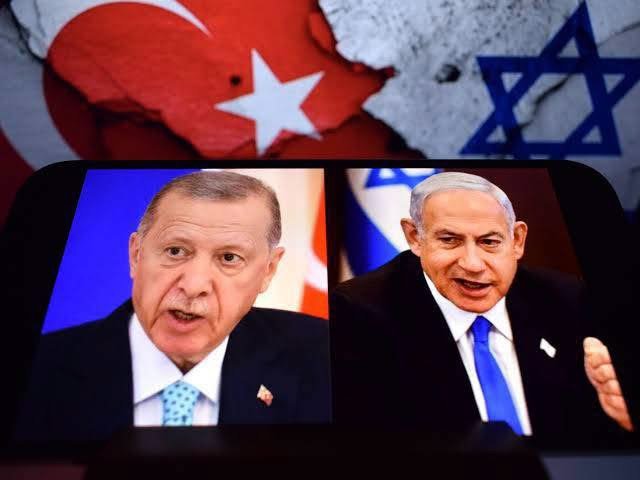
JERUSALEM / ANKARA / WASHINGTON — Social media commentary and political narratives circulating online have highlighted alleged tensions between Israel and Turkey, with unverified claims of strategic rivalry and possible US involvement in regional security and defence developments.
Posts and commentary shared across online platforms have suggested that Israeli officials increasingly view Turkey as a regional security concern following recent Middle East conflicts. These claims could not be independently verified and have not been confirmed in official Israeli statements.
Other reports cite remarks attributed to Turkish officials warning about Israel’s regional policies, including references to the war in Gaza and wider instability in the Middle East. Analysts say rhetoric between regional actors has intensified amid ongoing conflicts in Gaza and Syria and the aftermath of the Israel–Iran escalation.
The same narratives also reference statements attributed to political figures in both countries, as well as commentary involving US President Donald Trump and current US foreign policy positions. Claims of potential shifts in US defence cooperation and arms-related arrangements involving Turkey have not been officially confirmed.
US officials have not announced any changes to defence transfers linked to Turkey’s KAAN fighter jet programme, and there is no verified evidence of approval for advanced engine transfers for the project.
Turkey, a NATO member, continues to expand its domestic defence industry, including the development of its next-generation KAAN fighter jet, while maintaining complex diplomatic and security relations with both Israel and the United States.
Israel and Turkey have long maintained a mix of cooperation and tension, including diplomatic disputes and intelligence coordination, as well as disagreements over regional conflicts, particularly in Gaza.
Security analysts say that while rhetorical tensions between regional powers are common, there is currently no verified indication of imminent military confrontation between Israel and Turkey. Instead, competition is largely viewed in terms of diplomatic influence, regional alliances and defence industry development.
Experts also caution that much of the current narrative circulating online blends verified geopolitical developments with speculation and political interpretation.
Further developments will depend on official diplomatic statements and confirmed policy changes from the governments involved.