
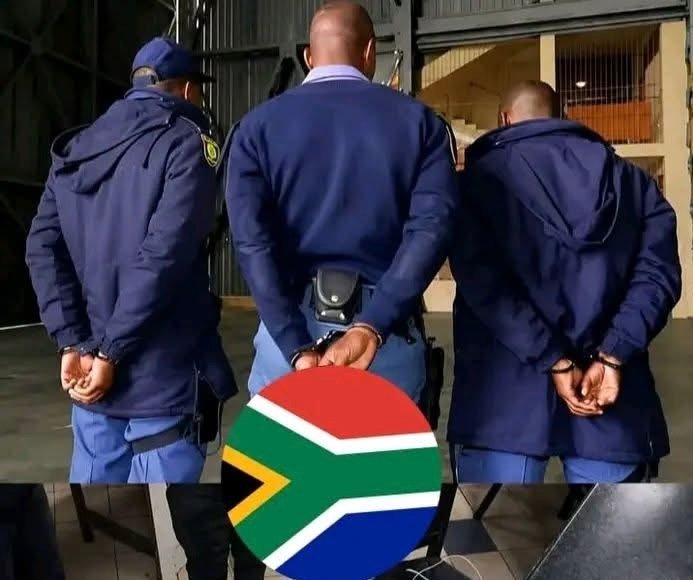
PRETORIA — The arrest of three South African police officers identified as Thembinkosi Mhlanga, Sibusiso Mkhize, and Bongani Dube has sparked renewed debate about corruption, organized crime, and the challenges facing law enforcement agencies in the fight against drug trafficking.
According to reports, the officers were taken into custody following an investigation into their alleged involvement in the supply and distribution of illegal substances. Authorities have not yet released full details of the case, but the arrests have attracted significant public attention because they involve members of the country’s police service, an institution responsible for combating crime and maintaining public safety.
The allegations have raised concerns about the potential infiltration of criminal networks into law enforcement structures. Security analysts have frequently warned that organized crime groups often rely on insider assistance, corruption, and access to sensitive information to facilitate their operations and evade detection.
The case has also intensified public discussion about the nature of South Africa’s drug trade. While foreign nationals are often blamed by some groups for drug-related crime, experts argue that large-scale criminal enterprises rarely operate without local participation. Criminal networks typically involve a complex web of actors, including local distributors, transporters, financiers, corrupt officials, and international suppliers.
The arrests come at a time when South Africa continues to face significant challenges related to drug trafficking, gang activity, and organized crime. Communities across the country have repeatedly expressed concern about the availability of illegal substances and the social problems associated with addiction, violence, and criminal activity.
Analysts note that the involvement of police officers in alleged criminal activities can have far-reaching consequences. Beyond the immediate criminal allegations, such cases risk damaging public confidence in law enforcement institutions and may undermine efforts to encourage cooperation between police and local communities.
Anti-corruption advocates have called for a thorough and transparent investigation, arguing that accountability is essential regardless of an individual’s rank or position. They say public trust can only be restored if authorities demonstrate a willingness to investigate and prosecute wrongdoing wherever it occurs.
The case has also reignited broader conversations about xenophobia and crime in South Africa. Critics of anti-immigrant campaigns argue that crime should be addressed through evidence-based law enforcement rather than by attributing responsibility to entire communities or nationalities. They contend that successful efforts to combat organized crime require targeting all participants in criminal networks, including corrupt officials and local collaborators.
South African authorities have not yet announced when the accused officers are expected to appear in court. As investigations continue, the case is likely to remain in the spotlight as a test of the country’s commitment to fighting corruption and strengthening the integrity of its law enforcement institutions.