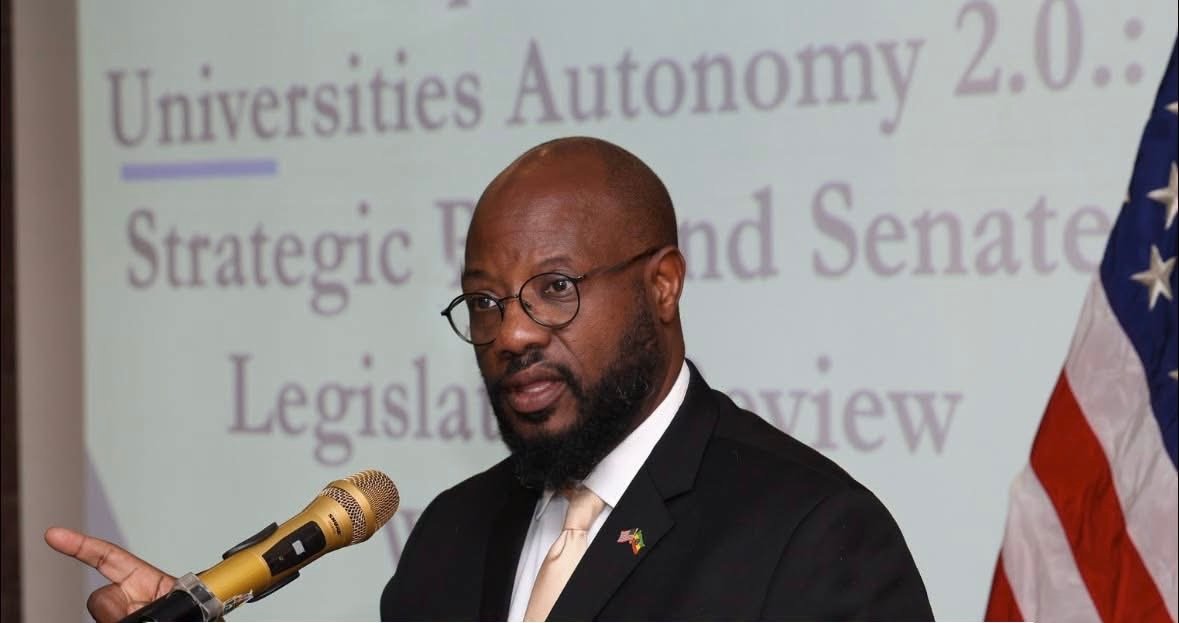
MEKELLE – U.S. Ambassador to Ethiopia Ervin Massinga has returned to Tigray for a high-level diplomatic visit as concerns grow over rising political tensions and the future of the Pretoria Peace Agreement, the deal that ended the devastating two-year war in northern Ethiopia.
Ambassador Massinga arrived in Mekelle for a one-day visit and was received by senior officials from the Tigray Regional State Administration. During his visit, he held discussions with regional authorities, humanitarian organizations, and other stakeholders on the humanitarian situation, recovery efforts, and the implementation of the 2022 Cessation of Hostilities Agreement (COHA), commonly known as the Pretoria Agreement.
The visit comes at a critical moment, with relations between Tigray’s political leadership and Ethiopia’s federal government facing renewed strain. Although the Pretoria Agreement brought an end to large-scale fighting in November 2022, several major issues remain unresolved, including security arrangements, the status of displaced communities, political reforms, and the withdrawal of forces not recognized under the agreement.
Washington’s renewed engagement follows a period of increasing concern over political divisions inside Tigray. A planned earlier visit by Ambassador Massinga was reportedly postponed as tensions intensified among Tigrayan political actors. The United States later announced visa restrictions targeting individuals it accused of contributing to instability and undermining the peace process.
The diplomatic pressure comes after the Tigray People’s Liberation Front (TPLF) issued stronger criticism of the peace agreement, claiming that key commitments have not been fulfilled. The party has accused Ethiopia’s federal government of failing to fully implement provisions related to the withdrawal of non-federal forces, the return of displaced civilians, and broader political guarantees.
The TPLF has described the Pretoria Agreement as being “effectively dead,” a statement that has raised concerns among regional and international observers who fear that unresolved disputes could create conditions for renewed instability.
Adding to the uncertainty, Tigray’s leadership has expressed opposition to Ethiopia’s National Dialogue process, arguing that security concerns and political grievances must first be addressed before meaningful national discussions can take place.
The United States has consistently called on all sides to preserve the Pretoria Agreement through dialogue and avoid actions that could threaten the fragile peace. Washington has emphasized that continued stability in Tigray is essential for humanitarian recovery, reconstruction, and long-term peace in Ethiopia.
Analysts say Ambassador Massinga’s visit represents an attempt by the United States to maintain communication with all sides and prevent further deterioration in relations between Mekelle and Addis Ababa. They note that while the Pretoria Agreement significantly reduced violence, many of the political and security challenges that fueled the conflict remain unresolved.
The situation is being closely monitored by regional actors, including Eritrea and neighboring countries, due to the strategic importance of northern Ethiopia and the potential consequences of renewed instability.
For now, the focus remains on whether diplomatic engagement can help rebuild trust and ensure that the Pretoria Agreement remains a foundation for lasting peace rather than becoming another failed attempt at ending conflict.