
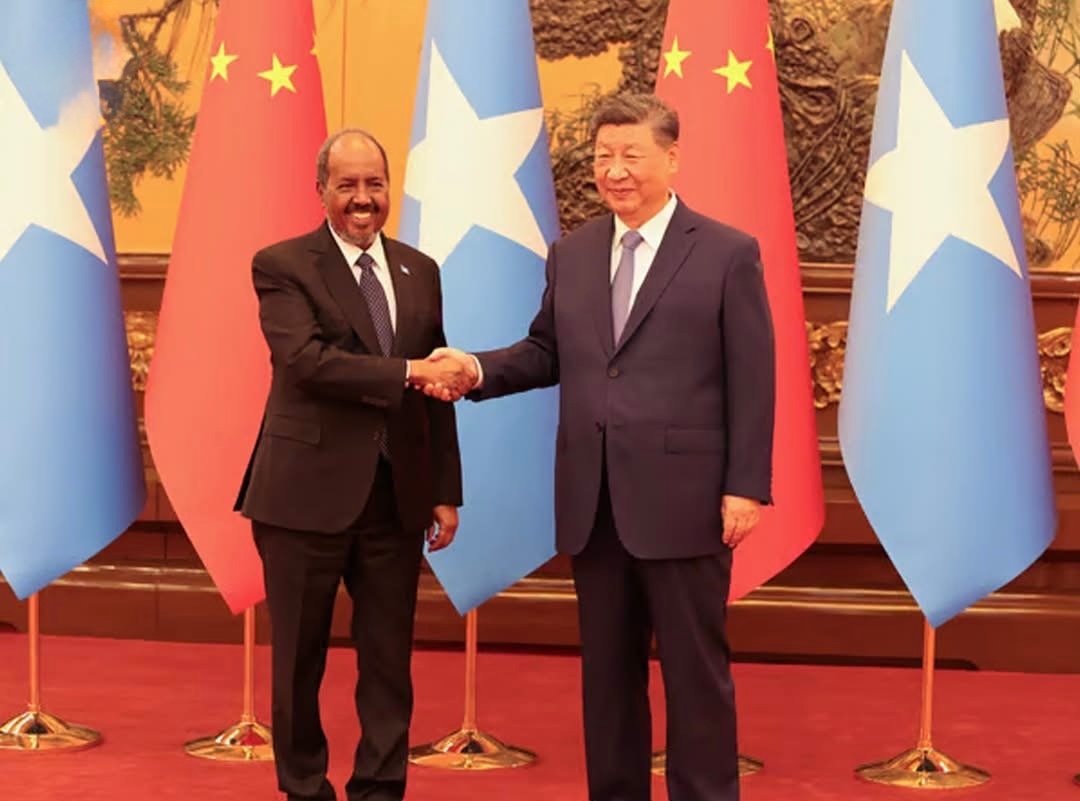
MOGADISHU — China and Somalia have signed a new trade agreement granting tax-free access to a range of Somali exports, a move aimed at strengthening economic ties and opening one of the world’s largest consumer markets to products from the Horn of Africa nation.
The agreement is expected to benefit key Somali export sectors, particularly fisheries, livestock, and agricultural products, by reducing trade barriers and improving access to Chinese buyers. Officials from both countries have described the deal as a step toward expanding bilateral trade and supporting Somalia’s economic development.
China has become one of Africa’s most important trading partners over the past two decades, investing heavily in infrastructure, transportation, energy, and industrial projects across the continent. The new arrangement with Somalia reflects Beijing’s broader efforts to deepen economic engagement in East Africa and along strategic maritime routes linking Africa, the Middle East, and Asia.
For Somalia, the agreement could provide new opportunities for exporters seeking to diversify markets beyond traditional regional trading partners. The country’s long coastline and rich marine resources have attracted growing interest from foreign investors, while Somali livestock exports remain a critical source of revenue.
Economists say duty-free access to the Chinese market could help Somali producers become more competitive internationally, potentially increasing export volumes and generating foreign exchange earnings. However, experts caution that Somalia will need to improve infrastructure, quality standards, and export capacity to fully capitalize on the agreement.
The deal also carries geopolitical significance. Analysts note that expanding trade relations often translate into stronger diplomatic and economic influence. As China increases its presence in the Horn of Africa, Somalia may become an increasingly important partner in Beijing’s regional strategy.
Supporters of the agreement argue that it could stimulate investment, create jobs, and support economic recovery in a country working to rebuild after decades of conflict and instability. Critics, however, warn that excessive reliance on a single major trading partner could expose Somalia to economic vulnerabilities and reduce its bargaining power in future negotiations.
The long-term impact of the agreement will likely depend on the range of products covered, the volume of exports that reach Chinese markets, and the ability of Somali businesses to meet international demand. Observers will also be watching whether the trade pact leads to additional Chinese investments in Somalia’s ports, fisheries, logistics, and industrial sectors.
While officials have welcomed the agreement as a milestone in bilateral relations, analysts say its success will ultimately be measured by tangible economic benefits for Somali producers, businesses, and local communities.