DJIBOUTI — The Intergovernmental Authority on Development (IGAD) and Somalia have reaffirmed their commitment to strengthening regional cooperation on agriculture, food security, and climate resilience during high-level discussions held at IGAD headquarters in Djibouti.
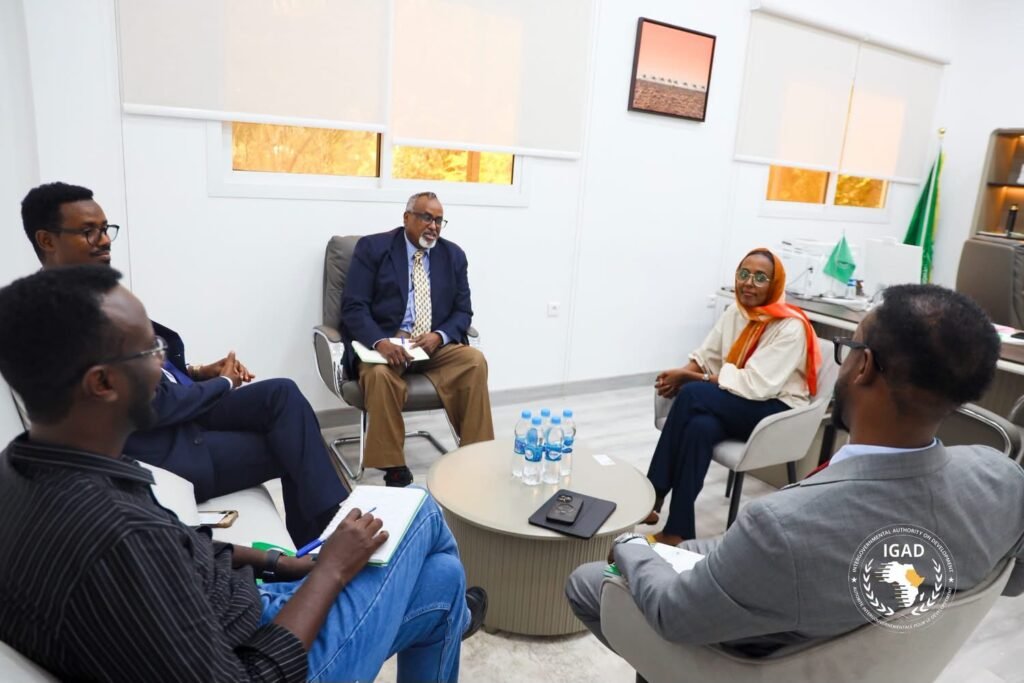
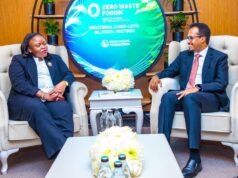
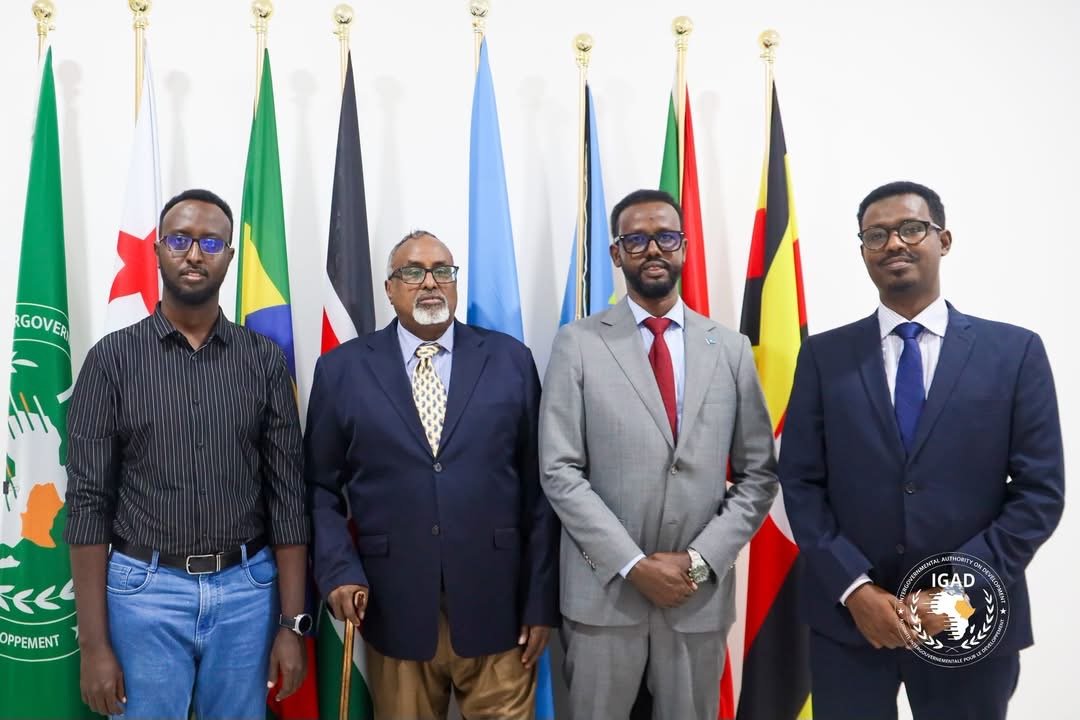
IGAD Deputy Executive Secretary H.E. Mohamed Abdi Ware welcomed Eng. Mohamed Hassan Abdulle, Director General of Somalia’s Ministry of Agriculture, and his delegation for talks focused on expanding collaboration between Somalia and the regional organization.
The meeting comes at a time when countries across the Horn of Africa are facing increasing pressure from climate-related challenges, including droughts, unpredictable rainfall patterns, and threats to agricultural production. Officials highlighted the need for stronger coordination and preparedness measures to protect vulnerable communities and support sustainable livelihoods.
Discussions focused on improving agricultural cooperation between Somalia and IGAD member states, with emphasis on strengthening food production systems, supporting farmers, and developing strategies to reduce the impact of climate shocks.
The officials also addressed the importance of preparing for anticipated El Niño conditions, which could bring extreme weather events and create additional challenges for communities dependent on agriculture and livestock. Strengthening early warning systems, improving climate information sharing, and enhancing disaster preparedness were identified as key areas for regional action.
For Somalia, agriculture remains a critical sector supporting livelihoods, particularly in rural areas where farming and livestock production provide income and food for millions of people. However, the sector continues to face challenges linked to climate change, limited infrastructure, water shortages, and recurring environmental shocks.
IGAD has been working with member states to promote regional approaches to food security and climate adaptation, recognizing that environmental challenges often cross national borders and require coordinated responses.
Analysts say stronger cooperation between Somalia and IGAD could help improve agricultural resilience by encouraging investment in sustainable farming methods, water management, climate-smart agriculture, and rural development programs.
The meeting also reflects Somalia’s broader efforts to strengthen engagement with regional institutions and improve its capacity to respond to food security challenges while building more sustainable economic opportunities for its population.
As climate pressures continue to affect the Horn of Africa, IGAD and Somalia are expected to increase cooperation on initiatives aimed at protecting livelihoods, improving agricultural productivity, and strengthening regional resilience.
The discussions underscore a shared regional message: addressing food insecurity and climate risks will require coordinated action, investment, and long-term planning across the Horn of Africa.