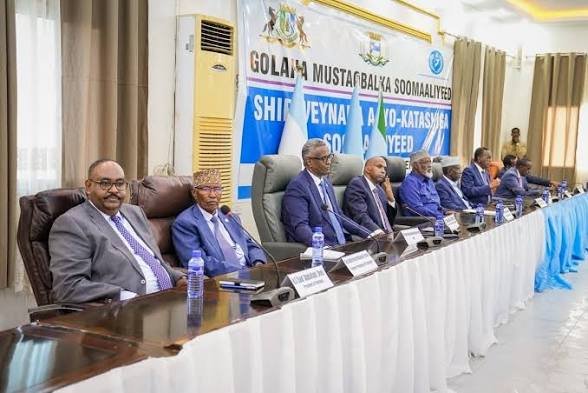
The Somali Future Council has called for a comprehensive political agreement to establish an inclusive Transitional Council that would oversee Somalia’s constitutional and electoral transition until new national institutions are peacefully formed through a legitimate and widely accepted political process.
In an open letter dated July 27, 2026, the council stated that Somalia’s most urgent priority is to reach a broad political settlement capable of restoring constitutional legitimacy, rebuilding national consensus, and ensuring the neutrality and professionalism of key state institutions, including the Somali National Army (SNA) and other national security forces.
The letter was addressed to the heads of state, ministers of defence, and chiefs of defence forces of countries contributing troops and police officers to the African Union Support and Stabilization Mission in Somalia (AUSSOM). These countries include Uganda, Kenya, Ethiopia, Djibouti, Burundi, and Egypt, all of which have played a significant role in supporting Somalia’s security and stabilization efforts.
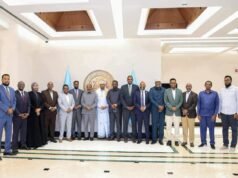
The Somali Future Council is an opposition political alliance comprising prominent national leaders, including a former President of Somalia, several former Prime Ministers, the current Presidents of Jubaland and Puntland, former cabinet ministers, members of parliament, and other senior political figures. The council says it is committed to promoting an inclusive political process aimed at preserving national unity and preventing further instability.
In its letter, the council expressed gratitude to the African Union member states that have contributed troops and police personnel to Somalia over the past two decades. It acknowledged the sacrifices made by thousands of African peacekeepers who have served with courage and dedication in helping Somalia combat terrorism, protect civilians, strengthen national institutions, and support long-term peace and security.
Despite recognizing these contributions, the council warned that Somalia has entered what it described as a dangerous and uncertain political period. It argued that President Hassan Sheikh Mohamud’s constitutional term expired on May 15, 2026, while the mandate of the Federal Parliament ended on April 14, 2026. According to the council, no widely accepted political agreement has been reached to guide the country through the transition following the expiration of these constitutional mandates.
The council stated that Somalia currently lacks a legitimate and nationally agreed framework to determine how the country should be governed during the transitional period. It warned that the absence of such an agreement risks deepening political uncertainty, increasing tensions among political stakeholders, and undermining confidence in state institutions.
“There is still no political agreement in place to manage the transition that must follow,” the council stated. “Somalia is now in the most dangerous phase of its politics, without a legitimate, agreed framework for who governs, and how.”
The council further accused the Federal Government of Somalia of mishandling the political transition, arguing that growing political divisions between the federal government, federal member states, and opposition leaders have weakened national cohesion. It said these disputes have diverted attention and resources away from the country’s most pressing security priorities, particularly the fight against the extremist groups al-Shabaab and Daesh (ISIS).
According to the council, achieving lasting peace and stability requires an inclusive political dialogue involving all major stakeholders, including federal and regional leaders, opposition groups, civil society, and traditional elders. It emphasized that only a consensual political settlement can restore public confidence, preserve constitutional order, and create the conditions necessary for credible elections and the peaceful transfer of power.
The Somali Future Council urged Somalia’s international partners, particularly the African Union and AUSSOM troop-contributing countries, to support an inclusive, Somali-led political process that prioritizes national unity, constitutional governance, and the long-term stability of the country.