MOGADISHU — New information obtained by Yoolbaar Media indicates that the Ethiopian government may have requested an acceleration of the withdrawal of some of its forces from Somalia, despite the fact that a broader or immediate withdrawal of Ethiopian troops was not initially expected at this stage.
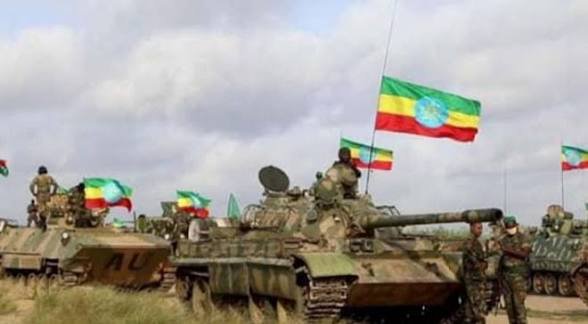
According to sources familiar with the developments, the request has reportedly led to adjustments in the timetable for the redeployment and reduction of foreign forces operating in Somalia.
Ethiopia reportedly requested changes to the withdrawal schedule
The information suggests that the African Union had initially been working on a gradual reduction of the size of some forces deployed in Somalia, including Ugandan troops and the remaining Burundian contingent.
However, according to the sources, the timetable was subsequently reviewed following a request from Ethiopia to accelerate the return of some of its troops from Somalia.
The reported move has raised questions about what may have prompted Addis Ababa to seek an earlier redeployment of troops that are currently involved in security operations in Somalia.
Growing security pressures inside Ethiopia
One of the main reasons cited by the sources is the emergence of renewed security challenges inside Ethiopia.
The sources claim that the Ethiopian government is facing increasing internal security pressures that require additional military resources and personnel.
Under this scenario, bringing some Ethiopian troops back from Somalia would allow Addis Ababa to reinforce its forces inside Ethiopia and respond to security challenges that may be becoming increasingly difficult to manage.
However, the exact nature and scale of these internal challenges have not been officially confirmed as the reason for the reported change in the withdrawal timetable.
Ethiopian forces hand over a military base in Buurhakaba
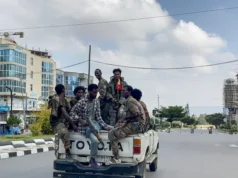
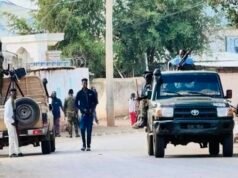
On August 8, Ethiopian forces reportedly handed over a military base in Buurhakaba, in Somalia’s South West State.
The transfer is being viewed as a possible indication that Ethiopia has begun implementing changes to its military deployment in parts of Somalia.
Sources also indicate that additional Ethiopian military positions could be handed over or vacated in the coming period.
If confirmed, the developments would represent a significant adjustment to Ethiopia’s military footprint in Somalia.
Possible reduction of Ethiopian troops in Baidoa
Another major development concerns Baidoa, the administrative capital of South West State.
According to the information obtained by Yoolbaar Media, plans are reportedly underway to reduce the number of Ethiopian troops stationed in and around Baidoa.
Baidoa is strategically important because of its location and its role as a major political and security center in South West State. Ethiopian forces have played an important role in supporting local security forces and conducting operations against Al-Shabaab in the region.
Any significant reduction of Ethiopian troops in Baidoa could therefore have important security implications.
Who will take over the security responsibilities?
The potential withdrawal raises an important question: who will assume responsibility for the areas currently secured or supported by Ethiopian forces?
A reduction in Ethiopian troops would increase pressure on Somali security forces to take over security responsibilities and protect strategic towns, military bases and supply routes.
It could also require closer coordination between the Somali federal government, South West State authorities and international partners to prevent security gaps from emerging after Ethiopian forces leave.
A potentially significant shift in Somalia’s security landscape
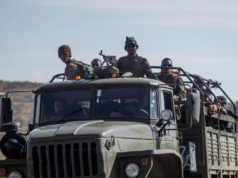
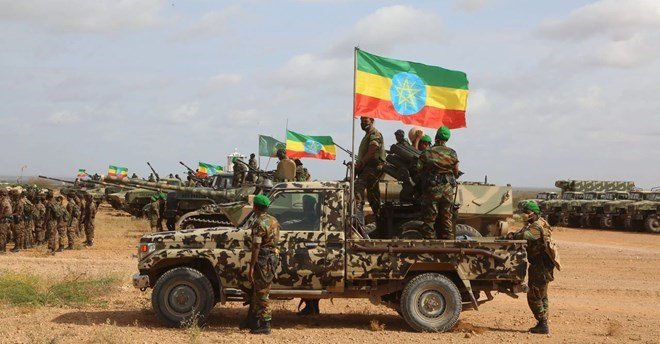
Ethiopia has maintained a substantial military presence in Somalia for many years and has been one of the most important regional actors involved in Somalia’s security efforts.
The reported acceleration of the withdrawal of some Ethiopian forces could therefore mark an important shift in the regional security landscape.
It comes at a time when Somalia is seeking to strengthen its own security institutions and gradually assume greater responsibility for national security.
For the withdrawal to avoid creating new security vulnerabilities, however, it would need to be accompanied by adequate preparations, including the deployment of capable Somali forces to areas vacated by Ethiopian troops.
Questions remain over the full scale of the withdrawal
Despite the information circulating about an accelerated withdrawal, several important questions remain unanswered.
It is not yet clear:
- How many Ethiopian troops are expected to leave Somalia;
- Which military bases will be handed over next;
- Whether the reduction will affect all Ethiopian deployments or only selected areas;
- What the revised timetable for the withdrawal will be;
- Which Somali forces will replace Ethiopian troops in the affected locations; and
- Whether the reported changes are temporary or part of a broader Ethiopian military redeployment.
The Ethiopian government, the Somali government and the African Union have yet to publicly provide full details regarding the reported changes.
The broader regional picture
The reported developments could have implications beyond Somalia.
Ethiopia’s military posture in Somalia has long been connected to its broader national security interests and its efforts to contain armed groups operating in the region.
If Addis Ababa is indeed redeploying troops from Somalia because of growing security requirements inside Ethiopia, the move could signal that Ethiopia is reassessing how its military resources are distributed between external and internal security priorities.
For Somalia, the immediate priority will be ensuring that any reduction in Ethiopian forces does not create security vacuums that could be exploited by Al-Shabaab.
Yoolbaar Media will continue to follow developments surrounding the reported Ethiopian military redeployment and provide updates as more information becomes available.
Editor’s note: The information above is based on reports and sources cited by Horn Africa News. Details regarding the scale, reasons and timetable of the reported withdrawal should be treated as unconfirmed until officially verified by the relevant governments or the African Union.