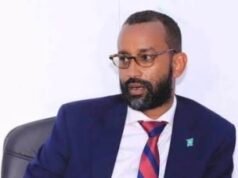
MOGADISHU — Political uncertainty is growing in Somalia’s Hirshabelle state as preparations for elections intensify, with President Ali Abdullahi Hussein, known as Ali Gudlawe, seeking another term amid competing political interests and calls for greater representation.
Gudlawe has publicly said he intends to contest the Hirshabelle presidency and has identified himself as a candidate affiliated with the Justice and Unity Party (JSP).
But speculation has increased over whether political negotiations could lead to a different leadership arrangement.
There has been no official confirmation from Villa Somalia, the Hirshabelle administration or JSP that Gudlawe has agreed to step aside, or that the party has decided to replace him.
The political uncertainty comes as Hirshabelle prepares for an electoral process based on the principle of one person, one vote, marking a significant shift from Somalia’s previous indirect electoral system.
A timetable reported in July set August 20, 2026, as the date for local council and House of Representatives elections, although the process faces political, security and logistical challenges.
Hiran Dispute Remains a Key Issue
At the centre of the political debate is the longstanding dispute over the relationship between Hirshabelle’s administration and political and community leaders in Hiran region.
The dispute has involved questions of political representation, governance and the distribution of power within the federal member state.
Tensions have at times complicated relations between the Hirshabelle administration and influential figures in Hiran, making broader political consultation an important factor in any effort to establish a lasting settlement.
For many political actors, the debate goes beyond the question of who should occupy the Hirshabelle presidency. It also concerns how political power and representation should be distributed among the communities that make up the state.
Hawaadle Seek Greater Political Influence
The political position of the Hawaadle community, which has significant influence in Hiran and parts of Hirshabelle, has emerged as another important factor in the contest.
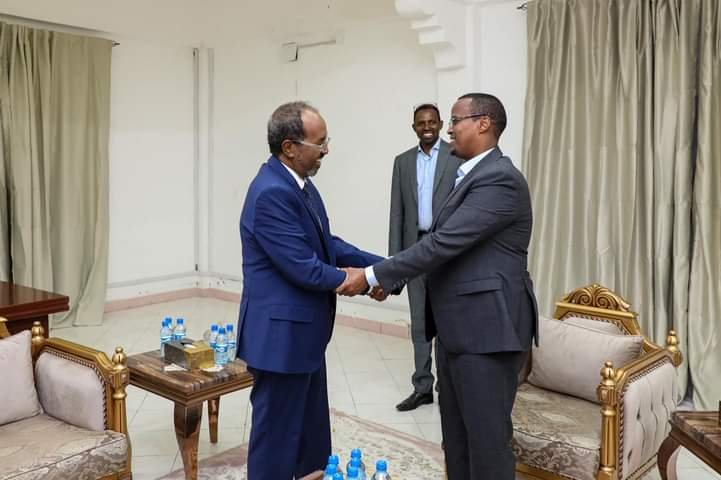
Recent reports say President Hassan Sheikh Mohamud has held discussions with Hawaadle traditional and political figures over the upcoming political process.
One report said an August 4 meeting at Villa Somalia produced an understanding concerning the community’s role in selecting a candidate for the state leadership. Other reports have described continuing consultations among Hawaadle elders and politicians over their political position.
The reported understanding has not been independently established as a final agreement determining who will lead Hirshabelle.
The developments nevertheless highlight the importance of community alliances in Somalia’s federal politics, where traditional leaders and political stakeholders often play an influential role in electoral negotiations.
JSP Position Under Scrutiny
JSP’s position is also being closely watched.
Gudlawe has publicly presented himself as a JSP candidate, giving the party a potentially important role in the presidential contest.
Reports that JSP could support another candidate have circulated, but without a formal announcement from the party, those claims remain unconfirmed.
The outcome of negotiations involving the federal government, Hirshabelle politicians and community representatives could therefore determine whether Gudlawe remains the principal candidate or whether a new political alliance emerges.
Claims of Financial Deal Unverified
Separate reports have alleged that Gudlawe could seek political or financial guarantees in exchange for stepping aside.
Those claims remain unverified.
There is no publicly confirmed evidence that Villa Somalia or the Hirshabelle administration has negotiated a financial settlement with Gudlawe, or that he has agreed to abandon his political ambitions in return for compensation.
The allegations should therefore be treated as part of the political speculation surrounding the contest rather than as established facts.
A Test for Somalia’s Federal Politics
The developments in Hirshabelle come as Somalia continues to debate electoral reforms, federal-state relations and the transition towards direct voting.
For President Hassan Sheikh’s administration, managing the political process in Hirshabelle could provide an important test of its ability to broker agreements among competing regional and community interests.
For Hirshabelle, the stakes are equally high.
A broad political settlement could help reduce tensions between Hiran and the state administration while creating greater space for political participation.
Failure to reach an agreement, however, could deepen existing divisions and create additional difficulties for the electoral process.
What Happens Next?
For now, Gudlawe remains a declared political contender, while reports of a possible change in leadership remain unconfirmed.
Key questions include whether JSP will maintain its support for Gudlawe, whether Hawaadle political and traditional leaders will unite behind a candidate, and whether the federal government can help broker an agreement acceptable to the principal stakeholders.
The coming weeks are therefore expected to be politically significant for Hirshabelle.
Any eventual change in leadership — or decision to retain Gudlawe — could have consequences beyond the presidency itself, potentially affecting relations between Mogadishu, Hirshabelle and Hiran and shaping the wider debate over Somalia’s federal political system.