
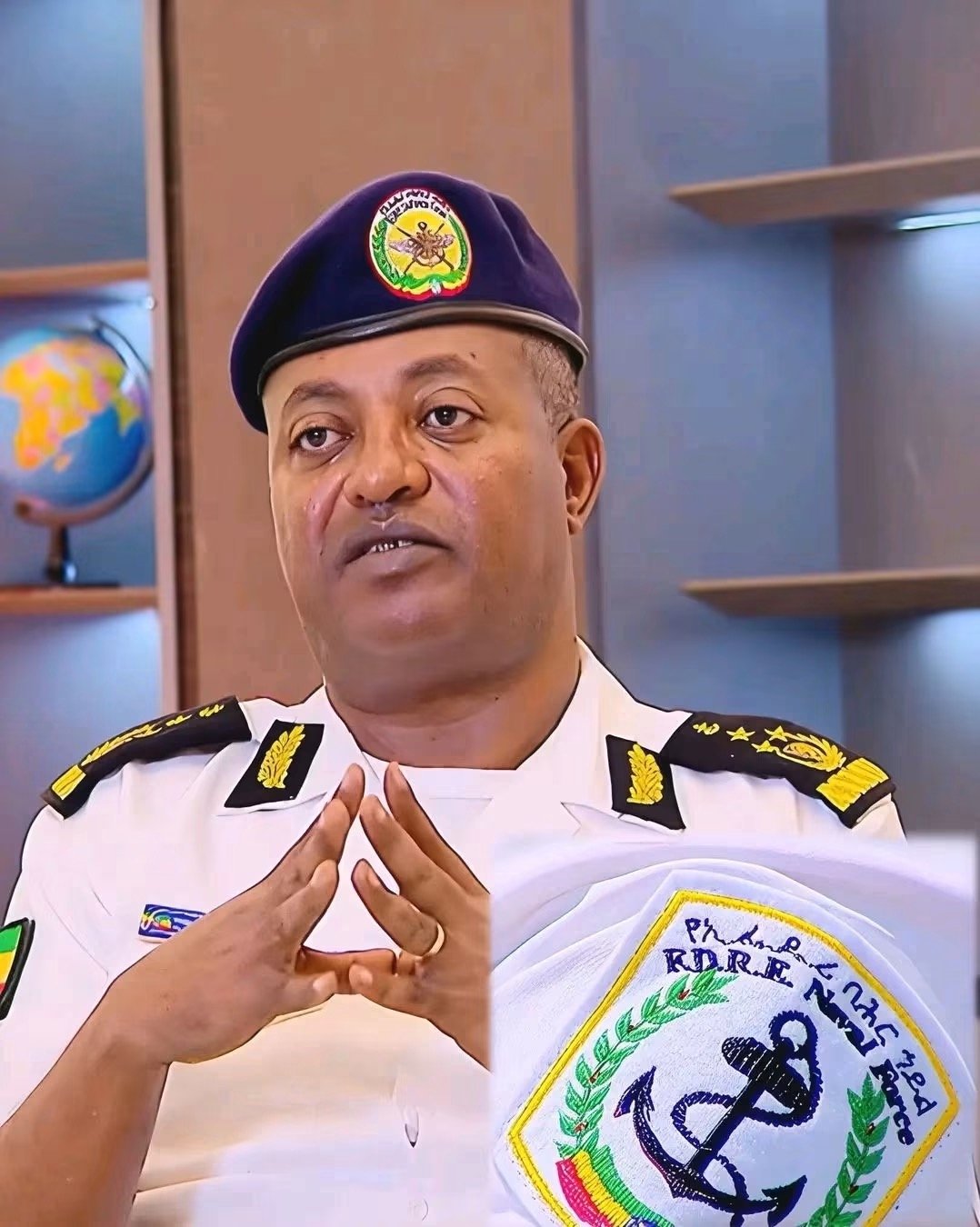
ADDIS ABABA — Ethiopian Navy Commander-in-Chief Admiral Kindu Gezu has described access to the sea as a matter of national survival, arguing that the future of Ethiopia’s approximately 130 million people depends on securing maritime access.
In remarks highlighting Ethiopia’s maritime ambitions, Gezu said the country’s ability to strengthen its naval capabilities was closely linked to its long-term survival and national interests.
“The threats occurring in the Red Sea cannot be defended against by anyone with the same sense of ownership as Ethiopia,” Gezu said.
He added that strengthening the capabilities of the Ethiopian Navy was directly connected to the country’s survival.
“Access to the sea is not a matter of choice; it is an existential necessity,” he said.
Ethiopia’s Pursuit of Maritime Access
Ethiopia, one of Africa’s most populous countries, became landlocked in 1993 following Eritrea’s independence. Since then, it has relied heavily on ports in neighboring countries, particularly Djibouti, for international trade.
Ethiopian officials have increasingly described access to the sea as a strategic priority linked to economic development, national security, and regional trade. The government has also emphasized the development of naval capabilities as part of its broader maritime ambitions.
Why Does a Landlocked Country Have a Navy?
Despite having no sovereign coastline, Ethiopia has established and developed a navy, raising questions about the purpose of maintaining a maritime military force while the country remains landlocked.
Ethiopia previously operated a navy before losing access to the sea following Eritrea’s independence. After decades without a naval force, the country announced the re-establishment of its navy in 2018, with the aim of rebuilding its maritime capabilities.
The Ethiopian government has presented the navy as a long-term strategic investment intended to support its maritime ambitions, protect national interests, and prepare the country for a possible future role in regional maritime security.
However, Ethiopia’s current lack of a coastline raises practical questions about where its naval forces can operate, how they would access the sea, and what arrangements would be necessary to establish a permanent naval presence.
Without sovereign coastal territory or an agreed arrangement with a coastal state, operating a conventional navy at sea presents significant logistical and diplomatic challenges.
Regional Security Implications
Ethiopia’s pursuit of maritime access has attracted considerable attention across the Horn of Africa because of the Red Sea’s importance to international shipping and regional security.
The issue is particularly sensitive among neighboring countries, including coastal states that emphasize territorial sovereignty and the need for maritime-access arrangements to be negotiated peacefully and in accordance with international law.
Admiral Gezu’s remarks underscore the Ethiopian military leadership’s view that access to the sea and naval development are central to the country’s long-term strategic interests.
Nevertheless, an important question remains: What practical role can Ethiopia’s navy play while the country has no coastline of its own, and how does Addis Ababa intend to secure the maritime access required to operate such a force?
The answer will depend on Ethiopia’s future diplomatic agreements, its relationships with neighboring coastal states, and whether it can secure lawful and reliable access to maritime facilities.
For now, Ethiopia’s naval ambitions remain closely connected to its broader efforts to obtain sea access, expand its regional influence, and strengthen its national security.