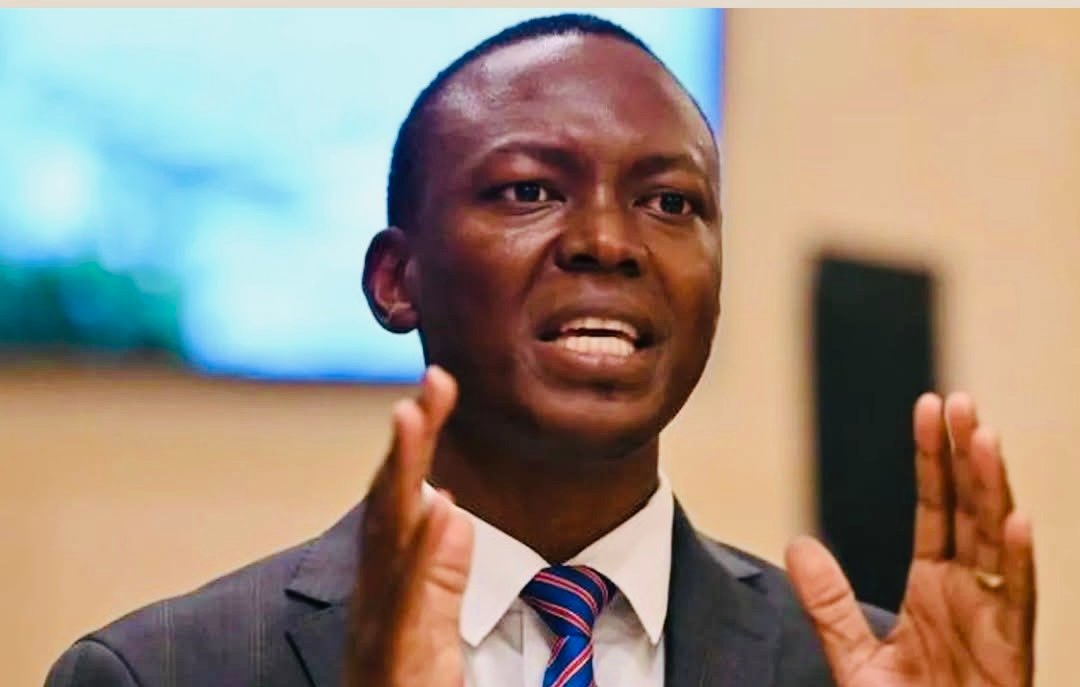
N’DJAMENA — Chadian President Mahamat Idriss Déby has granted a presidential pardon to opposition leader and former prime minister Succes Masra, one of his most prominent political rivals, after Masra spent more than a year in prison.
The pardon was announced by the Chadian presidency and is expected to pave the way for Masra’s release, along with eight other political figures covered by the same decision.
According to the presidency, the measure followed a request for clemency submitted by Masra’s lawyers. The government presented the decision as part of broader efforts aimed at promoting national reconciliation, peace and political stability.
Masra, who leads the opposition party Les Transformateurs, was arrested in May 2025 following deadly violence in southwestern Chad. Authorities accused him of inciting violence through inflammatory messages and of being involved in the bloodshed.
He was subsequently convicted and sentenced to 20 years in prison, as well as ordered to pay a fine of 1 billion CFA francs, equivalent to roughly $1.77 million.
Despite the presidential pardon, the civil financial penalties imposed on Masra remain in force, according to the presidency. The pardon therefore ends his imprisonment but does not necessarily remove all legal and financial consequences of his conviction.
A major political rival
Masra has been one of President Déby’s strongest political opponents. Before his imprisonment, he had served as prime minister during Chad’s transitional period and later contested the 2024 presidential election against Déby.
Déby won that election, which formally ended the country’s transitional period following the death of his father, longtime President Idriss Déby Itno, in 2021.
Masra rejected the official election results, alleging irregularities and disputing the legitimacy of the process. His political movement has remained an important opposition force in the country.
His arrest and subsequent conviction sparked criticism from opposition supporters and rights groups, who raised concerns about political freedoms and the treatment of government opponents.
Pardon follows reconciliation pledge
The presidential pardon comes only days after Déby pledged to release several convicted individuals as part of a wider initiative to promote national unity and reconciliation.
The decision to pardon Masra could potentially create new space for dialogue between the government and opposition groups after a period of heightened political tension.
For Masra’s supporters, the pardon represents a major development after more than a year behind bars and could allow the opposition leader to return to public political life.
For the government, the decision provides an opportunity to demonstrate a willingness to pursue reconciliation with political opponents and reduce tensions following years of political instability.
The pardon also comes at a sensitive time for Chad, a strategically important but politically fragile country in the Sahel that has faced security threats from armed groups and instability in neighbouring countries.
Déby consolidates power
Mahamat Idriss Déby came to power in 2021 after his father was killed while visiting troops fighting rebels in northern Chad. The military immediately established a transitional authority, with Déby eventually becoming its leader.
His government has since sought to consolidate state authority while facing opposition from political groups and armed movements.
The 2024 presidential election was presented by the authorities as a major step toward restoring constitutional rule, but opposition groups questioned the credibility of the vote.
Masra’s pardon could therefore have wider implications for Chad’s political landscape, particularly if it leads to renewed dialogue between the government and opposition.
The presidency said the nine individuals covered by the pardon would be released after the necessary legal and administrative procedures are completed.
The decision marks a significant shift in the case of Masra, but it remains unclear whether his release will lead to a broader political settlement between the government and opposition forces or whether tensions will persist.