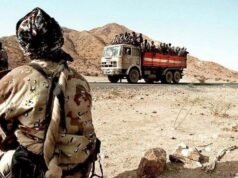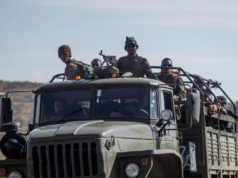
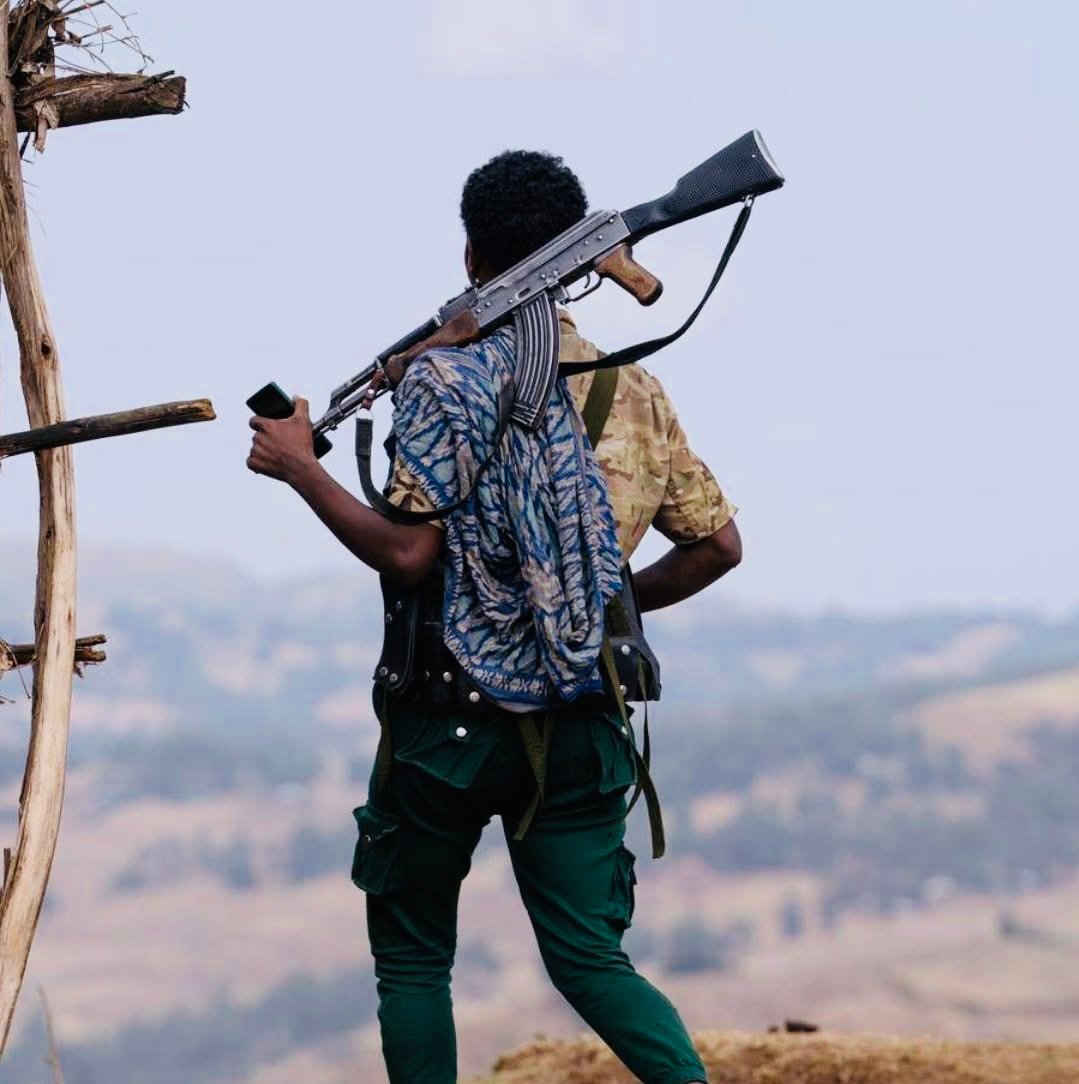
ADDIS ABABA — Ethiopia’s Amhara Fano militia says it has established a unified national command and formed alliances with at least seven regional armed groups as part of an effort to challenge and ultimately overthrow Prime Minister Abiy Ahmed’s government.
Fano leader Zemene Kassie made the claims in an interview with Swiss newspaper Le Temps, saying negotiations with the different factions lasted between seven and eight months before the alliance was finalized.
Kassie said the coalition includes armed factions from Tigray, Oromia and Somalia, as well as groups from Gumuz and forces linked to Sudan. He said the alliance is designed to coordinate military activities and establish a political framework for Ethiopia following what he described as the eventual fall of Abiy’s government.
“We are not only fighting for the Amhara people, but for freedom and equality for all nations and nationalities of Ethiopia,” Kassie said.
Fano Claims Growing Military Strength
Kassie claimed that Fano now has hundreds of thousands of fighters operating under a single command, following the consolidation of previously separate groups from Shewa, Wollo, Gondar and the Wellega area.
He also claimed that Fano controls more than 80% of rural areas in parts of the Amhara region, as well as dozens of small towns. According to Kassie, Fano forces have confronted 10 of the 13 military commands deployed by the federal government.
The claims could not be independently verified.
“We systematically have superiority on the battlefield,” Kassie said, arguing that the government could face a major defeat if Fano succeeds in weakening its security and military structures.
Conflict With Federal Government
Fano has emerged as one of the main armed opposition forces in Ethiopia’s Amhara region following tensions between the federal government and Amhara communities. Fighting between Fano fighters and government forces has resulted in casualties, displacement and disruption across parts of the region.
Kassie described Fano as a grassroots movement that emerged from local resistance, saying its initial objective was to protect the Amhara population while maintaining Ethiopia’s territorial integrity.
He said the movement’s current political ambitions extend beyond the Amhara region, emphasizing what he described as a broader struggle for political freedom and equality among Ethiopia’s different communities.
Fano’s Position on the Tigray War
Kassie also addressed the 2020–2022 Tigray conflict, during which Amhara forces fought alongside federal troops against Tigrayan forces.
He argued that the Fano movement had only a limited role during the war and that its current military structure developed largely after the conflict.
Kassie attributed many of Ethiopia’s longstanding political tensions to the 27 years of TPLF influence under the EPRDF coalition, which he said contributed to problems involving democracy, political freedoms and relations between the country’s various ethnic groups.
Government Has Not Confirmed Claims
The Ethiopian government has not, based on the information cited here, publicly confirmed Fano’s claims regarding the size of its forces, the extent of its territorial control or the formation of a seven-group alliance.
If confirmed, however, the creation of a broader armed coalition would represent a significant development in Ethiopia’s ongoing security crisis and could further complicate Prime Minister Abiy Ahmed’s efforts to stabilize the country.